


In 2026, electric mobility will no longer be a niche, but a daily reality for hundreds of thousands of Dutch people who want to travel smarter, cleaner, and cheaper. At the same time, the proliferation of e-scooters, mobility scooters, e-bikes, and electric microcars makes the choice complicated: which vehicle suits your situation, which driver's license do you need, and what does it cost you per kilometer? This guide answers those questions practically and without jargon, with figures accurate for 2026 and the choices we at IVA Mobility make with customers every day.
Here you can read exactly what electric mobility is, which vehicles are available for commuting and independent travel, what the annual costs are realistic, and what rules apply to environmental zones, insurance, and driving licenses. Then, in five steps, we help you choose between an electric scooter, mobility scooter, or three-wheeler — with the models from the range of IVA Mobility as a concrete point of reference.
Key points
- Electric mobility encompasses all vehicles that run entirely on an electric motor and battery — from e-scooters and mobility scooters to tricycles and microcars.
- You can ride an electric scooter (25 km/h) without a driver's license from the age of 16; for 45 km/h versions, you need an AM driver's license.
- The average costs of electric driving in 2026 will be approximately € 0,02 per kilometer in energy — a fraction of gasoline.
- Electric vehicles are allowed to enter all 29 Dutch low-emission zones, including in 2026, without an exemption or fine.
- For the elderly, a mobility scooter or electric three-wheeler offers safe and stable comfort without a driver's license and while maintaining independence.
- With proper use, a lithium-ion battery lasts four to six years before its capacity drops below 70%.
Table of contents
- What is electric mobility?
- Types of electric transport for daily use
- How much will electric driving cost in 2026?
- Advantages and disadvantages of electric mobility
- Which electric mode of transport suits you?
- Frequently Asked Questions
What is electric mobility?
Electric mobility is the movement of people or goods using vehicles that run entirely on an electric motor and rechargeable battery. No petrol, no exhaust fumes, no oil changes. The term covers a wide range of vehicles: from the electric car and e-bike to the e-scooter, mobility scooter, electric microcar, and tricycle. In English, it is often referred to as e-mobility; You also see the term electric transport in Dutch policy documents.
The difference compared to a hybrid vehicle is fundamental. A hybrid has an internal combustion engine in addition to the electric motor; a fully electric vehicle (BEV — Battery Electric Vehicle) has only a battery and motor. This makes electric mobility significantly simpler to use: fewer moving parts, less maintenance, and no local emissions of CO₂, particulate matter, or nitrogen oxides.
According to the Netherlands Enterprise Agency (RVO) The number of electric vehicles in the Netherlands has been growing at a double-digit rate for years. The government's objective is that by 2030, all new passenger cars will be sold emission-free. For two-wheelers and mobility aids, the electric share is already significantly higher: new mobility scooters and light mopeds are sold almost exclusively as electric vehicles.
What electric mobility stands for
Electric mobility revolves around three core points.First, sustainability: an electric vehicle emits nothing while driving, and when charged with green electricity, the CO₂ balance over the entire lifecycle is significantly more favorable than petrol. Second, affordability: driving an electric kilometer will cost you about two euro cents in electricity in 2026, compared to ten to fifteen euro cents in petrol. And third, accessibility: for many electric vehicles — think of e-scooters up to 25 km/h, mobility scooters, and e-bikes — you do not need a driver's license.
At IVA Mobility, the focus is on those last two. We build vehicles for people who want reliable, affordable, and simple transportation every day — not for enthusiasts of high-end technology.
Types of electric transport for daily use
For daily use, four categories of electric vehicles are relevant: the electric scooter, the mobility scooter, the electric three-wheeler, and the electric light quadricycle. Each type suits a different purpose of use, a different target group, and a different legal category. Below, you will find a brief description for each vehicle type, plus the practical prerequisites.
Electric scooter (25 or 45 km/h)
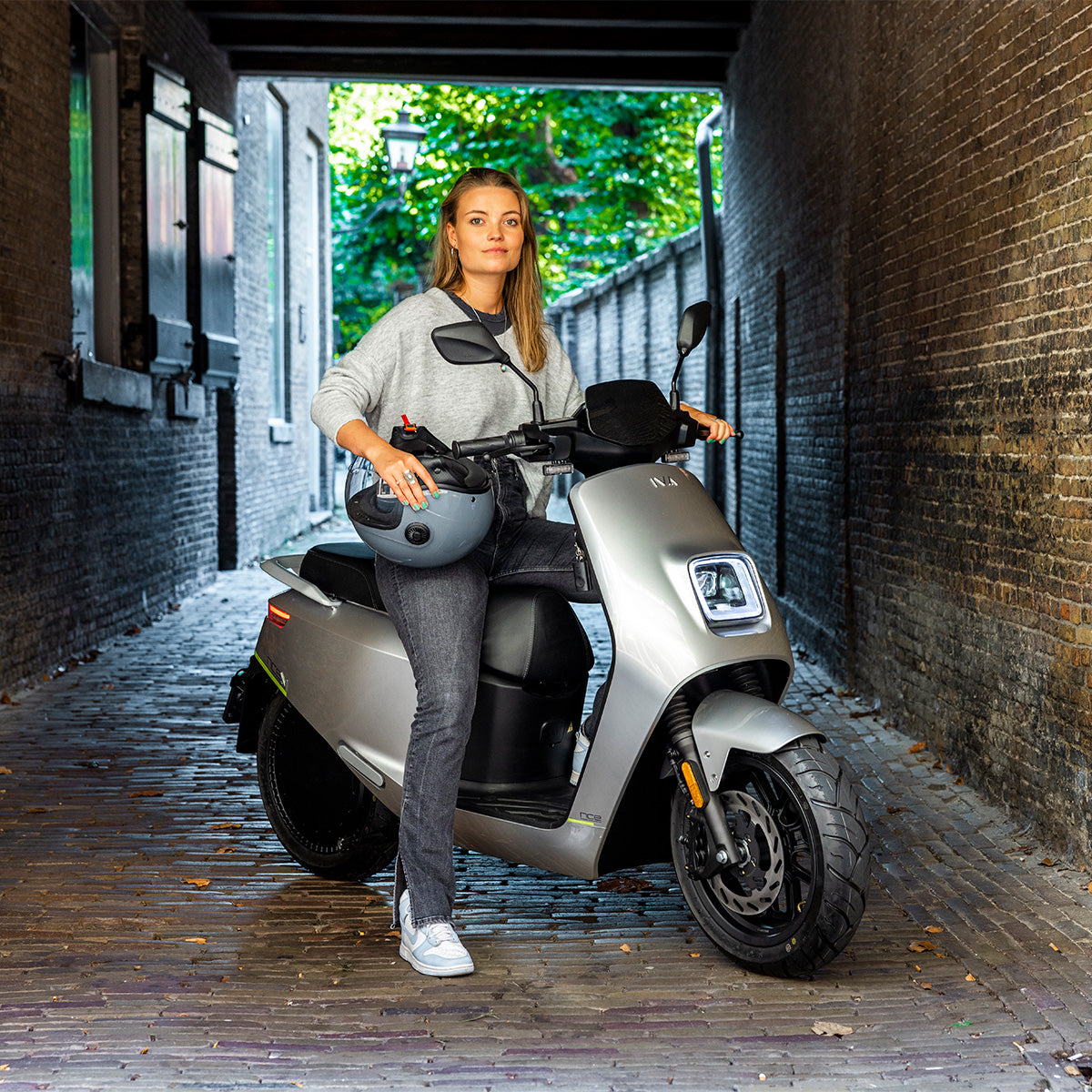
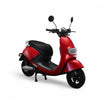
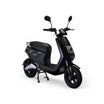
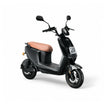
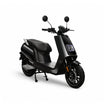
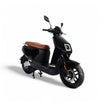
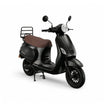
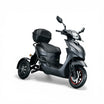
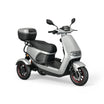
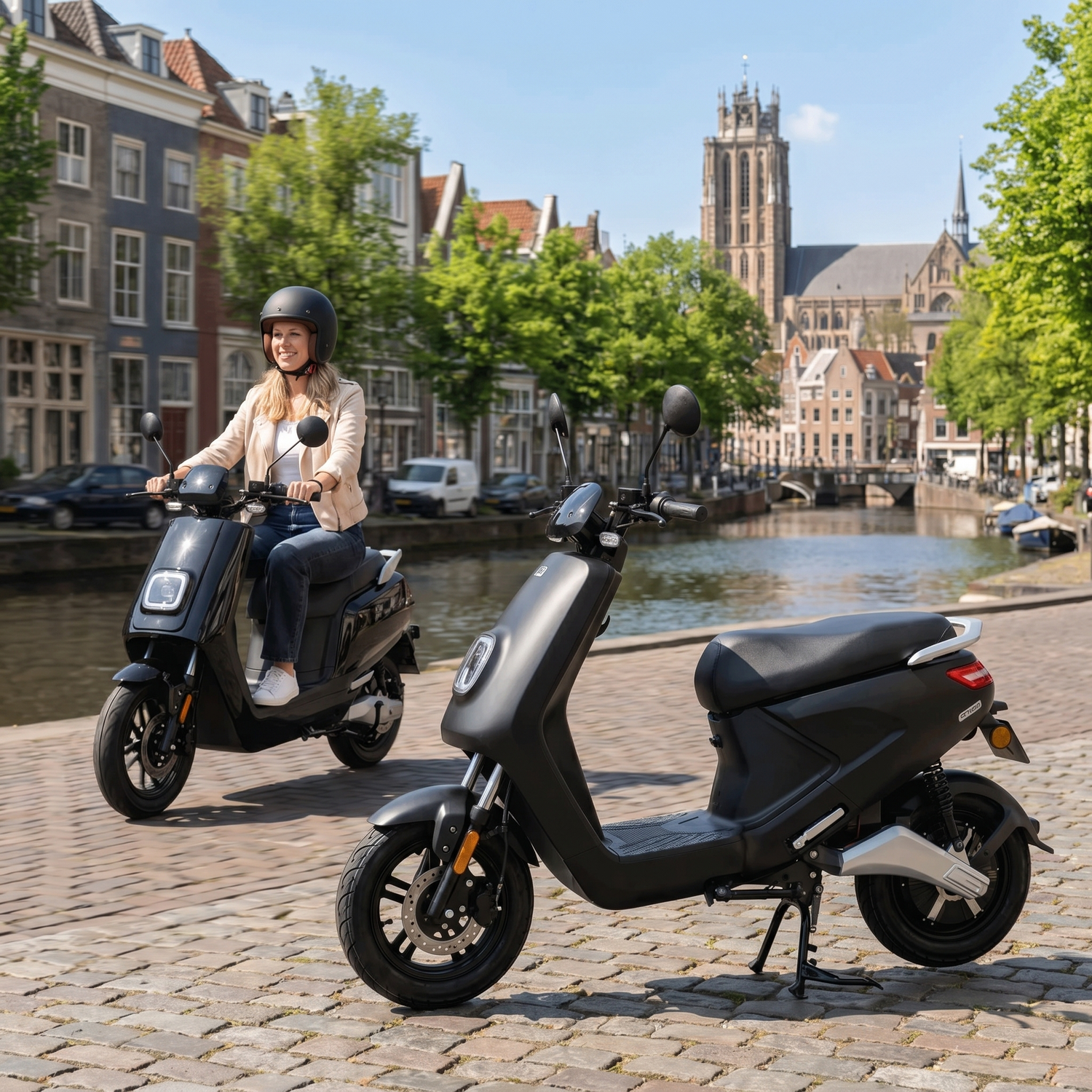
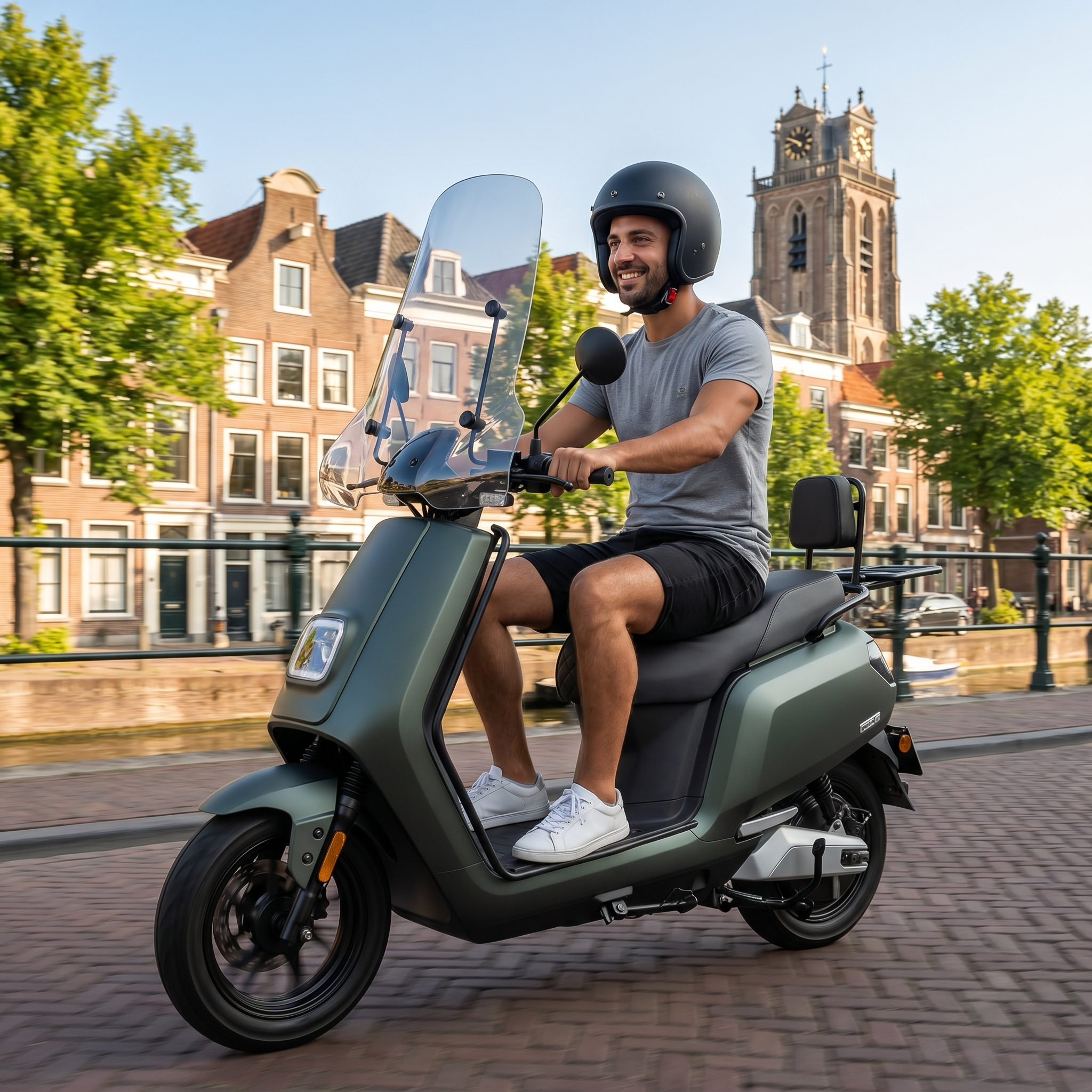
An electric scooter is a two-wheeled vehicle with an electric motor. In the Netherlands, we distinguish between two speed classes. The 25 km/h version is a light moped (blue license plate) for which you do not need a driving license from the age of 16; you ride on the cycle path where required, and on the road where permitted. The 45 km/h version is a light scooter (yellow license plate) and requires an AM driving license, a helmet is mandatory, and you ride on the road within built-up areas.
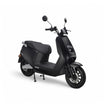
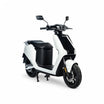
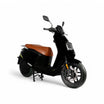
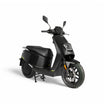
For commuting up to about 25 kilometers per day, this is the most popular choice. Models such as the IVA E-GO S4 and the more powerful IVA E-GO S5 have a range of 45 to 60 kilometers per battery charge. With a dual battery, that range increases to 120 kilometers.
Mobility scooter
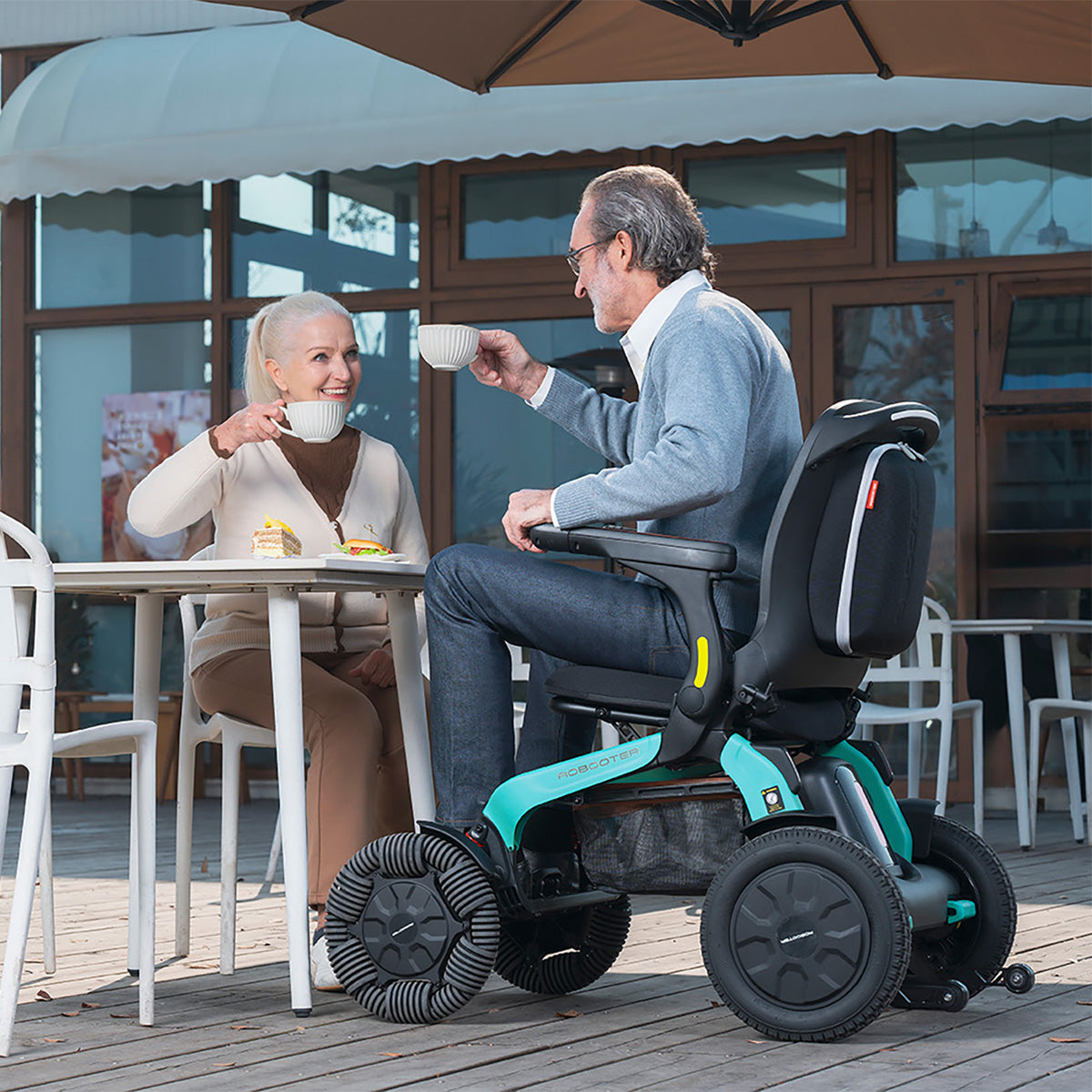
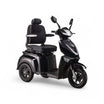
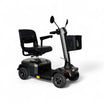
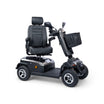
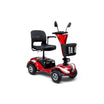
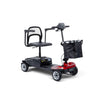
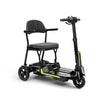
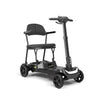
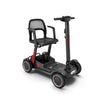
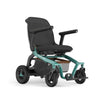
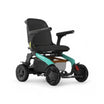
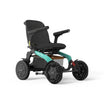
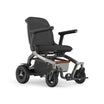
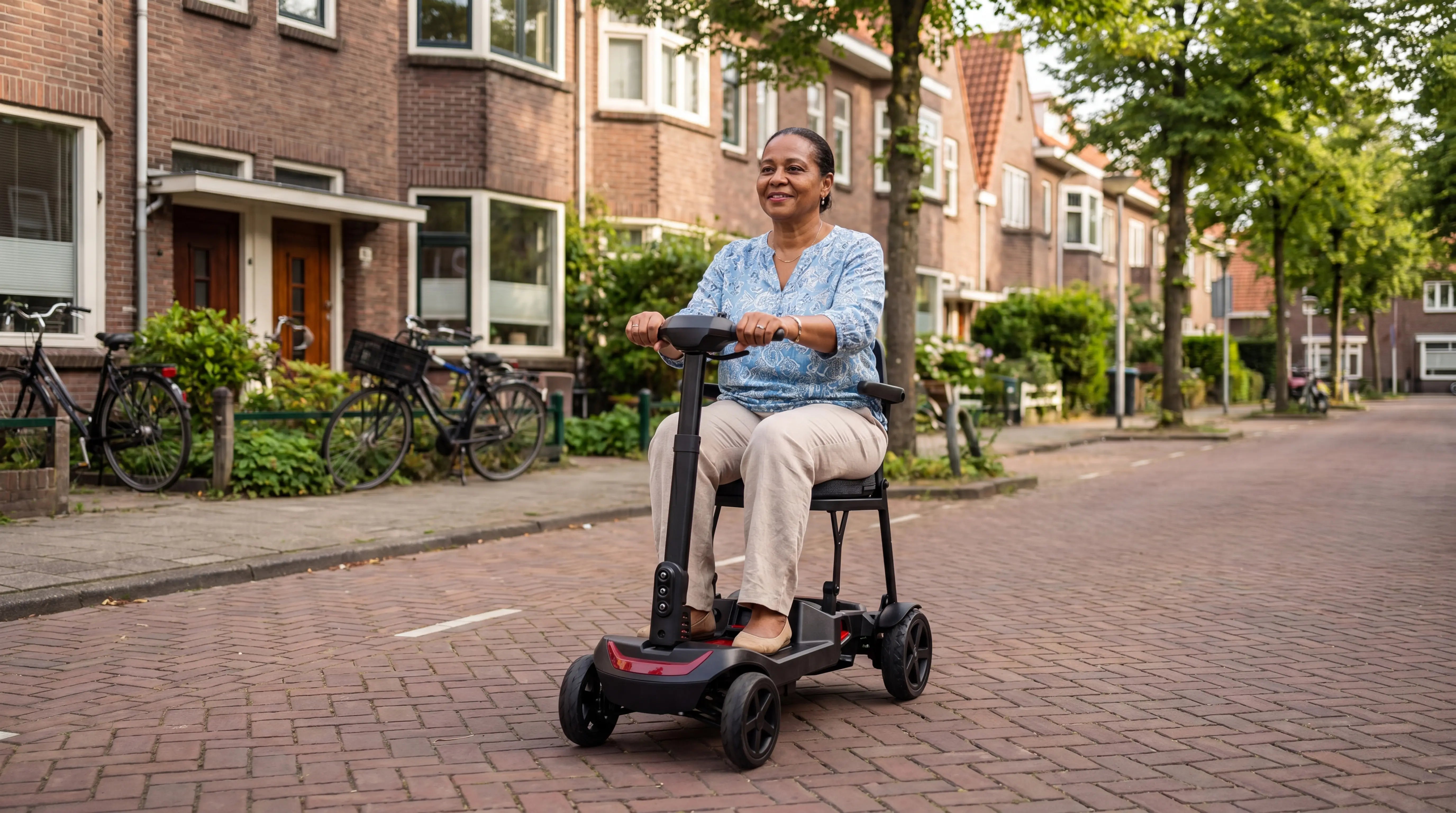
A mobility scooter is a three- or four-wheeled electric vehicle that does not require a driver's license, intended for people with reduced mobility. Legally, a mobility scooter falls under the category of 'disabled vehicle'. You drive at 6, 10, 15, or 25 km/h, depending on the model and the location of use (footpath, cycle path, or road). Third-party liability insurance is mandatory as soon as the vehicle can travel faster than 10 km/h.
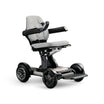
The choice between a fixed or foldable mobility scooter It depends on where you store it. A fixed model offers more comfort and a range of up to 50 kilometers; a foldable one fits in the trunk of an average car and is ideal for travel.
Electric tricycle
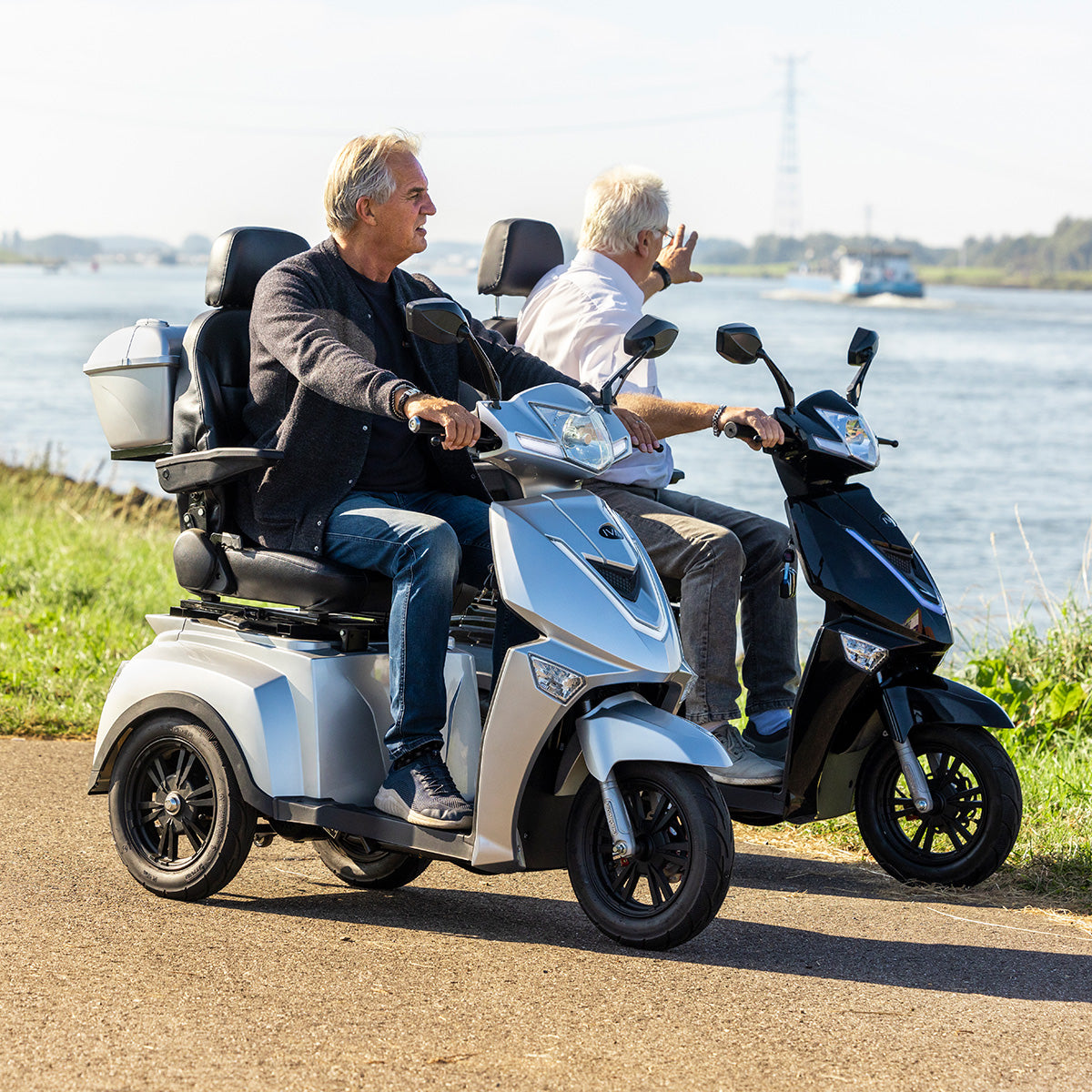
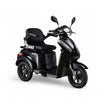
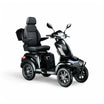
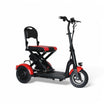
The electric three-wheeler sits between a scooter and a mobility scooter. Three wheels provide stability at a standstill and at low speeds — a major advantage for those who feel insecure on two wheels. Speeds range from 25 km/h (light moped class, no license required) to 45 km/h (scooter class, AM license required). A three-wheeler like the IVA T3 often has a reverse function, spacious storage compartments, and luxury seats — handy for shopping and short trips to the city.
Electric microcar
A microcar is a small, enclosed four-wheeled vehicle with a roof and doors. You drive at a maximum speed of 45 km/h, require an AM or B driving license, and are allowed to enter built-up areas. For those who do not want a car or do not have a car driving license, a microcar offers dry and safe transport. The price is significantly higher than a scooter, but so is the comfort.
If you want to know more about this category, read our guide about the buy electric microcar.
How much will electric driving cost in 2026?
The total cost of electric mobility consists of five components: purchase, energy, maintenance, insurance, and any taxes.For most electric vehicles in the two-wheeler or mobility scooter category, you do not pay road tax; for a microcar or light moped, you pay a low monthly motor vehicle tax.
Acquisition costs in 2026
Prices for new electric vehicles vary widely by category:
- Electric scooter (moped or scooter class): between € 1.795, - and € 3.495, -
- Mobility scooter (compact, foldable): from € 1.495, -
- Mobility scooter (fixed model, longer range): between € 2.495, - and € 4.995, -
- Electric tricycle: between € 2.295, - and € 3.795, -
- Electric microcar: from approx. € 9.000, -
Many dealers offer installment payments or leasing. For the electric scooters in our collection does it apply that you often already for less than € 50, - can drive per month.
Energy costs per kilometer
Electric driving is cheap to use. An e-scooter consumes approximately 2 kWh per 100 kilometers. At an electricity price of € 0,30 per kWh, driving one hundred kilometers costs you € 0,60. That is 0.6 cents per kilometer — a tenth of what a petrol scooter costs. On an annual basis, at 5,000 kilometers, you quickly save compared to petrol. € 300, until € 500, -.
Maintenance and insurance
Electric vehicles have fewer moving parts than petrol scooters. No oil changes, no timing belt, no gearbox. For an electric scooter, count on € 100, until € 150, - annual maintenance at an authorized dealer; for a mobility scooter, this is lower. Third-party liability insurance costs € 8, until € 15, - per month, depending on age, region, and chosen coverage.
Subsidies and schemes
For a mobility scooter, you can apply to your municipality for reimbursement under the Social Support Act (Wmo). Each municipality applies its own conditions. For the business purchase of electric vehicles, tax schemes apply, such as the MIA (Environmental Investment Deduction) and Vamil (accelerated depreciation). The current list can be found on the RVO website.
Advantages and disadvantages of electric mobility
Electric mobility offers clear advantages, but there are also preconditions that you must take into account. An honest assessment beforehand prevents disappointment afterwards.
Advantages
- Low operating costs: Energy and maintenance costs together often cost less than fifty percent of a comparable gasoline vehicle.
- No local emissions: zero CO₂, zero particulate matter, and zero nitrogen oxides while driving.
- Quiet driving experience: no noise from exhaust or engine — pleasant for yourself and those around you.
- Free access to environmental zones: All 29 Dutch environmental zones are accessible without an exemption.
- Easy charging: A standard 230V socket is sufficient; no separate charging station is needed.
- Accelerate quickly: An electric motor delivers full torque instantly — pulling away smoothly at traffic lights.
Disadvantages
- Range limited by temperature: In frost, the practical range can drop by 20 to 30 percent.
- Higher purchase price than petrol: The purchase is more expensive, but often pays for itself within three to four years in operating costs.
- Loading time: A completely empty battery takes 4 to 6 hours to charge — less spontaneous than refueling.
- Limited supply in the second-hand market: The used car market is still young, and residual value is harder to estimate.
For most daily users, the benefits far outweigh the disadvantages, provided you choose the right model for your usage. The next section discusses this.
Which electric mode of transport suits you?
You determine which type of electric vehicle you need in five steps. Go through this checklist before visiting a dealer or ordering online — it saves time, money, and regret.
Step 1: Determine your average daily distance
Calculate how many kilometers you cover per day. Up to 25 kilometers per day, almost any electric scooter will suffice. Between 25 and 50 kilometers, choose a model with a larger battery or a dual battery. Above 50 kilometers per day, a microcar or commuter scooter with a fast-charging function is more sensible.
Step 2: Determine your driver's license category
Do you have an AM, B, or neither driving license? Without a license, you can choose a light moped (25 km/h), mobility scooter (up to 25 km/h), or electric bicycle. With an AM license, you can drive a light moped or light motor vehicle up to 45 km/h. With a B license, you are allowed to drive all the above categories plus the heavier light motor vehicles.
Step 3: Determine stability and comfort
If you feel confident on two wheels, choose a scooter. If you want extra stability, then a three-wheeled scooter Rest at a standstill and low speed. For the elderly or people with balance problems, a mobility scooter or three-wheeler is safer.
Step 4: Determine your storage option
Do you have a shed, garage, or storage room where you can store the vehicle dry and safely, plus charge it? If not, choose a model with a removable battery — which you charge indoors. All models in our E-GO collection have a removable battery.
Step 5: Schedule a test drive
Never order blind. A test drive shows you how the vehicle feels, whether the entry height is correct, and whether you like the seating comfort during longer drives. Ask the dealer about the realistic range in cold weather, the warranty conditions, and the maintenance schedule for the first 1,000 kilometers.
Would you like a quick scan without a dealer visit? Check out our electric scooter collection and the mobility scooter collection — all models show range, speed, license category, and price on one page.
Ready to switch?
In 2026, electric mobility will be not only the sustainable choice but also the practical one. Lower costs per kilometer, access to all low-emission zones, and easy charging via a standard power outlet. Which vehicle suits you depends on your daily distance, driver's license, and stability preferences — not on the hype surrounding a specific brand. Schedule a test drive at an authorized IVA dealer or view the full range of scooters, mobility scooters, and three-wheelers online with clear specifications and prices.
View all electric vehicles from IVA Mobility →
Frequently asked questions about electric mobility
What exactly is electric mobility?
Electric mobility is transportation using vehicles that run entirely on an electric motor and rechargeable battery, without an internal combustion engine. This includes electric cars, e-scooters, mobility scooters, e-bikes, tricycles, and microcars. The key characteristic: there are no local emissions of CO₂, particulate matter, or nitrogen while driving. When charged with green electricity, the total CO₂ balance over the lifespan is significantly more favorable than with petrol or diesel.
Do you need a driver's license for electric transport?
Whether you need a driver's license depends on the speed class of the vehicle.For an electric scooter up to 25 km/h (moped class, blue license plate), you do not need a driving license from the age of 16. For 45 km/h (scooter class, yellow license plate), you need an AM driving license and wearing a helmet is mandatory. You can drive a mobility scooter without a driving license, regardless of the model. For a microcar, you need an AM or B driving license.
What will electric driving cost per kilometer in 2026?
In 2026, electric driving will cost approximately 0.6 to 2 euro cents per kilometer in energy, depending on the vehicle and your electricity tariff. An e-scooter consumes approximately 2 kWh per 100 kilometers; at € 0,30 per kWh that is € 0,60 per hundred kilometers. A petrol scooter costs about 10 to 15 cents per kilometer. On an annual basis, you easily save money at 5,000 kilometers. € 300, until € 500, -.
What is the difference between an e-scooter and an electric scooter?
In Dutch, the terms e-scooter and electric scooter are used interchangeably; both refer to the same vehicle category with an electric motor and license plate. Please note: an 'electric kick scooter' is something different. That is a kick scooter vehicle without a seat, often with handlebars and a board, and it is only permitted on public roads in the Netherlands under strict conditions. For commuting, you use an electric scooter, not a kick scooter.
Are you allowed to enter the low-emission zone with an electric scooter?
Yes, you may enter all 29 Dutch environmental zones with a fully electric scooter without an exemption or fine. This also applies to mobility scooters, electric three-wheelers, and battery-powered microcars. Environmental zones are established to ban petrol and diesel vehicles with high emissions; electric transport is by definition emission-free and falls outside the restrictions. To be sure, check your municipality's current zone regulations, as some cities are expanding the zones.
Which electric transport is suitable for the elderly?
For the elderly, a mobility scooter or electric three-wheeler is often the best choice. Both vehicles offer stability on three or four wheels, do not require a driver's license, and have comfortable seats with armrests. A foldable mobility scooter fits in the car and is ideal for travel or visiting family. For those who can still handle a two-wheeler themselves, the IVA E-GO moped (25 km/h) offers a simple, reliable option. Important: always take a test ride to experience the entry height and controls.
How long does an electric vehicle battery last?
A lithium-ion battery in a modern electric vehicle lasts four to six years under normal use before its capacity drops below 70 percent of its original value. Expressed in charging cycles: approximately 1,000 full charge and discharge cycles. You extend the lifespan by not driving the battery completely empty, not leaving it fully charged in heat, and keeping it charged between 40 and 60 percent during prolonged storage. Using original chargers is essential.
What subsidies are available for electric mobility in the Netherlands?
For mobility scooters, you can apply for reimbursement from your municipality via the Social Support Act (Wmo); conditions vary by region. For the business purchase of electric vehicles, the MIA (Environmental Investment Deduction of up to 45 percent) and the Vamil (accelerated depreciation) apply. Some municipalities offer a scrapping scheme for old, polluting scooters. You can find the current subsidy list and conditions on the RVO website.
How long does it take to charge an electric scooter?
You can fully charge an electric scooter in 4 to 6 hours using a standard 230V socket. With models featuring a fast-charging function, you reach 80 percent capacity within 2 to 3 hours.A removable battery — standard on all IVA E-GO models — can be easily charged indoors without the need to install a charging station. Always use the original charger to avoid damaging the battery cells and to maintain the manufacturer's warranty.
Is an electric scooter safe in traffic?
An electric scooter is just as safe in traffic as a traditional petrol scooter, provided you adhere to the helmet requirement (at 45 km/h) and traffic rules. The quiet riding requires extra alertness around pedestrians and cyclists, who may hear you approaching later. Modern models such as the IVA E-GO series feature standard LED lighting, front disc brakes, and integrated alarm and security systems. Perform the recommended annual maintenance at an authorized dealer to keep brakes and tires in top condition.

Leave a comment
This site is protected by hCaptcha and the hCaptcha Privacy Policy and Terms of Service apply.