

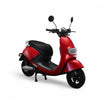
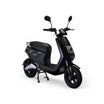
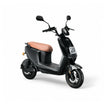
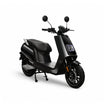
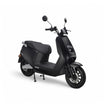
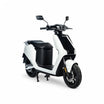
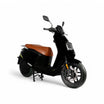
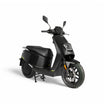
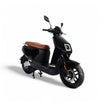
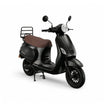
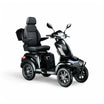
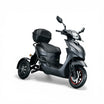
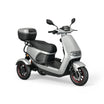

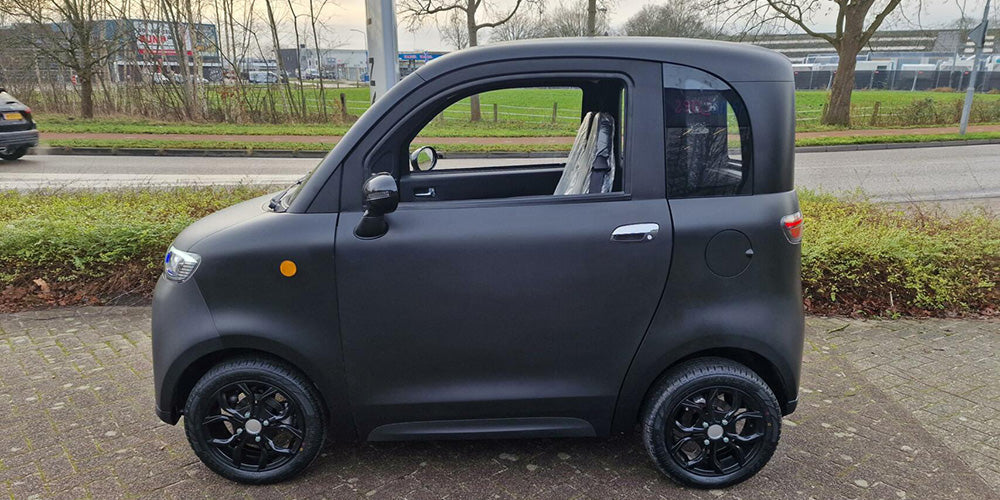
A electric microcar is the growth category in urban mobility: a compact 45 km/h vehicle that you can drive from the age of sixteen with an AM license, that doesn't consume a drop of petrol, and fits perfectly into city traffic. Whether you are too young for a car license, have (temporarily) lost your B license, or are simply looking for a sustainable alternative to a second car — an electric microcar could be the solution. In this guide, you will read how an electric microcar works, what it costs, what rules apply, and how to make the right choice in 2026. We cover, among other things, the IVA moped collection as a practical example.
Table of contents
- 1. What is an electric microcar?
- 2. Are you allowed to drive an electric microcar without a driver's license?
- 3. How much will an electric microcar cost in 2026?
- 4. How does an electric microcar drive in the city?
- 5. Buying an electric microcar: how to make the right choice
- Frequently Asked Questions
Key takeaways
- An electric microcar has a maximum speed of 45 km/h and falls under vehicle category L6e (moped with more than two wheels).
- You need an AM driving licence — not a B car licence — and can get behind the wheel from the age of 16.
- Prices in 2026 range from approximately € 9.500 (entry) to € 18.000 (premium, fully equipped).
- The average range is 80-150 km per battery charge; charging from a standard wall socket takes six to eight hours.
- Moped cars are not allowed on the motorway, but they are permitted within and outside built-up areas (max 45 km/h).
- The IVA Citycar A05 is IVA Mobility's electric microcar, with a leather interior, Android system, and a 72V/100Ah lithium battery.
1. What is an electric microcar?
A electric microcar is a four-wheeled vehicle that legally falls into the same category as a moped: L6e according to European type approval. It weighs a maximum of 425 kilograms (excluding batteries), has a power output of up to 4 kW, and reaches a top speed of 45 km/h. The drive is fully electric via a battery pack — usually a lithium-ion battery of around 72 volts. This distinguishes an electric microcar from petrol versions that run on a small two-cylinder engine.
It looks like a mini-car, but legally it isn't a car. That is precisely the appeal: you get an enclosed, weatherproof cabin with seats, windows, heating, and sometimes air conditioning — but with the accessible legislation of a moped. Many users experience a microcar as "car comfort without a car driver's license".
Difference compared to a microcar or small electric car
The concepts microcar, moped, small electric car and 45 km/h car are often used interchangeably, but do not always refer to the same thing. In colloquial language, a microcar is the same as a moped; every microcar is therefore a moped car. A truly small electric car like a Citroën Ami or Renault Twizy can also fall under the moped category, but there are also light passenger cars (category M1) that are somewhat smaller — these do require a B driving licence.
Why an electric microcar will be popular in 2026
Three developments will accelerate the growth of the electric microcar market in 2026: rising fuel prices, the expansion of environmental zones in Dutch city centers, and the disappearance of traditional 45 km/h petrol vehicles due to stricter emission standards.Many municipalities — including Rotterdam, Amsterdam, and Utrecht — are working on zero-emission zones where only electric vehicles are welcome. An electric microcar automatically complies with this, even in the strictest inner-city regimes.
Moreover, electric microcars are exempt from motor vehicle tax. The combination of low operating costs, weather-resistant comfort, and legal moped status makes the vehicle popular among three groups: young people aged 16 and over, seniors who no longer have a car driving license, and households looking for an affordable second "car" for commuting and shopping.
2. Are you allowed to drive an electric microcar without a driver's license?
No, you are not allowed to drive without a license altogether. But you have no category B driving license necessary — an AM driving license is sufficient. That is precisely why an electric microcar appeals to so many people who otherwise would not be able to get behind the wheel independently.
AM driving license in brief
The AM license is the moped license. You can get it starting from your 16th birthday. The course consists of two parts: a theory exam at the CBR and a practical exam at an accredited driving school. € 40, the practical exam around the € 130. Expect a total amount of, including lessons, € 400 to € 800. Much faster and cheaper than a car driving license, which in 2026 will be smooth € 2.500 to € 3.500 cost.
Anyone who already held a category B driving licence before October 1, 2009, is automatically permitted to drive microcars as well. If you obtained your category B licence after that date, the AM licence is still included as standard — you do not need to do anything extra. Always read the current rules. official central government page about microcars.
Other practical requirements
Your electric microcar must be RDW-approved and have a valid vehicle registration certificate have. The dealer usually arranges this upon delivery. You pay a one-time RDW fee for the license plate and no periodic road tax thereafter. Third-party liability insurance is legally mandatory; comprehensive insurance is optional. An MOT (APK) is not mandatory for microcars, but regular maintenance at an authorized dealer is strongly recommended.
A common mistake: You might think that you are allowed to drive a microcar or passenger car with an AM license. That is incorrect. The AM license grants access exclusively to vehicles in the moped categories (AM moped, AM scooter, AM microcar). If you want to drive a real electric passenger car — a Citroën Ami registered as L7e or a Renault Zoé — then you need a B license.
3. How much will an electric microcar cost in 2026?
A new electric microcar will cost between the in 2026 € 9.500 and € 18.000. That seems like a wide range, but the spread has a logical explanation: the market ranges from basic Asian imports without much comfort to premium European models with leather interiors, LED lighting, and infotainment. What you get for your money varies significantly by price range.
Three price segments
- Entry-level segment (€ 9.500 — € 12.000): Compact two-person version, lead-acid battery or small lithium battery, range 60-90 km. Limited comfort, often only the bare essentials. Examples: entry-level models of Aixam Easy, Microcar M.GO E.
- Mid-segment (€ 12.000 — € 15.000): larger lithium battery (60-80 Ah), range 100-130 km, better insulation, heating, electric windows. Examples: Aixam e-Coupé GTI, Ligier Myli, Casalini Sulky E.
- Premium (€ 15.000 — € 18.000): large 100 Ah lithium battery, range 130-170 km, leather interior, air conditioning, infotainment with Bluetooth, high-quality build. The IVA Citycar A05 falls into this segment, with features including leather seats, an Android system, optional air conditioning, and a 72V/100Ah lithium battery.
How much does an electric microcar cost to use?
The bottom line is that an electric microcar is one of the cheapest ways to travel in the weather. Count on the following fixed annual costs:
- Current: circa € 100 — € 200 per year (at 5,000 km and € 0,30/kWh). A full charge costs around € 1,50.
- Third-party liability insurance: € 200 — € 350 per year (depending on age and region).
- Maintenance: € 150 — € 300 per year. No oil changes, no timing belt — just tires, brakes, and battery check.
- Vehicle ownership tax: € 0. Moped cars are exempt from motor vehicle tax.
You can find a second-hand electric microcar starting from € 5.000, but pay close attention to the battery condition — that determines 60-70% of the actual residual value. A replacement lithium battery costs € 2.000 — € 3.500.
4. How does an electric microcar drive in the city?
An electric microcar is built for the city. With a top speed of 45 km/h, it seamlessly matches the pace of urban traffic, and with dimensions of around 2.6 meters long and 1.4 meters wide, it fits into the tightest parking spaces. Moreover, it is quieter than a petrol scooter and emits no harmful gases. For inner-city trips of a few kilometers, that is a significant advantage.
range and charging
The average range of a modern electric microcar is between 80 and 150 kilometers per battery charge. That is more than enough for most urban users for a few days of driving. The actual range depends on temperature, driving style, load, and heating use in winter. Expect 20-30% less in January than in June.
Charging is done at any standard household socket (230 V). A full charge from empty to full takes six to eight hours. Fast charging is unusual for microcars — the batteries are relatively small and regular overnight charging is sufficient. For a 72V/100Ah lithium battery (such as the one in the IVA Citycar A05), the full charge time is around seven hours. Many users charge once every two to four days.
Parking and environmental zones
A microcar may park anywhere a moped is allowed to park. In practice, you almost always park in a regular parking space — conveniently, it often fits into half-spaces. In environmental zones and zero-emission zones (which will be active in an increasing number of Dutch city centers by 2026), you are fully welcome: an electric microcar produces no exhaust fumes and automatically falls into the highest environmental class.
Comfort and safety
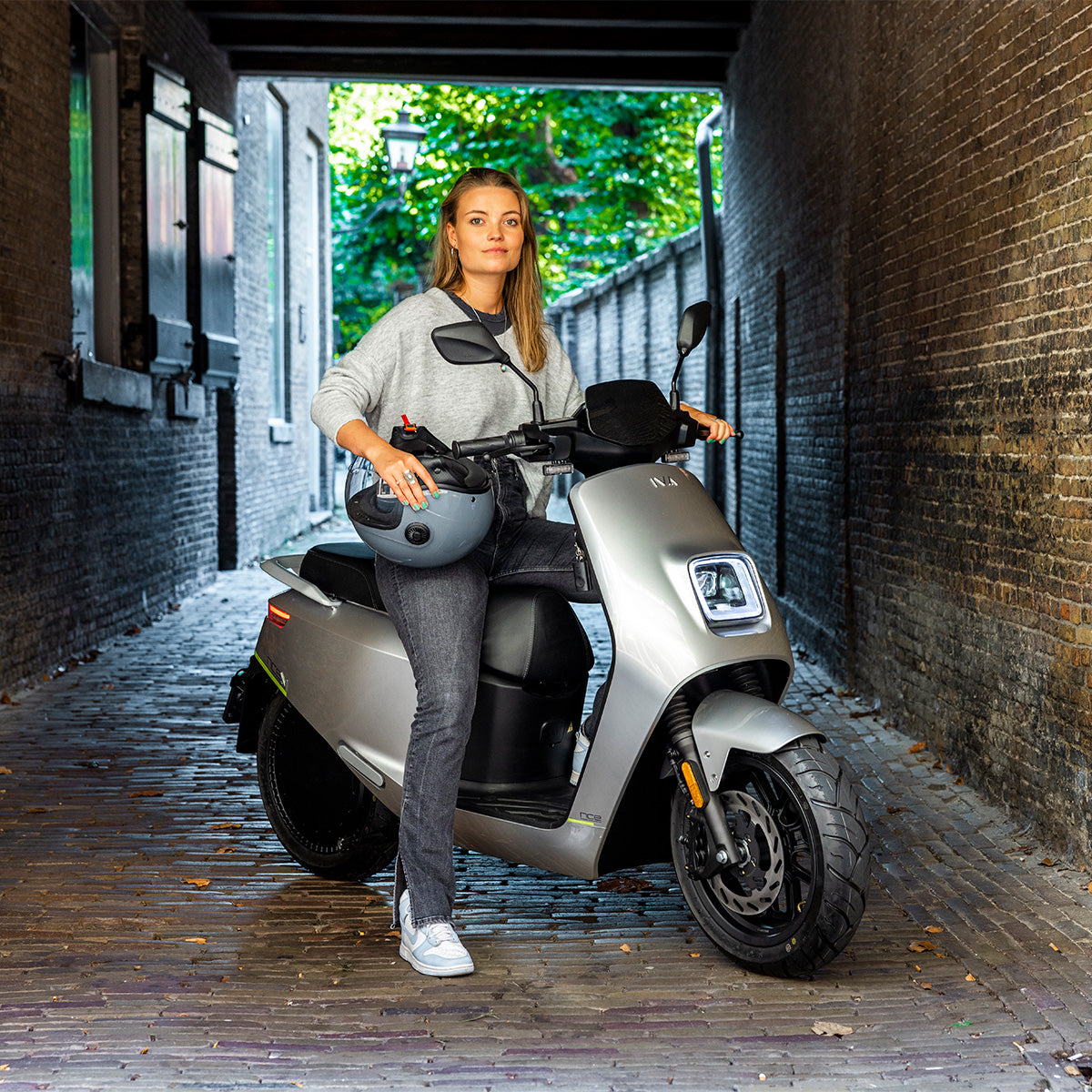
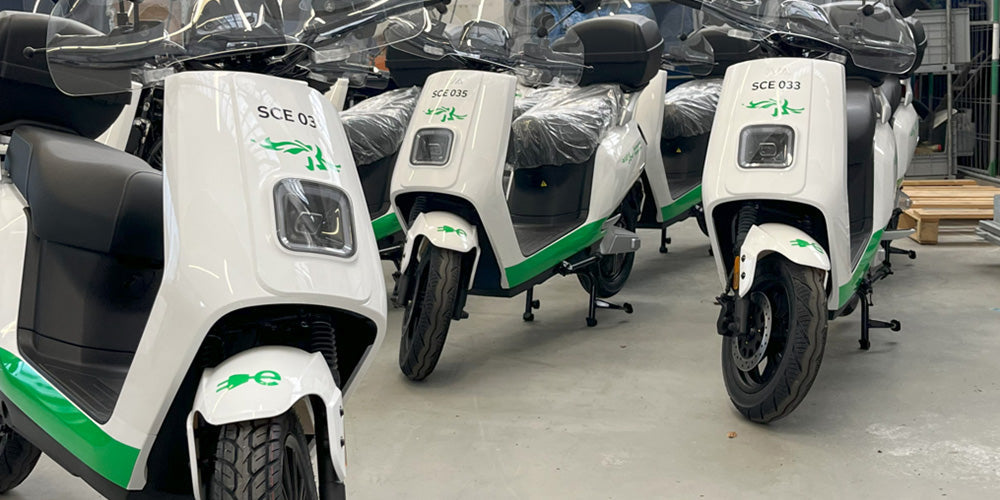
Unlike a scooter, a microcar offers real dryness, warmth, and a seatbelt. Premium models such as the IVA Citycar A05 feature a full metal body (no tubular frame), three-point seatbelts, disc brakes on all four wheels, and LED lighting. Compare that to a wet scooter ride through Rotterdam in November, and you feel the difference immediately. For scooter riders ready for something more weather-resistant, a microcar is a logical next step. IVA's electric scooters Naturally, they remain a fast, agile option for those who enjoy the wind.
5.Buying an electric microcar: how to make the right choice
An electric microcar is a major purchase. You spend between the € 9.500 and € 18.000 Drive and often use the vehicle for five to ten years. Choosing wisely starts with honestly determining what you really need. Go through this five-point check before you go to the dealer.
Checklist: how to choose the right electric microcar
- Determine your daily distance. Add up your commuting kilometers, grocery shopping, and social trips. If you drive less than 40 km/day, an entry-level model is sufficient; if you drive more than 60 km/day, choose at least a mid-range or premium model.
- Choose the battery type carefully. Lead-acid batteries are cheaper to purchase but only last 300-500 charge cycles. A lithium-ion battery, like the one in the IVA Citycar A05, lasts 1,500-2,000 cycles — four to five times longer.
- Pay attention to the build quality. A metal body is safer and more durable than a tubular frame with plastic panels. During a test drive, ask about the body structure and inspect the finish of the seals, door frames, and window edges.
- Test the comfort. A test drive of at least 15 minutes is essential. Pay attention to seating comfort, sound insulation, leg support, field of vision, and control ergonomics. Comfort varies enormously between models, even within the same price range.
- Check the warranty and the dealer network. Ask for a minimum of 2 years manufacturer's warranty on the vehicle and 3-5 years on the battery. A local authorized dealer saves a lot of hassle with maintenance and minor repairs. View VAT rates. dealer locator to find a nearby dealer.
Example: the IVA Citycar A05
As a practical example, let's take the IVA Citycar A05, the premium model from IVA's microcar collection. The A05 is built around a 72V/100Ah lithium-ion battery, providing a charging time of approximately seven hours. Standard features include leather seats, an Android infotainment system with Bluetooth, heating, electric windows, LED lighting, and 13-inch alloy wheels. With dimensions of 2,600 × 1,398 × 1,636 mm, it is one of the more compact models, perfect for inner-city parking spaces.
Important: always check current availability and price on the product page, as assortment and specifications may change. On ivamobility.com/collections/brommobielen view the current selection. Would you like to experience the vehicle live? Visit one of our dealers for a test drive.
When is a microcar not the right choice?
Honest advice is part of the deal. Do you mainly drive long distances (>50 km one way), regularly on highways or often with more than two people plus luggage? Then a microcar is not ideal. A light electric passenger car or a electric scooter might then be a better fit. If you are unsure about the right mobility solution, please contact an IVA advisor — we are happy to help.
Frequently asked questions about an electric microcar
Do you need a driver's license for an electric microcar?
Yes, you need an AM driving licence — the moped licence. A car licence category B is not required. You can obtain the AM licence from the age of 16 via a CBR theory exam and a practical exam at an accredited driving school. Anyone who held a car licence category B before October 1, 2009, is also permitted to drive light motor vehicles without a separate AM licence.
How fast does an electric microcar go?
An electric microcar reaches a legal top speed of 45 km/h. This is identical to the speed of a regular moped and is suitable for city traffic.The speed is limited by the regulations regarding vehicle category L6e and may not be increased without losing type approval.
What is the range of an electric microcar?
The range for modern lithium-ion models is between 80 and 150 kilometers per battery charge. Entry-level models with lead-acid batteries achieve 60-90 km. Temperature, driving style, and the use of heating affect the range: expect 20-30% less in winter than in summer.
Are you allowed to drive a microcar on the highway?
No, you are not allowed to drive a microcar on motorways or expressways. With a maximum speed of 45 km/h, this is practically impossible and prohibited for safety reasons. However, a microcar is permitted on all other public roads, both within and outside built-up areas.
How much will an electric microcar cost in 2026?
A new electric microcar will cost between the in 2026 € 9.500 (entry-level model) and € 18.000 (premium with lithium battery, leather interior and infotainment). Second-hand starts from approx. € 5.000, provided the battery is in good condition. Insurance and electricity costs combined € 300 — € 550 per year.
How long does it take to charge an electric microcar?
A full charge takes six to eight hours at a standard socket (230 V), depending on the battery size. The 72V/100Ah lithium battery in the IVA Citycar A05 is fully charged again in approximately seven hours. Fast charging is uncommon: microcars are usually charged at home overnight using a standard socket.
What is the IVA Citycar A05?
The IVA Citycar A05 is an electric microcar from IVA Mobility, built for urban use. It is equipped with a 72V/100Ah lithium-ion battery, leather interior, Android infotainment system, heating, and LED lighting. With dimensions of 2,600 × 1,398 × 1,636 mm, it is a compact premium model.
Is an electric microcar required to be insured?
Yes, third-party liability insurance is legally required for every microcar — electric or not. The annual premium is between € 200 and € 350, depending on the driver's age, region of residence, and chosen coverage. Comprehensive or limited comprehensive is optional and costs € 100 — € 250 extra per year.
Is a 16-year-old allowed to drive an electric microcar?
Yes, from the age of 16 you may drive an electric microcar provided you have a valid AM driving licence. This makes the microcar an attractive and weather-resistant alternative to a scooter for young people, especially during rainy seasons or for longer commutes to and from school.
What is the difference between a light moped and a microcar?
In practice, the terms are used interchangeably — in Dutch usage, a microcar is the same as a moped: a 45 km/h vehicle in vehicle category L6e. A true small passenger car (category M1) looks like a minicar but requires a B driving license and is allowed to drive faster than 45 km/h.


2 reactions
Franck
Ik heb de a05 nu drie weken maar de accu blijft altijd op 100% staan , ik moet het maar via de kilometers bijhouden wordt gezegd (niet door ivamobility.com)
En hoort er geen onderhoud/handleidings boekje bij te zitten.
Verder al een kleine 400km gereden zonder problemen.
Leen durieux
Januari gekocht hooguit 2 weken mee gereden monteur geweest 28 april en nog niet goed stop bij 65% en nu ook als ik hem wil pakken staan deuren steeds open
Leave a comment
This site is protected by hCaptcha and the hCaptcha Privacy Policy and Terms of Service apply.