

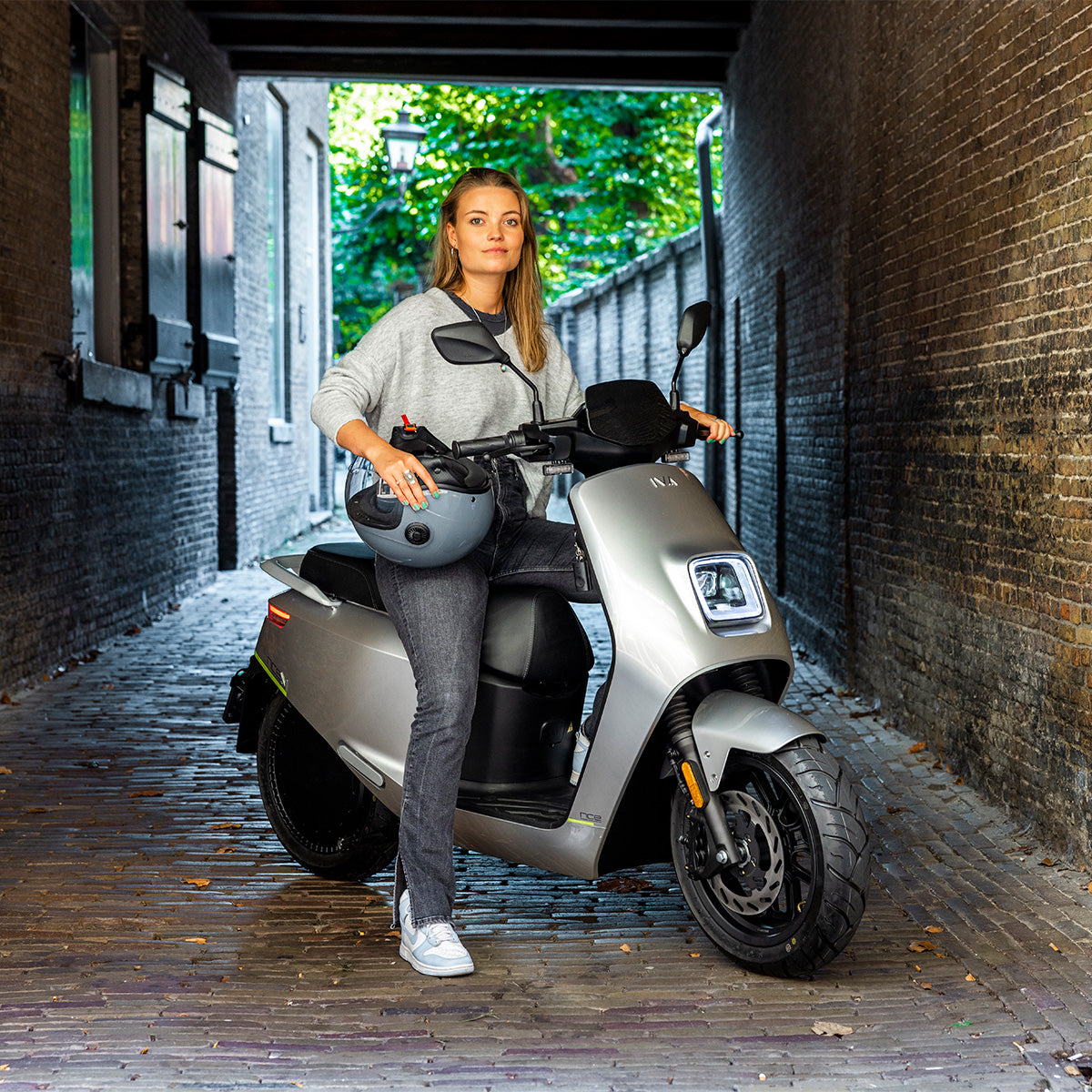
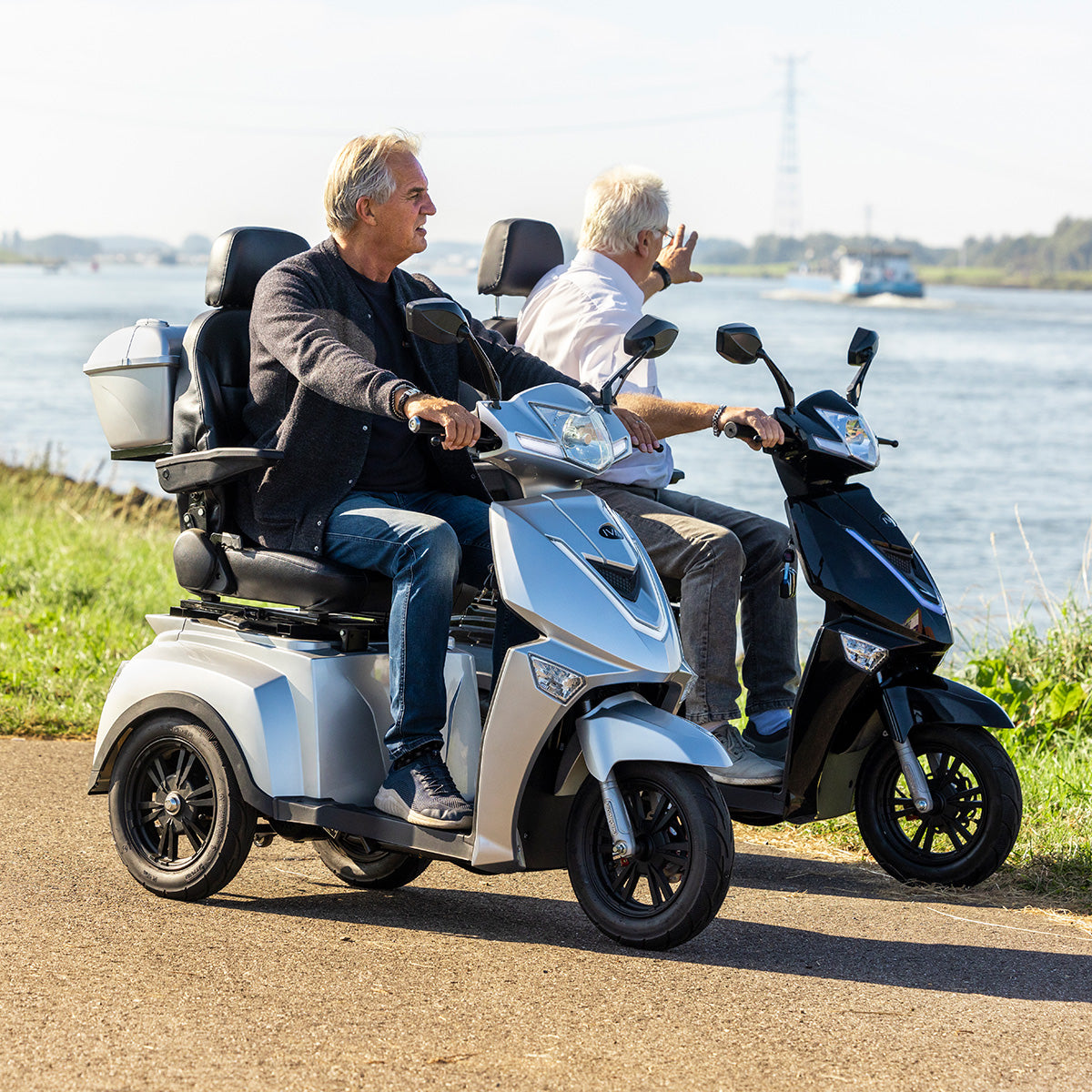
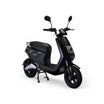
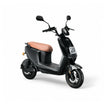
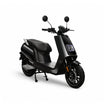
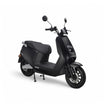
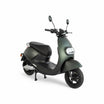
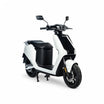
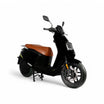
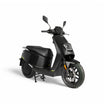
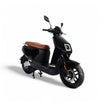
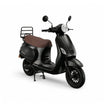
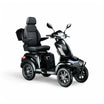
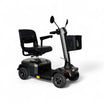
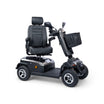
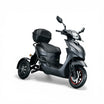
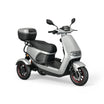

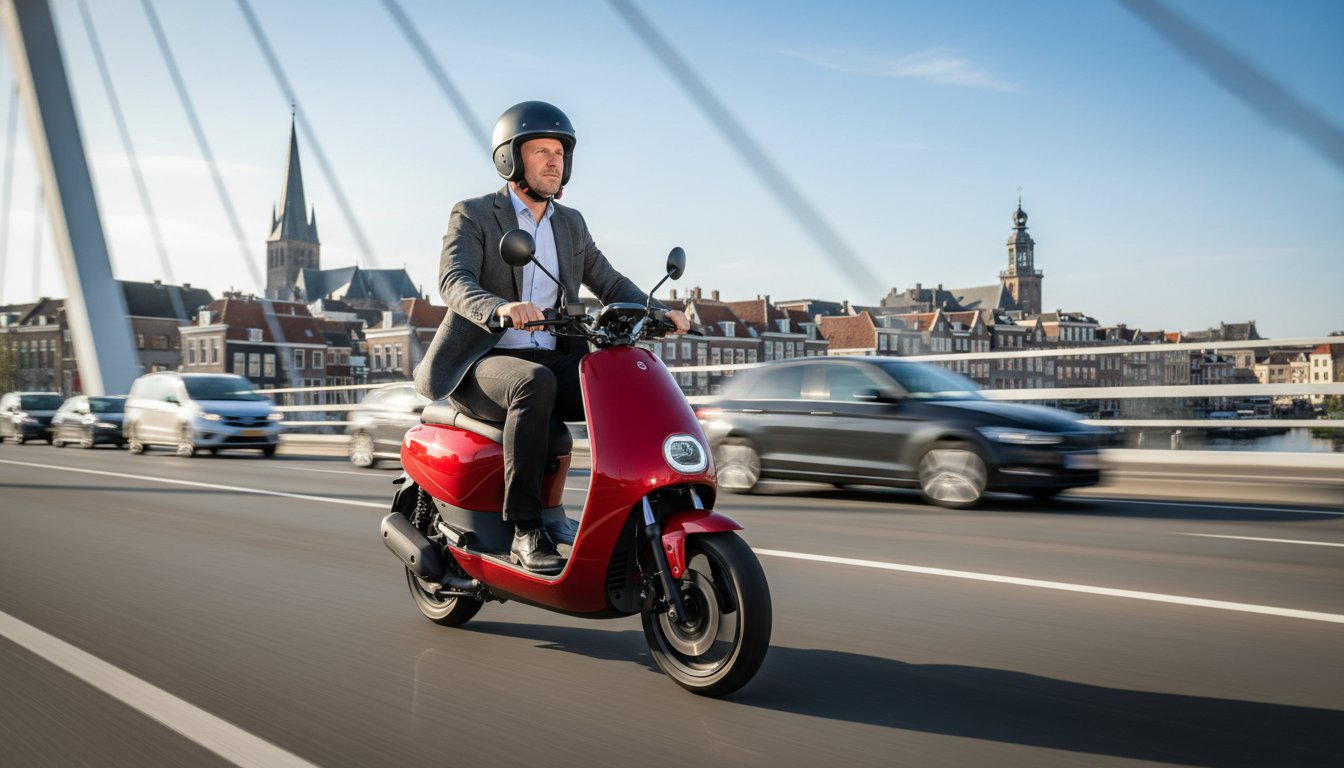
A electric motor scooter combines the comfort of a scooter with the power of a light motorcycle. You ride silently, with zero emissions and instant acceleration — and in 2026, that will no longer be a niche in the Netherlands, but a serious alternative to the car in and around the city. Traffic jams along the A2, A12, and A16 are getting longer, and fuel prices remain structurally above € 1,95 per liter and environmental zones are being tightened in more and more municipalities. An electric motor scooter cuts through these problems: riding without traffic jams, free parking on the sidewalk (where permitted), and no access restrictions in environmental zones.
In this guide, you will learn exactly what an electric motor scooter is, which license you need, how the Total Cost of Ownership compares to petrol, and which models will matter in 2026. By the end, you will know if an electric motor scooter suits you and which segment best fits your daily commutes. Read through in 8 minutes — or jump straight to the section you need.
Key points
- An electric motor scooter is an L3e vehicle: minimum design speed of 60 km/h, motorway access, and a minimum A1 driving licence.
- The market volume for "electric motor scooter" in the Netherlands is 600 search queries per month and is growing steadily towards 2026.
- The cost per kilometer is around € 0,02 — approximately 75% cheaper than a petrol scooter running on Euro 95.
- Maintenance costs on average € 150 to € 250 per year; no oil, spark plugs, or timing belt.
- For business use, MIA and Vamil offer up to 27% net tax benefit above € 2.500 investment.
- IVA Mobility has been supplying electric motor scooters since 2009, with more than 200 Benelux dealers for service and maintenance.
Table of contents
- 1. What is an electric motor scooter?
- 2. Which driver's license do you need?
- 3. Electric vs. petrol: costs and performance
- 4. The best electric motor scooters in 2026
- 5. Buying, leasing, or renting: the smart purchasing step-by-step plan
- FAQ — Frequently Asked Questions
1. What is an electric motor scooter?
An electric motor scooter is a two-wheeled vehicle in the European vehicle category L3e, powered by an electric motor instead of an internal combustion engine. It combines the low step-through frame and automatic transmission of a scooter with the power and design speed of a light motorcycle — at least 60 km/h, often 80 to 130 km/h in practice. This makes it permitted on motorways.
The difference compared to a regular electric scooter (L1e) lies in the power, speed, and driving license category. A light moped is limited to 25 km/h, a light moped to 45 km/h — both fall under L1e and require only an AM driving license. An electric motor scooter falls under L3e and requires at least an A1 driving license.
Categories listed
- L1e (moped/scooter) — up to 45 km/h, AM driving license, yellow or blue license plate.
- L3e-A1 (light motorcycle/motor scooter) — up to 11 kW power, A1 driving licence from age 18.
- L3e-A2 (medium-duty engine) — up to 35 kW power, A2 driving license from age 20.
- L3e-A (heavy engine) — unlimited power, A license from age 24 (or 22 via the step method).
The L category your vehicle receives is stated on the registration certificate. Are you unsure about your registration? The The RDW states on its website a clear breakdown per type and refers to the correct driving licence category.
Why the electric variant will break through in 2026
Three developments are accelerating the transition. One: petrol scooters will be banned from environmental zones in 27 Dutch municipalities starting in 2027 — an electric vehicle remains welcome. Two: in 2026, lithium-ion batteries will have a price per kWh that is 60% lower than in 2018, bringing the purchase price of an electric motor scooter increasingly closer to that of the petrol variant. Three: the convenience of charging at home (4 to 7 hours on a standard socket) is considered more important by 78% of Dutch commuters than visiting a petrol station. Consequently, the electric motor scooter is no longer an experiment, but a logical choice.
What distinguishes an electric motor scooter from an electric motorcycle
An electric motorcycle (Honda WN7, Zero SR/F, LiveWire One) has a sport or touring frame, footrests behind the pegs, and is aimed at pure motorcyclists. An electric motor scooter has a low step-through frame, the feet rest on a flat floor at the front, and it is optimized for urban and commuting use. The drive is electric in both cases, but the ergonomics differ significantly. For commuting and shopping, you almost always choose the motor scooter form.
2. What driver's license do you need for an electric motor scooter?
For an electric motor scooter, you need at least an A1 driving licence. Which A category exactly depends on the power of the vehicle. A car driving licence (B) is not sufficient, not even for electric variants — as of January 19, 2013, that exception has been abolished.
A1 — the entry level (from 18 years old)
The A1 driving licence applies to motor scooters with a continuous power output of up to 11 kW and a power-to-weight ratio of a maximum of 0.1 kW/kg. In practice, this covers all urban electric motor scooters with a top speed of up to approximately 100 km/h. The exam consists of theory, vehicle control (AVB), and participation in traffic (AVD). Count on € 1.850 to € 2.350 for the entire process and an average processing time of five months in 2026 due to congestion at the CBR. The official requirements are on the website of the CBR.
A2 — medium difficulty (from 20 years old)
The A2 license applies to motor scooters up to 35 kW. This places you in the segment of premium e-motor scooters such as the BMW CE 04 and sturdier models that can comfortably maintain 120 km/h on the motorway. If you have already held an A1 license for two years, a shortened practical transition is sufficient.
A — unlimited (from age 24 or via the step method)
The full A driving license grants access to all power classes. For an electric motor scooter, this is rarely necessary: most models fall well within the A2 limit.
What about an electric motor scooter without a driver's license?
That does not exist. However, with an AM driving license you can ride an electric moped or scooter (L1e), like ours. electric scooters from IVA in the E-GO S2 or S4 line. From L3e onwards, a Class A driving licence is always mandatory.
3. Electric vs. petrol: costs, performance and environment
In 2026, the choice between an electric and a petrol motor scooter is primarily a calculation. Over a five-year usage period, the electric variant wins on almost every financial point — although the purchase price is often € 500 to € 1.200 higher.
Costs per kilometer
A fuel-efficient petrol scooter consumes 2.5 liters per 100 km. At € 2,05 That costs per liter of Euro 95 € 5,13. An electric motor scooter consumes an average of 3.5 kWh per 100 km. Against € 0,35 per kWh that is € 1,23 — a difference of € 3,90 per 100 km. At 10,000 km per year, you save € 390 on fuel alone.
Maintenance costs
An electric motor has several moving parts.An internal combustion engine has hundreds of them. The result: no oil changes, no spark plugs, no air filter, no timing belt. Count on € 150 to € 250 annual maintenance for an electric motor scooter, against € 350 to € 500 for a petrol variant. Tires, brake pads, and battery diagnostics remain — nothing more.
Total Cost of Ownership over 5 years
A calculation example for 10,000 km/year over 5 years:
- Petrol motor scooter: purchase € 4.500 + fuel € 2.565 + maintenance € 2.000 + Road Tax € 700 = € 9.765.
- Electric motor scooter: purchase € 5.500 + current € 615 + maintenance € 1.000 + Road Tax € 0 (exempt) = € 7.115.
The difference: € 2.650 advantage of electric. The payback period on the higher purchase price is around 22 months.
Fiscal in 2026
Electric motors are exempt from BPM and motor vehicle tax (MRB) until at least the end of 2026. For business buyers, MIA and Vamil apply; up to 27% net tax benefit above € 2.500 investment. You can find current MIA codes in the RVO Environmental List — ask your dealer or accountant for confirmation before purchasing.
Performance
The electric variant also wins on riding characteristics. Instant torque from zero rpm makes accelerating at traffic lights faster than with a comparable 125cc petrol scooter. Riding is quiet and vibration-free, which demonstrably reduces mental strain during daily commuting. However, the range is a point of concern: at temperatures below 7°C, capacity drops by 20% to 30%. Keep this in mind for winter use.
Conclusion section
For those who drive more than 5,000 km per year and can charge the motor scooter at home during the day or night, the electric variant will be the smarter choice in 2026, both financially and practically.
4. The best electric motor scooters in 2026
The market can be divided into three distinct segments: city-ready models up to 45 km/h (technically L1e but colloquially also called "motor scooters"), provincial models up to 80 km/h, and highway-ready models from 90 km/h. Below is an overview of the models that score best in 2026 on the combination of price, quality, and service network in the Netherlands.
Top 5 electric motor scooters for the Dutch market
- IVA E-GO S5 — 45 km/h, removable 60V lithium battery, range 60–80 km, A1 or AM variant available. Strong in urban driving and commuting up to 20 km. From approx. € 2.099.
- IVA NCE Pro — 100 km/h top speed, 72V architecture with LG cells, range 100–140 km. Suitable for motorway commuting and long journeys. A1 driving licence required. From approx. € 4.499.
- BMW CE 04 — premium L3e with 31 kW (A2), top speed 120 km/h, range approx. 130 km. Advanced ABS and traction control, higher price range starting from € 13.000.
- Silence S01 — Spanish manufacturer, 9 kW, top speed 100 km/h, remarkable removable "trolley battery" on wheels. From approx. € 7.500.
- NIU MQi GT Evo — popular urban L1e/L3e intermediate form, 5 kW, top speed 70 km/h, strong smartphone integration. From approx. € 4.200.
What IVA results in
IVA Mobility has been supplying e-mobility in the Benelux since 2009. The E-GO S5 and NCE Pro are the two models that best suit the electric motor scooter seeker: fast for the city and ready for the highway, respectively.Both models use Bosch drivetrains and LG or Samsung battery cells, have an extensive dealer network (200+ Benelux dealers), and an up-to-date parts warehouse in Dordrecht. This reduces waiting time during service. Read more about the background on the about IVA page.
Which segment suits you?
- Daily 5–15 km city rides → 45 km/h segment (IVA E-GO S5, NIU MQi).
- Provincial commute 15–30 km → 70–90 km/h segment (Silence S01, light NCE variant).
- Highway commute 30+ km → 100+ km/h segment (IVA NCE Pro, BMW CE 04).
5. Buying, leasing, or renting: the smart purchasing step-by-step plan
To make the right choice, you go through five steps in 2026. Do not skip any step — the test drive, in particular, prevents costly corrections later on.
Step 1 — Determine your usage profile
Write down: average daily distance, desired top speed, number of passengers, storage needs, and charging location (home, office, public). These five answers determine 80% of the model choice.
Step 2 — Check license plate and insurance
An electric motor scooter has a yellow L3e license plate. Insurance is available for third-party liability, limited third-party liability, or comprehensive; premiums for electric variants are on average 12% lower than for petrol models due to a lower risk of theft (built-in GPS) and lower maintenance claims. Read how to applies for scooter license plate in our step-by-step guide.
Step 3 — Schedule a test drive
A test ride of at least 20 minutes on mixed terrain (city, 50 km/h road, possibly country road) reveals the ergonomics. Pay attention to seat height (760–810 mm for most riders), mirror reach, dashboard readability, and weight distribution at a standstill. A IVA dealer near you arranges this free of charge.
Step 4 — Choose your financing method
- Buy: Lowest total price, maximum ownership. Suitable for those who want to keep the vehicle for 4+ years.
- Operational lease: Fixed monthly payment, maintenance and insurance included. Suitable for business drivers and short usage periods (2–3 years).
- Financial lease: Combines ownership with investment diversification. Suitable for freelancers and SMEs with VAT deduction.
- Rent: only useful for occasional use (max 30 days per year).
Step 5 — Utilize subsidies and schemes
For private individuals, several municipalities (Amsterdam, The Hague, Rotterdam, Utrecht) offer scrapping or trade-in premiums of € 400 to € 1.200 when handing in an old petrol scooter. For business purposes, MIA/Vamil applies via the RVO. Always combine: they are not mutually exclusive.
Purchasing step-by-step plan at a glance
The step-by-step plan in 30 seconds: profile → license plate/insurance → test drive → financing method → subsidy. Done.
Would you like to broaden your search to the full e-scooter range? Our complete buying guide for electric scooters also covers the L1e segments (mustache and moped).
Frequently asked questions about the electric motor scooter
Are you allowed to ride an electric motor scooter on the highway?
Yes. An electric motor scooter is allowed on the motorway as soon as the design speed is at least 60 km/h and the vehicle is registered in the L3e category. In practice, you want at least 11 kW of power to keep up smoothly with other traffic. For this, you need a valid motorcycle license (at least A1) and a yellow license plate.
What driver's license do you need for an 11 kW electric motor scooter?
For an electric motor scooter up to 11 kW, you need a category A1 driving licence. You can obtain this licence from the age of 18. It consists of a theory exam, the vehicle control exam (AVB), and the road participation exam (AVD). A car driving licence (B) is not sufficient, not even for electric variants.
Which electric motor scooter is the best in 2026?
That depends on your usage. For city rides up to 45 km/h, the IVA E-GO S5 is the favorite due to its removable lithium battery and low maintenance costs. If you aim for highway speeds, you will end up with the IVA NCE Pro or similar 72V models with a top speed of around 100 km/h. To make the best choice, first set your daily distance and desired top speed.
Can you ride an electric motor scooter with a B driving license?
No. Since January 19, 2013, the Category B driving licence is no longer valid for motorcycles or motor scooters in the L3e category. You need at least an A1 driving licence. For lighter e-scooters in the light moped or scooter class (category L1e), an AM driving licence is sufficient.
How long does the battery of an electric motor scooter last?
A modern lithium-ion battery in an electric motor scooter lasts 1,000 to 1,500 full charge cycles before the capacity drops below 80%. With average use, that is 7 to 9 years. Avoid deep discharges to 0% and preferably charge between 20% and 80% — this demonstrably extends the lifespan.
How far can you drive on a single charge with an electric motor scooter?
Depending on the model and driving style, you can achieve 60 to 140 kilometers on a single full charge. City models at around 45 km/h typically manage 70–90 km. Highway-ready models with larger batteries (3 to 4 kWh) reach approximately 140 km. At temperatures below 7 °C, the range decreases by 20–30%.
What are the maintenance costs of an electric motor scooter?
Count on € 150 to € 250 per year in maintenance. An electric motor scooter has no engine oil, spark plugs, or timing belt; the work is limited to tires, brake pads, battery diagnostics, and software updates. That is, on average, 45 to 65 percent cheaper than maintenance on a gasoline variant.
Can you lease an electric motor scooter for business purposes with MIA/Vamil benefits?
Yes. Business buyers will still benefit from the Environmental Investment Deduction (MIA) and the Accelerated Depreciation for Environmental Investments (Vamil) in 2026. The net tax benefit can amount to around 27% of the investment amount above € 2.500. Ask your dealer or accountant for the current MIA codes for electric motor scooters.
Can you charge an electric motor scooter using a regular wall socket?
Yes. Every electric motor scooter charges at a standard 230V socket using the supplied charging cable. A full charge takes 4 to 7 hours, depending on the battery capacity. Many models have a removable battery, so you can charge indoors or at the office without having to look for a charging point outside.
What is the difference between an electric motor scooter and a regular electric scooter?
A standard electric scooter (category L1e) is limited to 25 or 45 km/h and falls under moped or scooter regulations. An electric motor scooter (category L3e) has a higher top speed (from 60 km/h to approximately 130 km/h), larger wheels, ABS, and requires at least an A1 driving license. In return, you get motorway access and significantly more riding comfort on longer journeys.
The next step
In 2026, the electric motor scooter will no longer be a thing of the future, but the smartest choice for those who want to go beyond the city limits.Lower cost per kilometer, exemption from road tax, unrestricted traffic in low-emission zones, and a maintenance regime that costs only a fraction of a petrol variant. Do one thing this week: book a test drive at a specialized dealer and take it for a spin. Ten minutes in the saddle tells more than a hundred spec sheets.
View all electric scooters and motor scooters from IVA or find an IVA dealer near you for a no-obligation test drive.


Leave a comment
This site is protected by hCaptcha and the hCaptcha Privacy Policy and Terms of Service apply.