

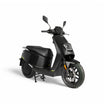
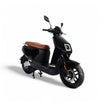
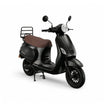
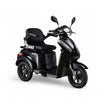
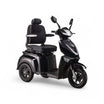
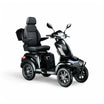

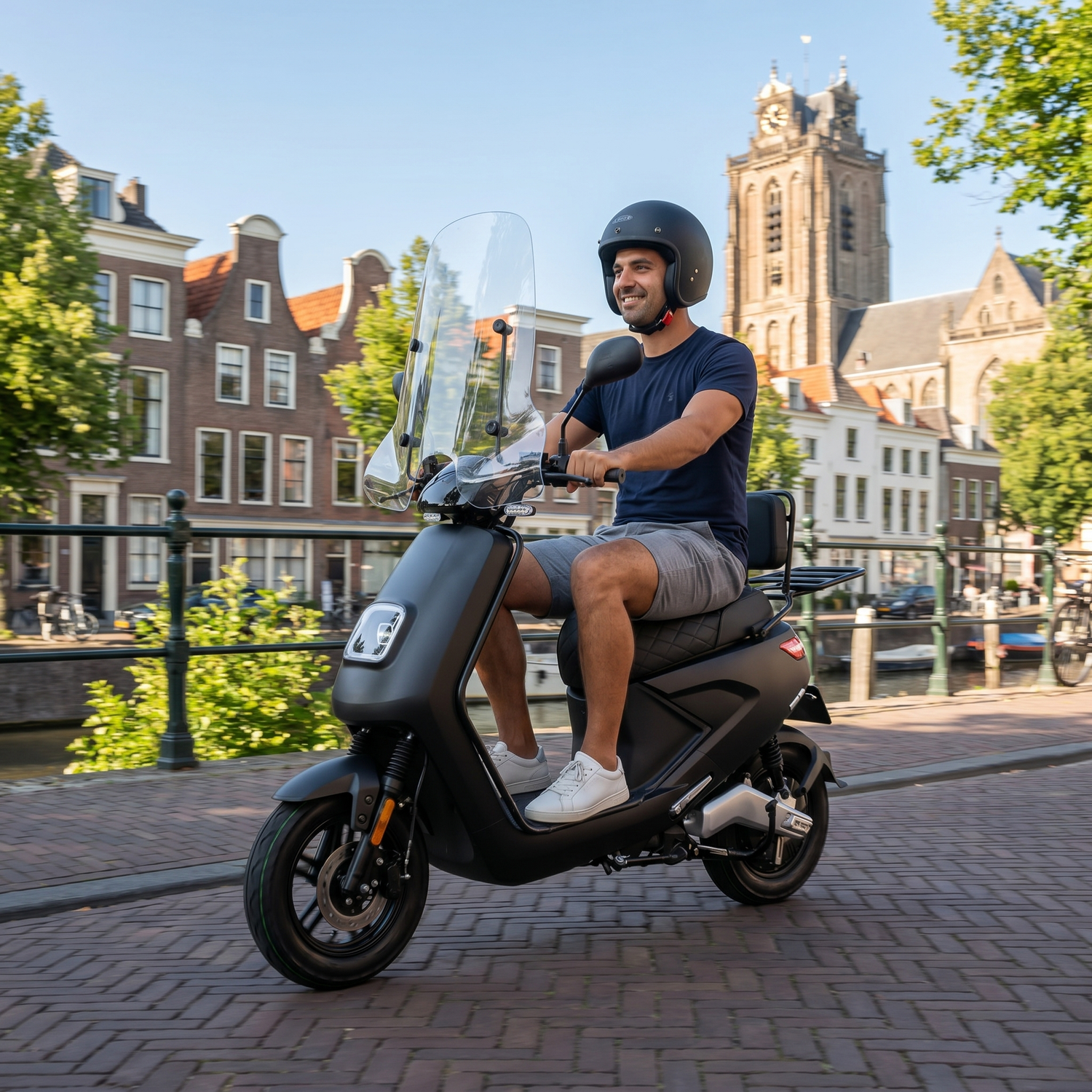
A electric scooter is the most logical choice for urban traffic in 2026: quieter, cleaner and average €0,02 per kilometer of energy compared to €0,11 for petrol. Yet every purchasing decision quickly gets lost in a fog of terms — BLDC, BMS, Wh per kilometer, AM license, blue or yellow license plate. What do you really need to know before you put down your money?
This guide explains the whole puzzle: the technical workings of an electric scooter, what it will realistically cost in five years, the rules that apply per type, and how to choose the right model in five steps. No jargon without explanation, no sales talk — just what you need to make an informed decision today.
Table of contents
- Key points
- 1. What is an electric scooter? (definition + types)
- 2. The technology: motor, battery, controller and brakes
- 3. How much does an electric scooter cost? Purchase and TCO
- 4. Rules, driving licence and insurance by type
- 5. Choosing the right electric scooter: 5-step plan
- Frequently Asked Questions
Key points
- An electric scooter drives for approximately €0,02 per kilometer on electricity — about 80% cheaper than gasoline.
- In the Netherlands, there are two main types: the moped (25 km/h, blue license plate) and the moped (45 km/h, yellow license plate). For both, an AM driving license and a helmet are mandatory.
- The battery accounts for 30 to 50% of the price. Expect a lifespan of 800 to 1,200 load cycles before the capacity drops below 80% — that is 5 to 7 years with daily use.
- Realistic range in the Netherlands: 40-70 km for city models, 70-120 km for models with a double battery.
- Expected €1.500 to €4.500 for a new electric scooter, depending on type, battery, and build quality.
- The greatest cost savings are not in electricity but in maintenance: no oil, no V-belt, no spark plug — average €200 to €300 less per year than gasoline.
1. What is an electric scooter? (definition + types)
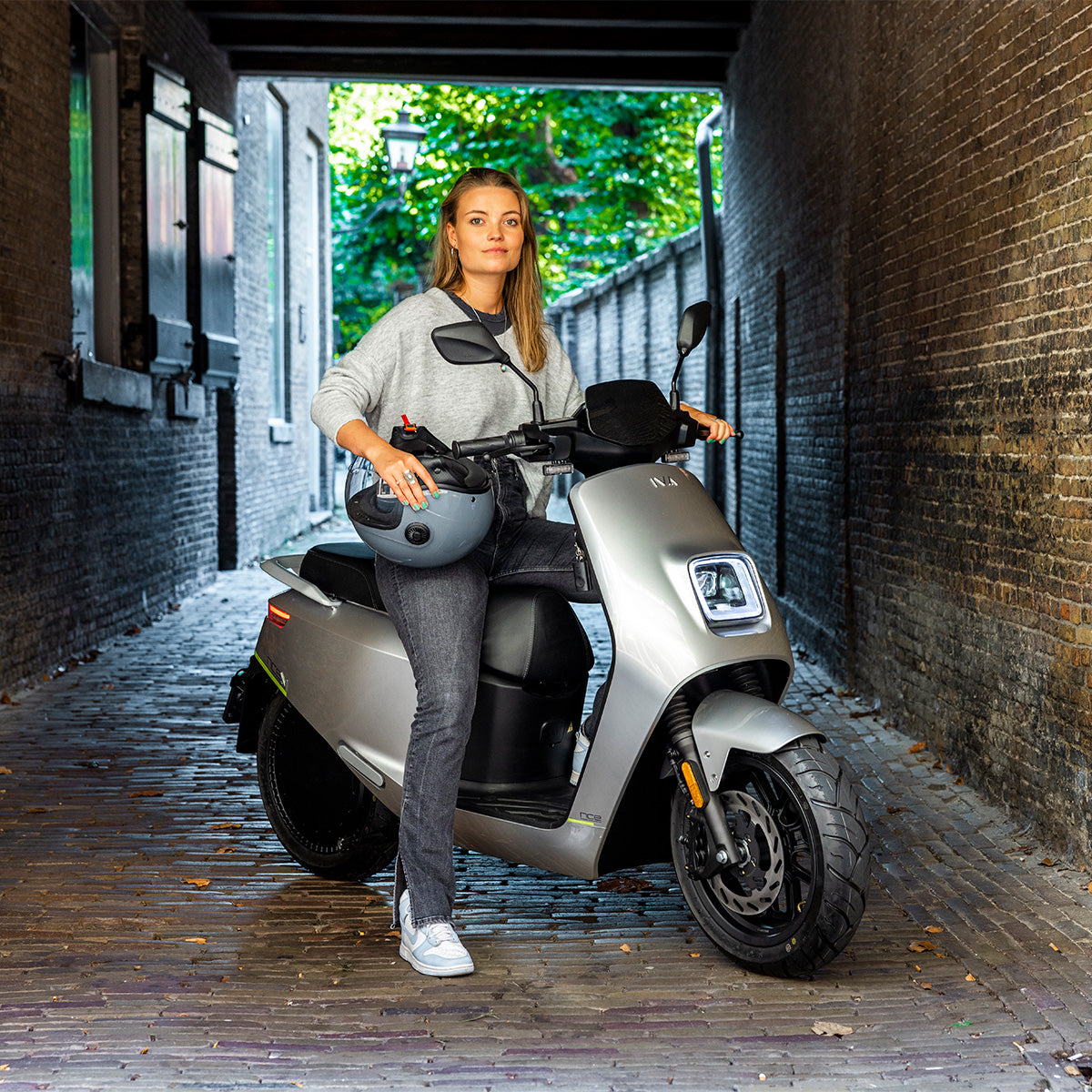
An electric scooter is a two-wheeled motorized vehicle with an electric motor and a rechargeable lithium-ion battery instead of an internal combustion engine and petrol tank. It falls under the same traffic laws as a regular scooter — so it requires a license plate, insurance, a helmet, and a driver's license.
In the Netherlands, the term "electric scooter" is sometimes confused with an electric kick scooter (an upright vehicle on two small wheels). This article deals only with the seated variant: a full-fledged scooter used for commuting, shopping, or delivery work.
Moped, scooter, or light motor?
The Netherlands has three electric vehicles that resemble scooters. The difference determines which rules apply, which driver's license you need, and where you are allowed to drive.
- Electric moped (25 km/h): Blue license plate, AM driving license, helmet requirement (since 2023). Allowed on bike paths in most situations; soon no longer permitted in an increasing number of cities. Popular for short city rides.
- Electric moped (45 km/h): Yellow license plate, AM driving license, helmet required. Drives on the road (or cycle path outside built-up areas). Suitable for commuting over 10 km.
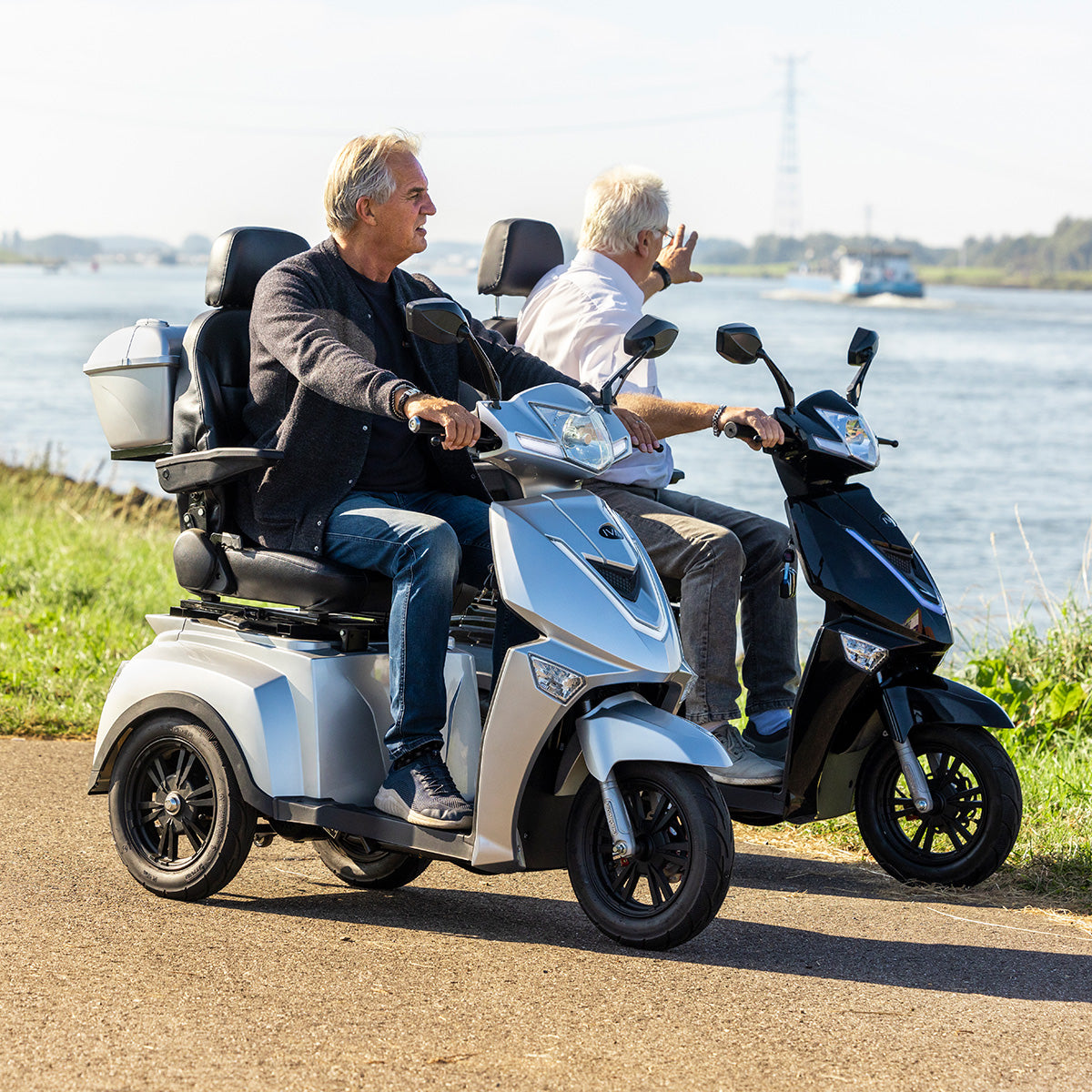
- Electric microcar (45 km/h, on 3 or 4 wheels): A covered vehicle requiring registration and an AM driving license. Not a scooter in the sense of this guide, but a popular alternative for those who want to stay dry all year round.
By 2026, all three categories will be considered a full-fledged alternative to the petrol scooter. The majority of models sold fall into the moped class, because 45 km/h is a comfortable riding speed in urban traffic and the range hardly decreases at that speed.
Why the transition accelerates in 2026
Three developments are pushing the market towards electric. First, many Dutch cities have environmental zones that are phasing out petrol-powered mopeds and scooters (model year 2010 or older) from the city centre. Second, the price of an electric scooter has fallen by approximately 20% since 2022 due to economies of scale in the production of lithium-ion batteries. Third, fuel costs are rising: a litre of petrol will cost around the in 2026 €2,15, while a fully charged electric scooter battery for about €0,60 charges via mains.
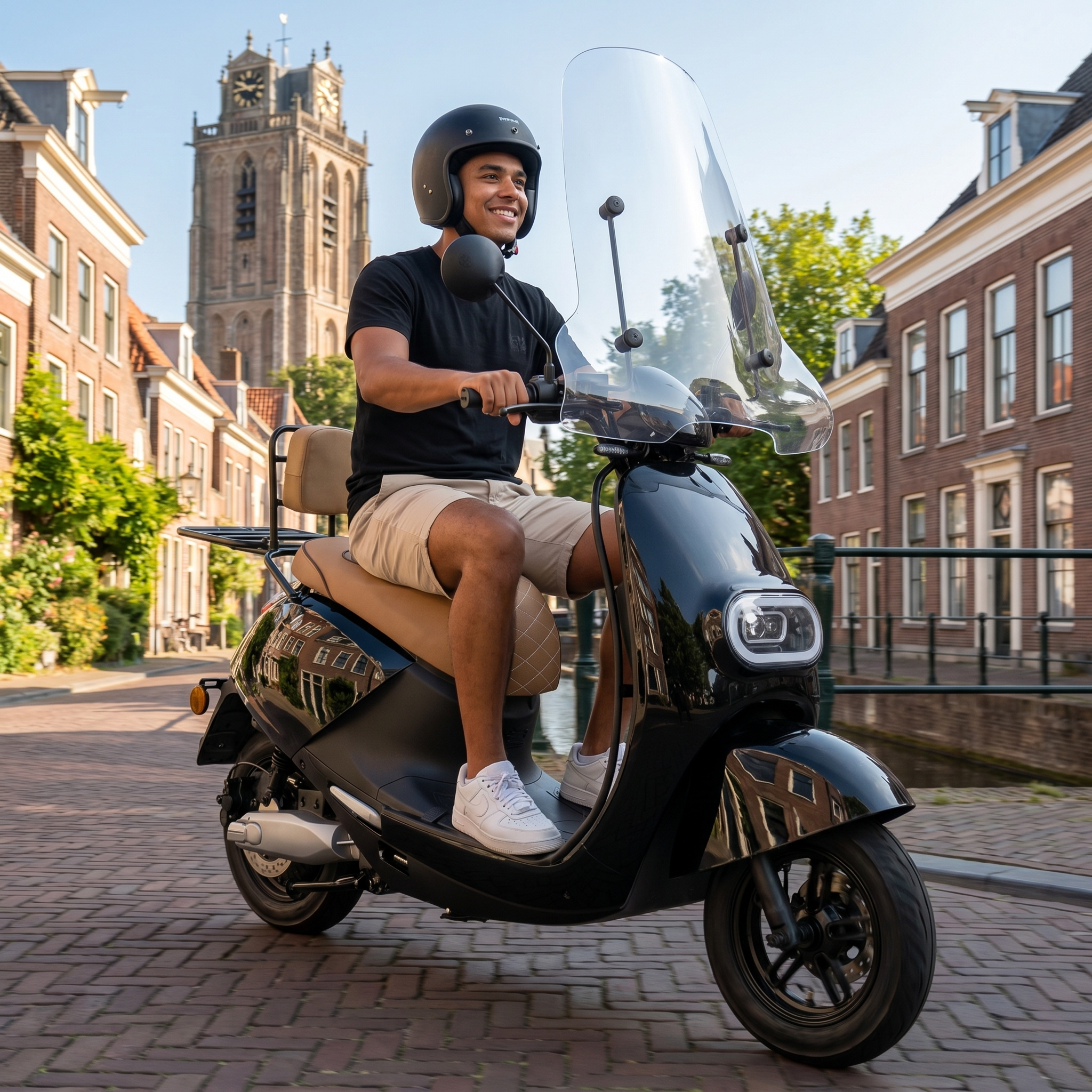
Do you want to compare more broadly? View the electric scooter collection from IVA Mobility for an overview of current models by category.
2. The technology: motor, battery, controller and brakes
An electric scooter consists of four core components: an electric motor, a battery pack, a controller that regulates the power supply, and a braking system. If you understand these four, you can read any spec sheet.
The motor: BLDC is the standard
Virtually every modern electric scooter uses a brushless direct current motor, usually abbreviated as BLDC (Brushless DC). BLDC motors have no carbon brushes that wear out and are therefore maintenance-free. The efficiency is around 90-92%, compared to approximately 30% for a gasoline engine.
The motor is usually located in the rear wheel as a hub motor. Power outputs range from 1,000 watts (light mopeds) to 3,500 watts (two-person scooters). More important than peak power is continuous power — that is what you actually deliver on an incline or at an average speed of 30 km/h. A reliable light moped has a minimum of 600-800 watts of continuous power; a scooter 1,000-1,500 watts.
The battery: the heart and the most expensive component
The battery accounts for 30 to 50% of the purchase price. In 2026, lithium-ion will be the norm; lead-acid batteries will only be seen in cheap entry-level models below the €1.200 and are not recommended — they only last 300-400 cycles and weigh three times as much.
Three digits tell you what a battery does in practice:
- Voltage (V): usually 48V, 60V or 72V. Higher voltage = more power, faster acceleration.
- Capacity (Ah): Usually between 20 and 40 Ah. Higher = more kilometers on a charge.
- Energy (Wh): Voltage × capacity. A 60V × 30Ah battery has 1,800 Wh — good for 50 to 70 realistic kilometers in Dutch conditions.
A high-quality lithium-ion battery retains at least 80% of its capacity after 800 to 1,200 full charge cycles. With daily use, this amounts to 5 to 7 years. In 2026, replacement will cost between the €600 and €1.100, depending on capacity and brand.
Tip: preferably choose a removable battery. That way, you charge it at the table or in the office instead of with an extension cord on the street. For everything about battery life and correct charging we have a separate guide.
The controller and the BMS
The controller is the digital brain between the battery and the motor. It translates the position of your throttle into the exact power supply and controls, among other things, the three riding modes (eco, normal, sport) used by many models. A well-tuned controller makes the difference between smooth acceleration and jerky pulling away.
The Battery Management System (BMS) monitors every cell in the battery.The BMS prevents overcharging, deep discharging, and overheating, balances the cells, and logs errors. With a branded battery equipped with a good BMS, the risk of fire or explosion is negligible. Would you like to know more about safe parking and charging, Then you will find the practice guidelines there.
Braking and regenerative braking
Good electric scooters have hydraulic disc brakes front and rear, often with CBS (Combined Braking System) that activates both brakes simultaneously. Many models support regenerative braking: as soon as you release the throttle or brake, the motor briefly runs as a generator and sends energy back to the battery. In city traffic, this provides 5 to 10% extra range.
3. How much does an electric scooter cost? Purchase and TCO
A new electric scooter will cost between the in 2026 €1.500 and €4.500. The Total Cost of Ownership over 5 years (purchase + electricity + maintenance + insurance − residual value) is between for most models €2.500 and €5.500. As a result, an electric scooter is almost always cheaper than a comparable petrol scooter over its lifespan.
Price ranges by category
- Entry-level moped (25 km/h, short trips): €1.500 – €2.200. Sufficient power for a 5-15 km commute.
- Mid-range moped (45 km/h): €2.200 – €3.200. Full equipment, premium battery, suitable for intensive daily use.
- Premium moped (45 km/h, dual battery or long range): €3.200 – €4.500. For distances exceeding 60 km per day or for dual use.
Cheaper than €1.500 This almost always means: lead-acid battery, no-name motorcycle, and no local service. In that segment, expect a lifespan of 2 to 3 years instead of 7-10.
The true cost per kilometer
Energy costs are where electric really takes a turn for the worse. An electric scooter consumes an average of 25-35 Wh per kilometer. At an electricity price of €0,30 per kWh, one driven kilometer costs approximately €0,008 to €0,011 — completed €0,02 including energy loss during charging. A petrol scooter gets about 40 km per liter. €0,11 per kilometer in fuel. Over 5,000 km per year, that saves €450 to €500 per year.
According to Environment Central over the lifespan of an electric scooter (calculated based on the Dutch electricity mix), you also save approximately 1,500 to 2,000 kg of CO2 compared to a comparable petrol scooter.
Maintenance, insurance and residual value
Maintenance is where electric scooters really win. No oil changes, no V-belt replacements, no spark plugs, no air filters, no carburetor adjustments. What remains is tire pressure, brake pads, possibly a controller firmware update, and the annual MOT-equivalent check. Count on €80 to €150 per year for maintenance, as opposed to €250 to €400 for a petrol scooter.
The insurance will cost between in 2026 €12 and €40 per month, depending on type (moped/scooter), place of residence, age, and claim-free years. A light moped is generally cheaper to insure than a light scooter because the maximum speed is lower.
The residual value of electric scooters has increased. A well-maintained moped with retained battery capacity (visible in the app) loses approximately 40-50% of its value in 5 years. For petrol equivalents, this is 60-70% due to declining demand in environmental zones.
4. Rules, driving licence and insurance by type
Four basic requirements apply to every electric scooter in the Netherlands: registration, an AM driving license (or B/A driving license), mandatory helmet use, and third-party liability insurance.The details vary by type and are defined by the RDW (National Road Traffic Service).
Driving license
For all electric scooters — both light mopeds and light mopeds — you need at least an AM driving licence. You obtain this from the age of 16 via a theory and practical exam at the CBR. If you have a valid car driving licence (B) or motorcycle driving licence (A), AM is automatically listed on your document. Since 2023, AM (category AM4) also applies to 3- or 4-wheeled electric light mopeds.
License plate
Every electric scooter requires a license plate. A new scooter is registered by the dealer; for a second-hand purchase, you arrange the transfer yourself at PostNL or an RDW location. The license plate is blue for a light moped and yellow for a light scooter.
Helmet requirement and traffic rules
Since January 1, 2023, wearing a helmet is mandatory for all moped and light scooter drivers and passengers. An approved helmet (ECE 22.06 or NTA 8776 for mopeds) is mandatory. For light scooters, a speed pedelec helmet is not sufficient — always use a scooter helmet.
In many municipalities, light mopeds are still permitted to ride on bicycle paths within built-up areas, but cities such as Amsterdam, Utrecht, and Rotterdam have abolished this for parts of their city centers. In these areas, light mopeds ride on the road at a maximum speed of 25 km/h. A light scooter always rides on the road within built-up areas; outside built-up areas, it rides on the moped path or bicycle path where indicated.
Insurance
Third-party liability insurance is legally mandatory. If you also want coverage against theft and damage to your own scooter, choose WA+ or comprehensive insurance. For an electric scooter older than 4 years, comprehensive insurance is often no longer cost-effective. Many insurers offer a discount for a certified lock (ART 4-star or higher) and a GPS tracker.
Environmental zones and zero-emission zones
Petrol-powered mopeds and scooters manufactured in 2010 or earlier will be phased out of environmental zones in cities including Amsterdam, Utrecht, and The Hague starting in 2025. Electric scooters—as emission-free vehicles—are allowed everywhere, even in the strictest zero-emission zones. This is a growing practical advantage.
5. Choosing the right electric scooter: 5-step plan
A structured choice prevents disappointment after the purchase. Follow these five steps and you will know which model suits you.
Step 1: Determine your daily distance
Count how many kilometers you drive per day — round trip. Add a 30% buffer for winter conditions and battery aging. A daily 20 km drive therefore requires a range of at least 26 km, plus a margin for unexpected stops. That is not a problem for most models; if you drive 50 km per day or more, choose a model with a dual battery or a 40Ah pack.
Step 2: choose light moped or light scooter
Do you mainly drive in the city (city center trips of 2-5 km, many traffic lights)? A light moped (25 km/h) is sufficient, often cheaper, and has lower insurance premiums. Do you have a commute of 10 km or more, or do you often drive on national roads within built-up areas? Then a light scooter (45 km/h) is the logical choice — you keep up with traffic more safely.
Step 3: check the technique
Ask the dealer for the spec sheet and pay attention to four points:
- Continuous power (not peak) — minimum 800 W for light moped, 1,200 W for scooter
- Battery capacity in Wh — compare brands by this measure, not just Ah or Volts
- Brand of the battery cells — Samsung, LG, Panasonic, or CATL are reliable
- Presence and quality of the BMS
Step 4: ergonomics and test drive
Schedule a test drive.Pay attention to seat height (760-810 mm is comfortable for most Dutch people), handlebar position, weight (a scooter under 90 kg is easy to push out of a parking space), and storage space. Do you often travel with a second helmet? Choose a model with a 28-32 liter top case or storage compartment under the seat that can accommodate a second helmet.
Step 5: warranty, service and dealer
An electric scooter has become a software product. Local service is important: for firmware updates, battery diagnostics, warranty claims, and roadside assistance. Check via the dealer locator check if there is a certified service point in your area. Ask about the warranty on the motor (3-5 years is common), battery (minimum 80% capacity after 600-800 cycles), and chassis (2-3 years). Cheap no-name imports often have only a 1-year manufacturer's warranty and no local service — a disappointment at the first defect.
Still undecided between models? Our guide 5 common mistakes when buying an electric scooter covers the ten most common pitfalls, and the blog advantages and disadvantages of an electric scooter provides a fair weighting.
Frequently asked questions about the electric scooter
What will an electric scooter cost on average in 2026?
A new electric scooter in the Netherlands will cost between the in 2026 € 1.500 and € 4.500. Entry-level mopeds for city riding start around € 1.500 to € 2.200. Mid-range mopeds for daily commuting costs € 2.200 to € 3.200. Premium models with a dual battery or long range are in between € 3.200 and € 4.500. Under € 1.500 you usually get lead-acid batteries with a short lifespan.
What is the best electric scooter for the city?
The best electric scooter for the city is a light moped or scooter with a power output of 1,000 to 1,500 watts, a range of at least 50 km, a removable lithium-ion battery, and hydraulic disc brakes. For city trips of 2 to 8 km, a light moped (25 km/h, blue license plate) is usually sufficient. For commuting over 10 km, a scooter (45 km/h, yellow license plate) is safer and faster.
What are the disadvantages of an electric scooter?
The three main disadvantages of an electric scooter are: a higher purchase price than a comparable petrol scooter (on average 10-15% more expensive), a range that decreases by 15 to 25% in winter due to the cold, and the replacement costs of the battery after 5 to 7 years (€ 600 to € 1.100). Over 5 years, lower energy and maintenance costs usually more than recoup this price difference.
What driver's license do you need for an electric scooter?
For every electric scooter in the Netherlands, you need at least an AM driving licence. This applies to both the light moped (25 km/h) and the light scooter (45 km/h). You can obtain the AM driving licence from the age of 16 by passing a theory and practical exam at the CBR. If you have a valid car driving licence (B) or motorcycle driving licence (A), the AM category is automatically listed on your licence and you do not need to do anything extra.
How long does the battery of an electric scooter last?
A high-quality lithium-ion battery in an electric scooter lasts 800 to 1,200 full charge cycles before its capacity drops below 80%. With daily use, this amounts to a lifespan of 5 to 7 years, or approximately 40,000 to 60,000 kilometers. Lead-acid batteries last only 300-400 cycles. By keeping the battery charged between 20% and 80% and avoiding overheating, you significantly extend its lifespan.
How far can you drive on a full battery?
The practical range of an electric scooter in the Netherlands is between 40 and 120 kilometers per full charge.City models with a single battery achieve 40 to 70 km. Premium models with a large or dual battery achieve 90 to 120 km. The actual distance depends on driving speed, driver weight, weather conditions, and selected driving mode. In winter (below 5°C), the range is approximately 15-25% lower than in summer.
What is the difference between a light moped and a light scooter?
A light moped has a maximum speed of 25 km/h, a blue license plate, and is permitted on bicycle paths in many municipalities. A light moped has a maximum speed of 45 km/h, a yellow license plate, and always travels on the road within built-up areas. Both require an AM driving license and an approved helmet. The light moped is more suitable for longer distances; the light moped is better suited for short trips within the city with many traffic lights.
Are you allowed to modify an electric scooter to increase its speed?
Modifying an electric scooter — adjusting it software-wise or mechanically to a speed higher than the legal maximum speed — is prohibited in the Netherlands. During a traffic stop, the RDW can check whether the vehicle still falls within the legal specifications. A modified scooter is no longer insured, and in the event of an accident, you are jointly and severally liable. Fines run up to € 400 and the vehicle may be seized.
Is an electric scooter cheaper to maintain?
Yes, an electric scooter is significantly cheaper to maintain than a petrol scooter. The annual maintenance costs on average € 80 to € 150, opposite € 250 to € 400 for petrol. This is because parts such as engine oil, V-belts, rollers, spark plugs, and air filters are completely missing. What remains: tire pressure, brake pads, a possible firmware update, and an annual check of the lighting and braking system.
Are you allowed to ride an electric scooter with two people?
You may ride a light moped (25 km/h) with two people, provided the scooter is approved for this (indicated by a second footrest and a passenger seat). The same applies to a light scooter (45 km/h). Both passengers must wear an approved helmet. Take into account a reduced range (20-30% less due to extra weight) and, if you regularly ride with a passenger, choose a model with at least 1,500 watts of continuous power.
Would you like to conclude your orientation with a concrete offer? View the current electric scooter collection from IVA Mobility or contact our customer service for personal advice.


Leave a comment
This site is protected by hCaptcha and the hCaptcha Privacy Policy and Terms of Service apply.