


Scooter environmental zone 2026: rules per city, fines, and the electric alternative
The environmental zone for scooters regulations increasingly determine where you are still allowed to ride in the city. Do you have a petrol scooter from before 2011? Then there is a good chance that you will soon no longer be allowed into Amsterdam, Rotterdam, The Hague, or Utrecht. In this guide, we explain the applicable rules for each city, from which year of manufacture your scooter will be refused entry, the amount of the fine, and why an electric scooter offers the future-proof solution.
Table of contents
- What is an environmental zone for scooters?
- Environmental zones per city: Amsterdam, Rotterdam, The Hague, Utrecht
- Which scooters are allowed in? (Euro 4, Euro 5 and year of manufacture)
- Fine, exemption and enforcement
- Future-proof: the electric scooter
- Frequently Asked Questions
Key takeaways
- A environmental zone for scooters exclude old, polluting mopeds and scooters from central areas in cities.
- Amsterdam, Rotterdam, The Hague, and Utrecht each use their own year and Euro standard — there is no national standard.
- In most environmental zones, scooters with a date of first registration before January 1, 2011 refused; as of January 1, 2027, that limit will be further tightened.
- The fine for violating a scooter environmental zone typically amounts to... in 2026 € 100,00 plus € 9,00 administrative costs.
- An electric scooter has no emissions and is therefore allowed to drive in all Dutch environmental zones — now and in the future.
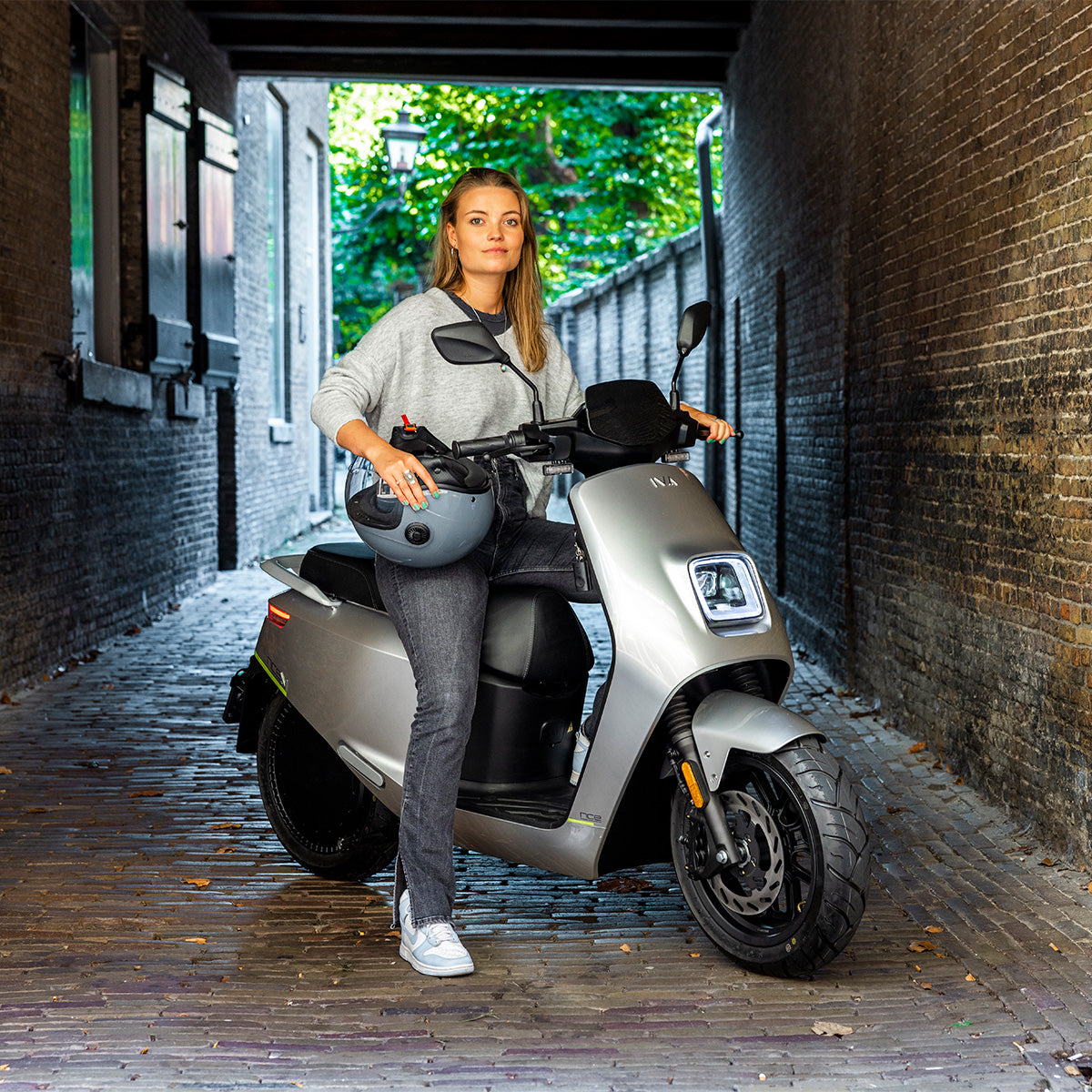
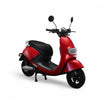
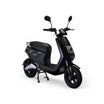
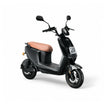
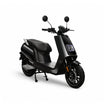
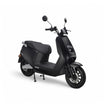
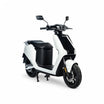
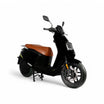
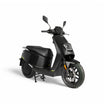
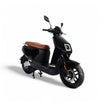
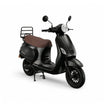
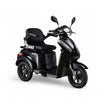
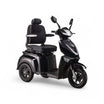
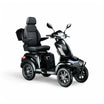
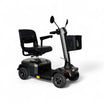
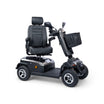
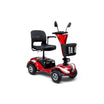
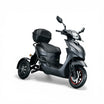
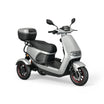
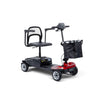
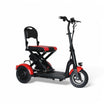
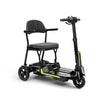
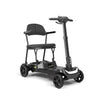
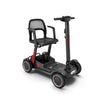
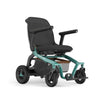
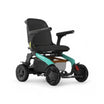
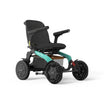
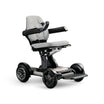
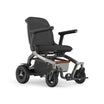
- With the E-GO S4 (25 km/h), E-GO S5 and E-GO S8 (45 km/h), IVA offers a fully electric alternative that is allowed in every Dutch city.
What is an environmental zone for scooters?
A environmental zone for scooters is a designated area in a Dutch city where mopeds and scooters are only allowed to ride if they meet a minimum emission standard. The goal is simple: to improve air quality by banning old two-stroke and four-stroke scooters from the city center.
The zone is indicated by traffic sign C22a ("Entry prohibited for mopeds and scooters that do not meet the entry requirements"). Cameras with automatic license plate recognition check whether your scooter is allowed to pass. Does your vehicle not comply? Then you will automatically receive a fine sent to your home address.
Who is affected by these rules?
The environmental zone rules apply to mopeds, light mopeds, microcars and speed pedelecs with internal combustion engines. Electric scooters are exempt from the regulation — they have no emissions and are allowed everywhere. Bicycles, e-bikes, and pedestrians are also not affected.
For most riders with a scooter from the 2000s or early 2010s, this means that the city center will become inaccessible in a few years. Anyone who uses their scooter daily for commuting is therefore forced to consider replacing it.
Environmental zones per city: Amsterdam, Rotterdam, The Hague, Utrecht and more
There exists no national environmental zone for scooters. Each municipality decides for itself whether and when a zone is introduced, which area is included, and from which year of manufacture scooters are banned. Below you will find an up-to-date overview for the four major cities plus a few other municipalities.
Amsterdam environmental zone for scooters
Amsterdam was the first Dutch city with an environmental zone for mopeds and scooters. Since January 1, 2018, the zone has covered virtually the entire area within the A10 ring.Scooters with date of first admission (DET) before January 1, 2011 are no longer allowed in. As of January 1, 2027, Amsterdam is shifting the cutoff further to January 1, 2018 — from that moment on, scooters must meet at least Euro 4 standards to be allowed into the zone.
Do you want to know for sure if your scooter is allowed into the Amsterdam low-emission zone? Then enter a license plate check check out via the Municipality of Amsterdam website. You only need your license plate number.
Rotterdam environmental zone for scooters
Rotterdam announced an environmental zone for mopeds and light mopeds for before January 1, 2025, linked to the existing environmental zone for cars in the city center. For scooters, the following applies: vehicles with a DET (Date of First Registration) before January 1, 2011, will be refused. The municipality is working on further tightening of regulations towards 2028. Anyone living in Rotterdam who uses their scooter daily for getting around the city would be well advised to switch over in good time.
Environmental zone The Hague scooter
The Hague implements by January 1, 2026 an environmental zone for old mopeds and scooters. The ban applies to scooters with a DET before January 1, 2011, and covers the city center within the Centrumring. The Hague operates a phased exemption scheme for people who can demonstrate they have no alternative — you can read more about this later in this guide.
Environmental zone Utrecht scooter
Utrecht is adopting its own approach. The environmental zone for scooters exists in concept and is expected to be introduced in 2027. The municipality is still investigating whether the limit will be set at January 1, 2011, or be stricter (Euro 4). Keep an eye on the Municipality of Utrecht website for the definitive implementation date.
Other municipalities
In addition to the major cities, Arnhem, Eindhoven, Nijmegen, Tilburg, and Leiden are also working on an environmental zone for mopeds and scooters. The national trend is clear: Old petrol scooters are being banned from every city center step by step.. You can find the official complete overview at milieuzones.nl, the joint information site of the Dutch municipalities.
Which scooters are allowed in? (Euro 4, Euro 5 and year of manufacture)
Access to an environmental zone depends on two things: the Date of first admission (DET) of your scooter and the European emission standard which it complies with. Both are listed on your registration certificate.
How do you know if your scooter is Euro 4 or Euro 5?
The European emission standard for mopeds and light mopeds is linked to the date on which the vehicle type was first admitted to the European market. The general guideline is as follows:
- Euro 2: scooters produced between approximately 2003 and 2016.
- Euro 4: new types from 1 January 2017, existing models from 1 January 2018.
- Euro 5: new types from 1 January 2020, existing models from 1 January 2021.
The exact Euro standard of your scooter is stated on the registration certificate (Part I, field V.9 "environmental class"). Are you unsure? Then use the license plate check at rdw.nl or on your municipality's website.
Year of construction limit per environmental zone
Currently, almost all Dutch environmental zones apply the same limit: scooters with DET before January 1, 2011 be refused. The practical rule of thumb is therefore: Is your scooter older than 15 years and does it run on petrol? Then you won't be able to enter the city anymore soon.
From 2027, this limit in Amsterdam (and possibly other cities) will be further tightened towards Euro 4 (DET from January 1, 2018). Anyone buying a scooter from the second-hand market now would therefore be wise to choose at least Euro 4 — or better yet: fully electric.
Fine, exemption and enforcement
The environmental zone is strictly enforced via fixed cameras at the access roads. If you violate the rules, you will automatically receive a fine. An exemption is possible in limited cases.
Amount of the fine in 2026
The fine for driving in an environmental zone with a non-permitted moped or scooter amounts to... in 2026 € 100,00, increased by € 9,00 administrative costs. Some municipalities communicate an amount of € 110,00 or even higher. The fine applies per violation — so driving through the zone daily means a fine every day.
Apply for an exemption
An exemption from the environmental zone is possible in exceptional cases. Municipalities grant exemptions, for example, in the following situations:
- Medical necessity: if you can demonstrate that you have no alternative transport due to a physical disability.
- Professional exception: for example, for certain suppliers or service providers in the center.
- Temporary exemption: a one-time day exemption for moving or similar situations (max. a few days per year).
The application is submitted via the counter of the relevant municipality. Please note that a permanent exemption is rarely granted and usually expires — the municipality wants you to eventually switch to a clean vehicle.
How much longer are you allowed to ride a petrol scooter?
Outside the environmental zones, you can continue to ride your petrol scooter for the time being. Within cities, the situation is clear: Older petrol scooters will gradually become unusable for urban use between now and 2030.. The national ambition of the central government is to only allow emission-free new sales of mopeds and scooters from 2025 onwards, although that policy has not yet been formally established in all situations.
Future-proof: the electric scooter as a solution
The simplest way to stop worrying about environmental zones, Euro standards, and fines? Switch to a electric scooter. An electric scooter has no emissions and falls outside every current and future environmental zone in the Netherlands. You can ride around freely everywhere, even in centers where petrol drivers no longer go.
Five concrete benefits for the city driver
- Free through every environmental zone — emission-free, so no restrictions whatsoever now or in 2030.
- Low operating costs — a full battery costs about € 0,40 to € 0,80 on electricity for driving 50 to 80 kilometers. A petrol scooter is easily five times that amount.
- No road tax — a light moped version up to 25 km/h is completely exempt; a scooter version up to 45 km/h pays a low rate.
- Low maintenance — no oil changes, no spark plugs, no exhaust repairs. Just tires, brakes, and (after many years) a new battery.
- Silent and stable — no humming sound, smooth acceleration from a standstill, ideal for city traffic with frequent stops.
Which IVA models suit your city?
IVA Mobility designs electric scooters specifically for the Dutch urban rider. Three models stand out:
- IVA E-GO S4 — moped version up to 25 km/h, blue license plate, no helmet required (city center favorite for commuting). Winner of the ANWB e-scooter test.
- IVA E-GO S5 — moped version up to 45 km/h, yellow license plate, for those who want to ride a bit faster and also regularly head out outside the city.
- IVA E-GO S8 — moped up to 45 km/h with a greater range (up to 100 km with dual battery), intended for commuters making longer journeys.
View the full range on the Overview page of IVA scooters. Do you want to take it for a test drive? Then find a dealer near you; Almost all IVA dealers let you take a free test drive before you decide.
And if you are still unsure about the speed and license plate?
Then read our comprehensive guide about the buy 45 km/h electric scooter — it lists the driver's license, insurance, license plate color, and all practical points to consider.
Frequently asked questions about the low-emission zone for scooters
What are the new rules for scooters in 2026?
As of January 1, 2026, The Hague is introducing an environmental zone for mopeds and scooters with a date of first registration before January 1, 2011. In Amsterdam, the existing zone remains in effect; as of January 1, 2027, it will be tightened to Euro 4 (DET from January 1, 2018). Other cities will follow in phases between 2026 and 2028. Outside of the environmental zones, there are no new national regulations.
How do you know if your scooter is Euro 4 or Euro 5?
The European emission standard is stated on Part I of the registration certificate, field V.9 "environmental class". As a general rule: new scooter types from 1 January 2017 are Euro 4, and from 1 January 2020 Euro 5. In doubt? Then perform a license plate check at rdw.nl — you only need your license plate number.
Which year of manufacture is a scooter no longer allowed in the low-emission zone?
In almost all current Dutch environmental zones, the cutoff date is before January 1, 2011. From 2027, this cutoff will be further tightened in Amsterdam (and possibly Rotterdam and The Hague) to a DET before January 1, 2018.
How much longer are you allowed to ride a petrol scooter?
Outside environmental zones, you may continue riding a petrol scooter for the time being. Within cities, the range will be gradually restricted between now and 2030. For new sales, the central government aims for fully emission-free vehicles from the second half of the decade.
What is the fine for the low-emission zone with a scooter?
The fine for driving in a scooter environmental zone without permission amounts to 2026 € 100.00 plus € 9,00 administrative costs. The fine is automatically imposed via cameras with license plate recognition and applies per violation.
Can you get an exemption for the low-emission zone with a scooter?
Yes, in limited cases. Municipalities grant exemptions for medical necessity, professional exceptions, or for a one-off day exemption (moving). A permanent exemption for regular use is rarely issued — the municipality expects you to switch to a clean vehicle in the long run.
Is an electric scooter allowed to ride everywhere?
Yes. An electric scooter has no emissions and falls outside every current and future environmental zone in the Netherlands. You are allowed to go anywhere a normal moped or light moped is allowed to ride, including all city centers.
Which cities have an environmental zone for scooters?
Currently, Amsterdam and (as of January 1, 2026) The Hague have an active environmental zone for mopeds and scooters. Rotterdam introduced the zone in early 2025 and is expanding the rules step by step. Utrecht, Arnhem, Eindhoven, Nijmegen, Tilburg, and Leiden are working on implementation between 2026 and 2028.
How do I check if my scooter is allowed in the low-emission zone (license plate check)?
The fastest way is a license plate check on the website of rdw.nl or on the environmental zone page of the relevant municipality. Enter your license plate number and you will immediately see whether your vehicle is allowed in the zone. For Amsterdam: amsterdam.nl/parking-traffic/environmental zone. For the national overview: milieuzones.nl.
What is the advantage of an electric scooter in the city?
An electric scooter combines exemption from low-emission zones with low operating costs (approx. € 0,40 to € 0,80 current per fully charged battery), minimal maintenance, no or low road tax, and silent riding. For a city rider making short trips daily, the difference compared to a petrol scooter is recouped within one to three years.
Conclusion: choose future-free driving now
The course is clear: Old petrol scooters will be banned from every Dutch city in the coming years.. Anyone still hesitating about replacement runs the risk of doing so daily in the future. € 100,00 to incur a fine or have an expensive, silent scooter parked in the driveway. An electric scooter offers the certainty that you will still be allowed to go anywhere, now and in 2030, at lower operating costs and without the hassle of maintenance.
Look at the complete IVA range of electric scooters, or schedule a test drive directly at a IVA dealer near you. Unsure which version suits you best — 25 or 45 km/h? Our guide on buy the 45 km/h electric scooter helps you further.
Official sources for this article: milieuzones.nl (central overview of Dutch environmental zones) and the environmental zone pages of the municipalities of Amsterdam, Rotterdam, The Hague and Utrecht.


Leave a comment
This site is protected by hCaptcha and the hCaptcha Privacy Policy and Terms of Service apply.