


Last updated: May 28, 2026
The battery of your electric scooter determines how far you can go, how often you need to plug it in, and what your e-scooter will be worth in a few years. Yet most riders know surprisingly little about that one component everything revolves around. What type of battery is inside? How long does it last? What does replacement really cost? And how can you get twice as many kilometers out of it with smart choices?
In this guide, we list everything about the electric scooter battery: From lithium-ion and lead-acid to 48V, 60V, and 72V systems, from charge cycles and lifespan to charging, replacement, and recycling. We base our findings on the practical experience of thousands of IVA riders and the technology behind the IVA E-GO and NC series. By the end, you will know exactly how to get the most out of your battery and when a new one is needed.
Contents
- What is a battery for an electric scooter?
- How long does an electric scooter battery last?
- Charging an electric scooter battery: here's how to do it right
- Battery replacement: costs, signs, and alternatives
- Extending lifespan: 8 practical tips
- Frequently Asked Questions
Important in brief
- Most modern electric scooters use a lithium-ion battery with a voltage between 48V and 72V.
- A lithium-ion battery lasts on average 500 to 1,000 full charge cycles along, which amounts to 3 to 8 years under normal use.
- A new battery for an electric scooter costs between the in the Netherlands € 350 and € 1.200, depending on voltage, capacity, and brand.
- The biggest killers of your battery are: driving it completely empty, charging in freezing temperatures, and cheap non-original chargers.
- A battery with removable battery pack (like on the IVA E-GO S5 and S8) is safer to charge at home and easier to replace.
- Empty batteries do not belong in residual waste — hand them in at an authorized recycling point or at your IVA dealer.
What is a battery for an electric scooter?
A battery for an electric scooter is a rechargeable energy pack that supplies electrical power to the electric motor. It determines three things: the range, the power (how fast you accelerate), and the lifespan of the scooter as a whole. Without a healthy battery, even the most beautiful e-scooter will stand still.
Lithium ion versus lead-acid
Virtually every modern electric scooter uses a lithium-ion battery. Lithium-ion is lighter, lasts longer, and delivers more energy per kilo than older lead-acid or AGM batteries. A 60V/30Ah lithium-ion battery pack weighs around 11 kg; a comparable lead-acid battery would weigh 25 to 30 kg and provide half the range.
Lead-acid and AGM batteries are still found on older mopeds, some inexpensive foldable mobility scooters, and in petrol scooters (as 12V starter batteries). For modern e-scooters of 25 or 45 km/h, lithium-ion is the standard.
Voltage and capacity: 48V, 60V and 72V
The tension The capacity of a battery is expressed in volts (V) and determines how much power the motor can deliver. capacity is stated in ampere-hours (Ah) and determines how many kilometers you can drive per charge.
- 48V batteries: Light city scooters and e-scooters up to 25 km/h. Range 40–70 km.
- 60V batteries: the most used format in the Netherlands. The IVA E-GO S4 and IVA E-GO S5 Drive on 60V. Range 60–110 km.
- 72V batteries: more powerful e-scooters of 45 km/h and sporty models. Range 80–140 km per charge.
A rule of thumb: volt × ampere-hour = watt-hour (Wh). A 60V × 30Ah battery delivers 1,800 Wh. Calculate approximately 1.5 km per 30 Wh, and you have a quick estimate of your range.
Fixed or removable battery
More and more models are getting a removable battery. That has three advantages: you charge safely at home (no need to leave your entire scooter plugged into a socket in the shed), you can take a second battery with you for extra range, and you don't have to go to the workshop for replacement. E-GO S5 and E-GO S8 has a removable battery pack; classic mobility scooters and heavier models often do not.
Do you want a electric scooter with removable battery? Then check out our complete scooter range and filter by battery type.
How long does an electric scooter battery last?
A The lithium-ion battery of an electric scooter lasts on average 500 to 1,000 full charging cycles.. With normal use, this amounts to 3 to 8 years before the capacity noticeably drops below 80% of new. Cheaper batteries often reach the lower end of that range, while quality brands, such as the cells in IVA scooters, reach the upper end.
What is a charging cycle, actually?
One charging cycle is a complete discharge from 100% to 0% and back again — not just once at the plug. Do you charge from 60% to 100% twice a day? Then that adds up to about half a cycle. A driver who drives 30 km per day and charges every two days will take an average of 5 to 7 years to reach those 800 cycles.
Which factors influence lifespan?
Four factors determine how many years you really get out of your battery:
- Loading behavior: Regularly deep discharging (below 10%) or overcharging halves the lifespan.
- Temperature: Charging below 5°C or above 40°C permanently damages cells.
- Driving style: Constantly accelerating hard and braking sharply requires a lot of peak current and accelerates wear.
- Storage climate: A dry garage of 10–20°C is ideal; an uninsulated shed in January is disastrous.
How do you know your battery is getting older?
An aging battery announces itself with a few recognizable signals:
- Your range has decreased by 20–30% (from 80 km to 55–60 km).
- Charging takes longer than before — sometimes extra hours.
- The charging light turns off quickly, but the meter drops back quickly along the way.
- In cold weather, the scooter suddenly covers far fewer kilometers.
- The battery feels warmer than before during or after charging.
An 8-year-old scooter can technically still run perfectly fine. If you encounter several of these signs, it is time to consider replacing it.
Charging an electric scooter battery: here's how to do it right
A charging electric scooter battery It takes an average of 4 to 8 hours to charge from nearly empty to 100%. Fast chargers halve that, but also shorten the lifespan of the cells. For daily use, slow charging with the original charger is always the best choice.
How long do you need to charge a scooter battery?
The charging time depends on capacity and charger power:
- 48V/20Ah battery with 5A charger: approximately 4 hours.
- 60V/30Ah battery with 5A charger: 6 to 7 hours.
- 72V/40Ah battery with 8A charger: 5 to 6 hours.
A quick rule of thumb: capacity in Ah ÷ charger amperage = charging time in hours, plus 10–15% loss. So a 30Ah battery with a 5A charger takes about 7 hours.
First time charging
You do not need to "burn in" a new battery for 12 hours like lead-acid batteries used to. Charge it fully slowly the first time using the included charger, disconnect as soon as the light turns green, and you are ready to ride. Run a full charge cycle slightly more frequently during the first three months; after that, partial charging (between 20% and 80%) is better.
Charging with a trickle charger
A trickle charger delivers a low, constant current and is handy if you don't use your scooter for a few weeks. Turn it on with a fully charged battery in a dry room; the charger tops up a few percent occasionally without overcharging the battery. For winter storage from December to March, a trickle charger is an excellent investment. € 30 to € 50.
What if your battery is completely dead?
A completely dead scooter battery often won't start because the Battery Management System (BMS) shuts down as a protection measure. Connect it to the original charger and wait 30 minutes — usually the BMS will return then. If that doesn't work, the battery must be "woken up" by a dealer. Never try to revive it with jumper cables or a car battery charger; this can lead to a fire.
Are you allowed to charge the scooter battery while riding?
No. An e-scooter does not have a dynamo or a regenerative braking system that recharges while riding. Some high-end scooters do have regenerative braking, but that only provides 2–5% extra range. True charging always takes place via a wall socket.
Battery replacement: costs, signs, and alternatives
The costs for replacing an electric scooter battery lies in the Netherlands between € 350 and € 1.200. The price depends on voltage, capacity, brand quality, and whether you choose an original OEM battery or a third-party alternative. For IVA scooters, we always recommend an original battery via a authorized dealer — otherwise your warranty and manufacturer's liability will become void.
How much does a new battery cost per voltage?
- 48V/20Ah lithium: € 350 – € 550.
- 60V/30Ah lithium (IVA E-GO S4, S5): € 600 – € 900.
- 72V/40Ah lithium (IVA E-GO S8, sport): € 900 – € 1.200.
- Lead-acid 12V 6Ah (small mobility scooters, mopeds): € 25 – € 60.
Count on top of the battery price € 50 to € 100 Installation costs if you do not replace it yourself. For removable batteries, you can replace them yourself in 30 seconds; for fixed batteries, it takes a workshop hour.
Overhaul or replace?
Sometimes is scooter battery refurbishment Possible: a specialist replaces only the weak cells in the pack. That saves 30–50% on the price and is more sustainable. Refurbishing only works for batteries up to about 6 years old and if the BMS is still healthy. If in doubt, ask your dealer — they know whether your specific IVA pack is suitable for this.
What do you do with your old battery?
A used lithium-ion battery does not belong in residual waste, the glass bin, or the recycling center without preparation. IVA has a own recycling service for scooter batteries: Hand in your old pack to a dealer, and we will ensure, via Stibat, that the raw materials (lithium, cobalt, nickel) are reused. This is mandatory and good for the environment — and in 2026, you will return approximately 85% of the materials into new cells.
Insurance and warranty
The warranty on an original IVA battery is a 2-year manufacturer's warranty plus a capacity guarantee of 70% after 3 years. A third-party battery falls outside this arrangement. Also check your contents or buildings insurance: lithium batteries charged at home are not always automatically covered in the event of fire. The Fire Department Netherlands publishes an up-to-date safety brochure on this subject.
Extending lifespan: 8 practical tips
A well-maintained battery can last up to twice as long as a neglected pack. These eight tips come straight from the practical experience of IVA technicians and cost you nothing extra.
1. Keep the battery between 20% and 80%
The most dangerous zones for a lithium cell are 0–10% and 95–100%. Rarely let your battery run completely empty and only charge to 100% when going on a long trip. Commuting daily? Charge from 30% to 80% and you double your charging cycles.
2. Never charge below 5°C or above 40°C
At low temperatures, lithium plating forms on the electrodes — an irreversible damage. In winter, bring your battery indoors first, let it reach room temperature for an hour, and only then charge it. In summer: do not charge in direct sunlight.
3. Always use the original charger
A cheap universal charger rarely exactly matches the charging profile that the BMS expects. The difference between an original IVA charger (€ 89) and an Aliexpress clone (€ 22you will earn back the cost in one year through longer battery life.
4. Store your scooter in a cool and dry place
An insulated garage or storage room between 10 and 20°C is ideal. A damp shed or outdoor space accelerates corrosion of the contacts and speeds up cell wear.
5. Do not drive at full throttle constantly
Full acceleration consumes 3 to 5 times more power than accelerating gently. If you do that every trip, you will run out of power 200 cycles faster. Applying gas gradually makes an immediate and audible difference to the range.
6. Prevent deep discharge in winter storage
A lithium battery left at 0% for months can be permanently damaged. Charge to approximately 60% before winter storage and check every 6 weeks to ensure the percentage has not dropped below 30%. Alternatively, use a trickle charger (see above).
7. Keep the contacts and connector clean
Moisture, salt, and dust on the battery terminal cause extra resistance and heat generation. Clean the connector once every quarter with a dry cloth; in case of salt damage, use a toothbrush and contact spray.
8. Have the scooter checked annually
An annual service at a IVA dealer Includes a battery condition test with diagnostic equipment. Weak cells are detected early, before they drag the entire pack down due to wear.
Frequently asked questions about the battery of an electric scooter
How many volts does an electric scooter battery have?
Most electric scooters use a 48V, 60V, or 72V battery. 48V is common for light city models up to 25 km/h, 60V for most e-scooters of 25 or 45 km/h, and 72V for sporty and heavier models. Lead-acid starter batteries in petrol scooters are always 12V.
How long does an electric scooter battery last?
An e-scooter's lithium-ion battery lasts 500 to 1,000 full charge cycles. In practice, this amounts to 3 to 8 years with daily use. Cheap third-party batteries often last 3–4 years; quality packs, such as those in IVA scooters, easily reach 6–8 years.
How much does a new battery for an electric scooter cost?
A new lithium-ion battery for an electric scooter costs between € 350 and € 1.200 in the Netherlands, excluding installation. A 60V/30Ah battery (the most common size) costs around € 600–€ 900. Overhauling is sometimes a cheaper alternative.
How long do you need to charge a scooter battery?
An average 60V/30Ah battery takes about 6 to 7 hours to fully charge with the standard charger (5A). Calculate roughly: capacity in Ah divided by the charger's amperage, plus 10–15% loss. Fast chargers of 8–10A halve that time but are not recommended for daily use.
Are you allowed to charge an electric scooter battery indoors?
Yes, but follow the guidelines of the Dutch Fire Service: never charge unattended, not in an escape route (hallway or stairwell), and not on top of flammable materials. A removable battery is safer to charge indoors than a fixed battery in a shed or garage without a smoke detector.
Where is the battery of a scooter located?
On an electric scooter, the battery is usually located under the seat or in the floor between the footboard and the rear wheel. Some models have the battery in the "tank" between your legs, others behind the seat. Removable batteries are almost always located under the seat with a quick-release mechanism.
Can you still charge a dead scooter battery?
Usually, yes. A deeply discharged lithium battery enters protection mode and appears dead, but often comes back to life after 30 minutes on the original charger. If that doesn't work, a dealer must reactivate the battery using a diagnostic tool. A battery that has been completely discharged for 6+ months is usually lost forever.
What is the difference between a lithium-ion battery and a lead-acid battery?
A lithium-ion battery is 50–70% lighter, lasts 3 to 5 times longer, and delivers more power per kilo than a lead-acid battery. Lead-acid is cheaper to purchase (starting from € 25 for a 12V pack), but more expensive per kilometer over the lifespan. For modern electric scooters, lithium-ion is the standard.
Can you refurbish a scooter battery instead of replacing it?
For batteries up to approximately 6 years old with a healthy BMS, a specialist can replace only the weak cells. This saves 30–50% on the new price and is more sustainable than a completely new battery. If in doubt, ask your IVA dealer.
What should I do with my old scooter battery?
Lithium-ion batteries must not be disposed of with residual waste. Hand in your old battery to an IVA dealer via our recycling service, or at a nearby Stibat collection point. Approximately 85% of the raw materials are reused in new cells in this way.
Ready to drive longer on a single charge?
A well-maintained battery means more kilometers, lower costs, and years of enjoyment from your electric scooter. Do you want an e-scooter with a battery truly built for the Dutch market — with a removable pack, manufacturer's warranty, and a dealer network of 200+ locations? Then check out our current models or request a test ride at a dealer near you.
Popular IVA models with powerful battery:
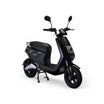
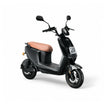
- IVA E-GO S4 — 60V/30Ah, range up to 90 km, winner of the ANWB e-scooter test
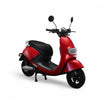
- IVA E-GO S5 — 60V removable battery, ideal for city use
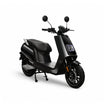
- IVA E-GO S8 — 72V/40Ah, for heavier work and 45 km/h

5 reactions
P brouwer
Goedendag kan ik de rij akku T3 2.0 60 volt 23,5 amp ook gebruiken voor mijn iva ncf uitvoering , hebben deze de zelfde connector aansluiting
Ps verlenging van service info abbonement is na omweg en vertaling teksten nu toch gelukt
Bedankt voor snelle reply even terug
P.J. Dekker
Is de IVA Electric technisch dienaangaande een KILLERBEE electrico?
Ivan Desmet
Bestaat er een druppellader voor de accu’s van een IVA S5 ?
Paul
Goedenavond,
Is er een manier om te achterhalen of een IVA T3 scootmobiel die te koop staat op Marktplaats eerlijk is en dus niet gestolen is? En van welk bouwjaar deze scootmobiel is? En is de accu te testen? Ik hoor het graag. Mvg Paul
Lindeboom
Kunt u mij helpen aan een handleiding van de IVA TR3 2.0 SCOOTMOBIEL
Leave a comment
This site is protected by hCaptcha and the hCaptcha Privacy Policy and Terms of Service apply.