

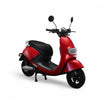
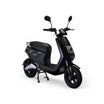
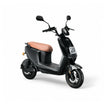
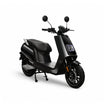
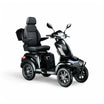
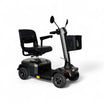
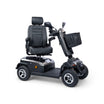
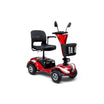
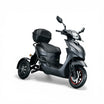
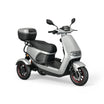
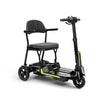

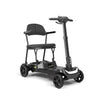
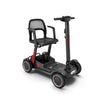
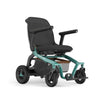
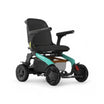
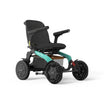
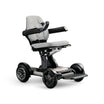
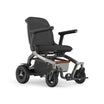
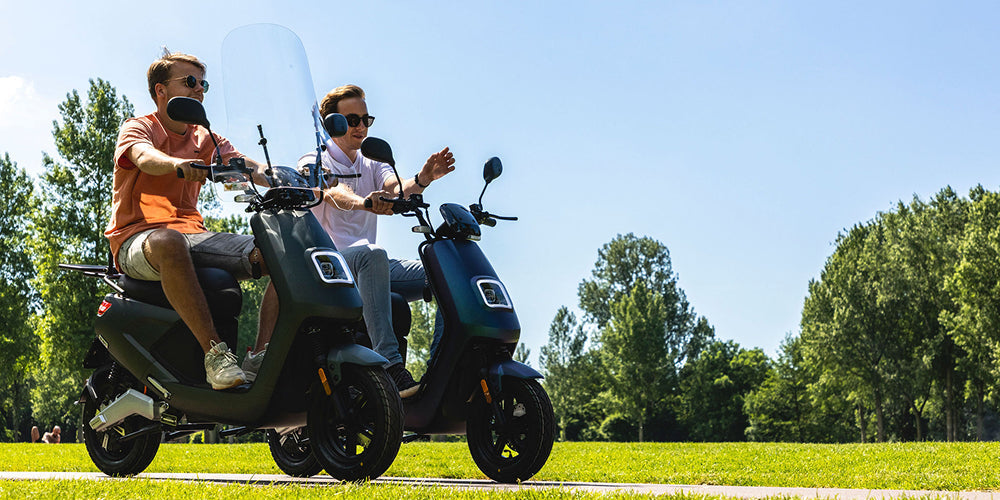
The average public transport annual pass will easily cost as much as 2026. € 3.500 to € 4.800, while an electric scooter costs you around the including insurance, power, and maintenance € 70 to € 110 costs per month. For more and more commuters, students, and city dwellers, a scooter as an alternative to public transport Therefore, it is no longer a strange choice, but a logical calculation. No delays, no overcrowded trains, no fluctuating public transport fares — and often faster door-to-door than the bus.
In this guide, we compare scooters, public transport, and cars based on cost, travel time, and convenience. You will read which scooter suits your commute, how much it will cost per month, and which rules apply. We conclude with an extensive FAQ on driver's licenses, insurance, bus lanes, and tax deductions.
Table of contents
- 1. Why the scooter will beat public transport in 2026
- 2. How much does a scooter cost per month vs. public transport and a car?
- 3. Travel time & flexibility: door-to-door in the city
- 4. Which scooter suits your commute?
- 5. Environment, parking and practical considerations
- Frequently Asked Questions
Key Takeaways
- A scooter is on average € 200 to € 350 cheaper per month than an annual public transport pass for a daily commute of 25 km.
- For rides up to 30 km within and around the city, a scooter is often faster than train or bus, partly thanks to direct door-to-door routes.
- A electric scooter costs approximately € 0,40 electricity per 100 km, a petrol scooter such € 4,50 — a factor of 10 difference.
- Immediately moped-scooter (yellow license plate, 45 km/h) you are allowed to drive faster and on more roads than with a light moped (blue license plate, 25 km/h).
- You have AM driving license required and your scooter must be third-party insured — for business trips, you can deduct per business kilometer driven for tax purposes.
- Parking is free or cheap, charging at home costs less than a euro, and you avoid traffic jams and rush hour congestion.
1. Why the scooter will beat public transport in 2026
In 2026, a scooter will be the smartest alternative to public transport for many commuters because it is cheaper, faster, and more flexible for distances up to 30 km. Public transport became more expensive again in January 2026, while the purchase price of an electric scooter actually decreased due to economies of scale and cheaper batteries.
NS calculates an average in 2026 € 0,25 per kilometer for a second-class trip without a discount. A bus or metro ride within the city quickly costs € 2,50 for 5 kilometers. Compare that to an electric scooter: around the € 0,005 per kilometer of electricity and you immediately feel where the pain lies for those who travel daily.
The three pain points of public transport that the scooter solves
1. Timetable. With public transport, you adjust your life to the schedule. With a scooter, you leave whenever you want and you aren't standing in the rain at 10:14 PM because the last bus just left.
2. Crowds. ProRail reported in 2025 that about 14% of all train passengers cannot find a seat during rush hour. On a scooter, you always have space, your own helmet, and no strangers standing right next to you.
3. Delay. According to NS figures, 89.8% of trains met the "on-time standard" of 5 minutes in 2025. On a scooter, you have no signal failures, no copper theft, and no collisions with livestock.
Who wins the most from the switch
The calculation is most pronounced if you travel 10-30 km one way daily within or just outside a major city, do not carry a laptop bag full of paperwork on every trip, and the public transport route has no direct connection.Think of commuters Rotterdam-Delft, Amsterdam-Hoofddorp, Utrecht-Nieuwegein, or Eindhoven-Veldhoven. On these routes, you are typically 10-20 minutes faster per one-way trip by scooter than by public transport.
2. How much does a scooter cost per month vs. public transport and a car?
A scooter will cost on average in 2026 € 75 to € 130 per month all-in, a public transport annual pass comes down to € 290 to € 400 per month and a second-hand mid-range car including fuel, insurance and parking at € 450 to € 700 per month. So for the average commuter, you save money with a scooter. € 2.500 to € 7.000 per year versus car or public transport.
Cost overview per mode of transport (commute 25 km one way)
| Expense item | Electric scooter | Petrol scooter | NS Annual Pass (Off-Peak Free + Weekdays) | Car (mid-range) |
|---|---|---|---|---|
| Purchase/subscription (monthly) | € 45 (lease) or € 1.999 buy | € 40 (lease) or € 1.699 buy | € 295 | € 350 (depreciation) |
| Fuel/electricity (per month) | € 4-7 | € 55-75 | n.v.t. | € 180-240 |
| Insurance | € 13-22 | € 13-22 | n.v.t. | € 75-110 |
| Maintenance | € 8 (average) | € 18 (average) | n.v.t. | € 60 |
| Road tax | € 0 (moped) or € 9 (moped) | € 0 or € 9 | n.v.t. | € 50-90 |
| Parking | € 0 | € 0 | n.v.t. | € 60-150 |
| Total per month | € 70-110 | € 95-135 | € 295 | € 775-1,000 |
Indicative, based on Nibud, Consumentenbond, and industry averages for spring 2026.
Electricity: why an electric scooter is so bizarrely cheap
A typical electric scooter consumes approximately 3 kWh per 100 km. With a dynamic electricity tariff of € 0,28 per kWh that is € 0,84 per 100 km. Compare: a petrol scooter does 30 km per liter and with petrol on € 2,15 per liter you are at € 7,15 per 100 km. So on an annual basis, with an 8,000 km commute, you save about € 505 purely on fuel.
Want to take a closer look at consumption, battery, and lifespan? Read our guide. how long does the battery of an electric scooter last.
Insurance: what do you really pay
Third-party liability insurance for a moped starts at € 13 per month, for a moped at € 18. If you want third-party liability plus comprehensive coverage, then there is something like this. € 7 per month. For details — premiums by age, region, and usage — everything is in our blog. scooter insurance 2026: costs and coverage.
Commercial: € 0,23 per kilometer tax-free
Since January 1, 2026, your employer is allowed to € 0,23 per business kilometer driven Reimburse tax-free, whether you travel by car, bicycle, or scooter. For 10,000 km of commuting per year, that is € 2.300 Tax-free. For self-employed professionals: you may fully deduct a business scooter as a business asset for income tax purposes.
3.Travel time & flexibility: door-to-door in the city
For distances up to 25 km within and around the city, a scooter is typically 10 to 25 minutes faster than public transport per one-way trip because there is no transfer time, no pre- or post-transport, and no waiting time. On an annual basis, that adds up quickly. 40 to 100 hours of time savings for a full-time commuter.
Comparison of popular commuter routes
| Route (one-way) | Distance | Public transport (incl. before/after) | Scooter 45 km/h | Time saving |
|---|---|---|---|---|
| Rotterdam South → Delft TU | 14 km | 52 min | 28 min | 24 min |
| Amsterdam West → Hoofddorp | 17 km | 48 min | 30 min | 18 min |
| Utrecht Lunetten → Nieuwegein | 9 km | 35 min | 16 min | 19 min |
| Eindhoven City Centre → Veldhoven | 11 km | 33 min | 20 min | 13 min |
| The Hague Central → Wateringen | 10 km | 40 min | 22 min | 18 min |
Estimated door-to-door times outside of peak hours, dry weather, average road usage.
Why a scooter is faster than you think
With a scooter, there are no transfers, no waiting time on the platform, and no "walk" from your home to the stop. Additionally, in many city centers, you are allowed to use narrow back roads, and parking at your final destination is usually right on your doorstep. Admittedly, you lose 2-5 minutes getting dressed in the rain or heat, but you still gain in the end.
When is public transport faster
Public transport does beat the scooter if your route lies entirely on a direct express train or metro connection (think of Amsterdam-Schiphol or Rotterdam-Centrum to The Hague Central Station) and if you live and work close to the station. With those exceptions, the scooter is almost always the winner in the city.
4. Which scooter suits your commute?
For commuting up to 25 km one way, a electric moped-scooter (yellow license plate, 45 km/h) The most practical choice: fast enough for main roads, no noise pollution, low operating costs, and permitted in most places. For inner-city trips shorter than 10 km, a light moped (blue license plate, 25 km/h) is perfectly adequate.
Moped, scooter or motor scooter
Immediately moped (max 25 km/h, blue license plate) in many municipalities you do not need a helmet, and you are allowed on the bike path but not on the bus lane. Good for city centers, limiting for commuting outside built-up areas. Since 2023, a helmet requirement for light mopeds applies in Amsterdam and parts of Utrecht — so check your municipality.
Immediately moped-scooter (max 45 km/h, yellow license plate) you are required to wear a helmet, you ride on the road, and in many municipalities you are allowed to use the bus lane. This is the "real" commuter scooter.
A motor scooter (from 125 cc) requires an A1 or A driving license and is suitable for distances exceeding 30 km. It is faster and more comfortable, but more expensive to purchase, insure, and fuel. Our blog motorcycle-scooter in 2026 goes into this in detail.
Our top 3 models for commuting
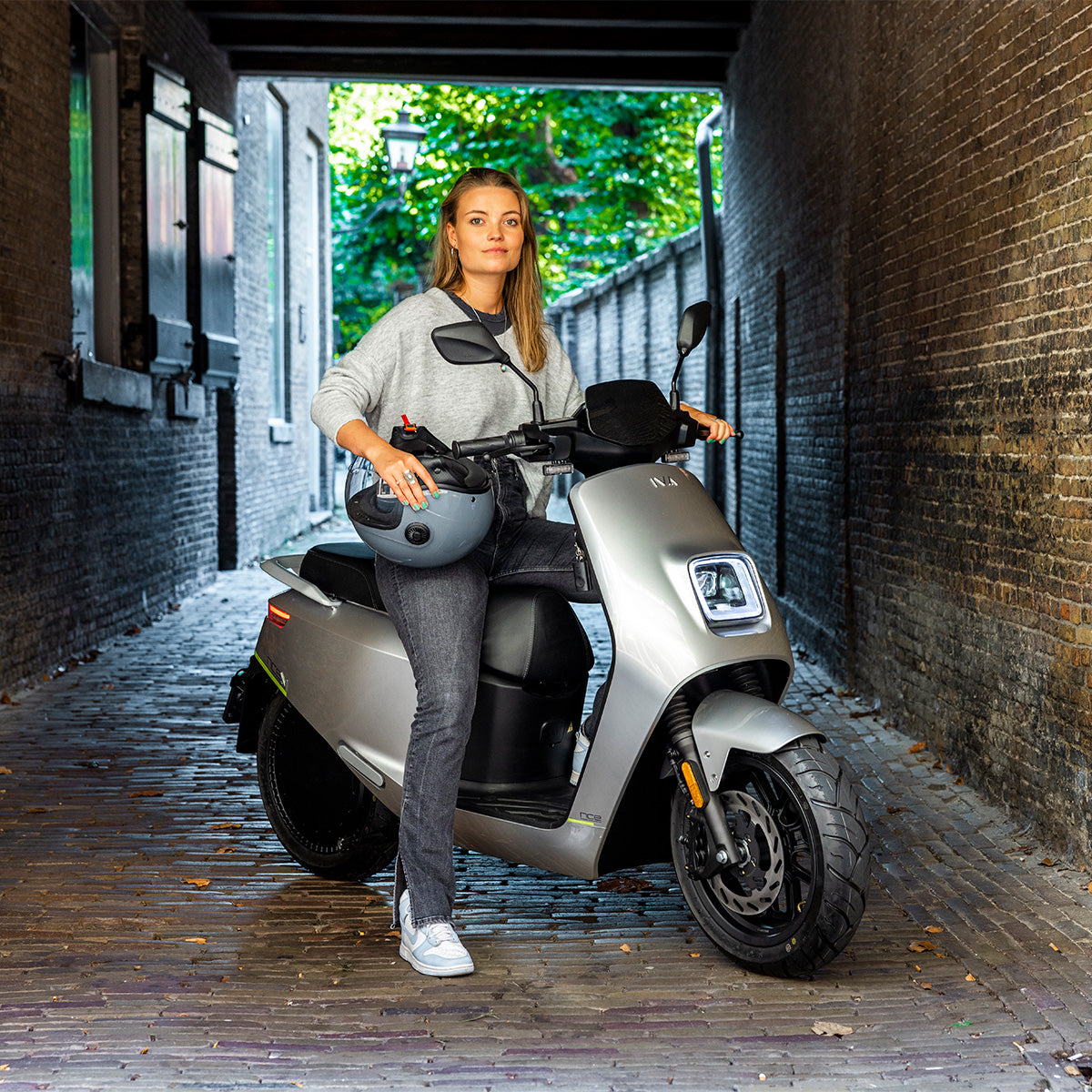
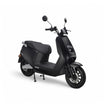
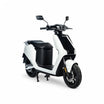
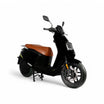
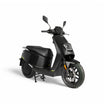
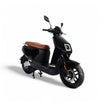
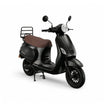
IVA E-GO S5 — our bestseller for commuters. 45 km/h, range of up to 90 km with two batteries, ABS brakes, USB port, and large luggage compartment. Suitable for commuting up to 35 km one way.View the IVA E-GO S5 product page.
IVA E-GO S4 — winner of the ANWB E-Scooter Test 2025. 45 km/h, 60-70 km range, modern design, very quiet motor and excellent price-performance ratio. Read our extensive IVA E-GO S4 review.
IVA Citycar A05 — for those who really do all their trips within the city and don't need to use the highway. Up to 25 km/h, no helmet requirement outside Amsterdam/Utrecht, and very low maintenance. Ideal as a supplement to occasional public transport use.
Second battery or not
Most IVA scooters have a removable battery that you charge indoors using a power outlet — handy if you don't have a driveway. A second battery costs around the € 450 but doubles your range and eliminates battery charging anxiety on longer trips. For commuting over 20 km one way: definitely do it.
5. Environment, parking and practical considerations
An electric scooter emits during use zero CO₂, zero particulate matter and zero NOx out. This automatically complies with all environmental zones in the Netherlands (Amsterdam, Rotterdam, Utrecht, The Hague, Eindhoven, and expanding in 2026). For a comparable petrol scooter, this saves approximately 480 kg of CO₂ per 8,000 km of commuting per year — equivalent to driving over 2,000 kilometers in a car.
Parking: usually free and right in front of the door
A scooter takes up approximately 1 m² of space and fits on almost any sidewalk, bicycle parking spot, or special moped/scooter parking area. In most Dutch cities, parking is free, with the exception of parts of Amsterdam and Rotterdam where there are paid moped/scooter parking spaces. At most station parking facilities, you can safely park your scooter for € 0,90 to € 1,50 per day.
Safety: helmet, ABS and visibility
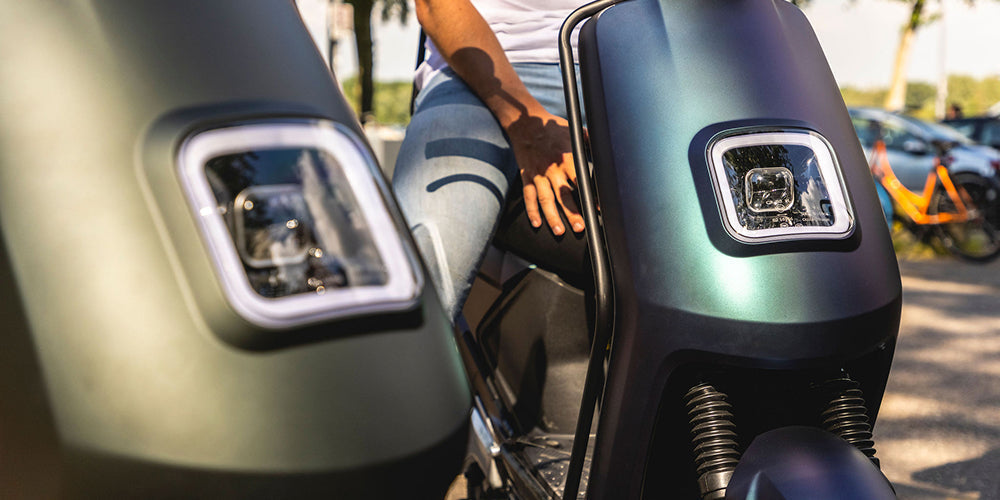
A good helmet (€ 50-150), reflective clothing and ABS brakes significantly reduce your risk. According to figures from SWOV is the helmet the most important single factor in preventing head injuries in scooter accidents. All IVA moped models come standard with dual disc brakes and LED lighting for maximum visibility.
Weather conditions
Rain, snow, or freezing temperatures don't have to be a showstopper. A waterproof poncho (€ 25), winter gloves (€ 40) and optionally heated grips make a scooter perfectly usable even in the Dutch autumn and winter. Many commuters who switched indicate that they use the scooter on 80-90% of workdays and use public transport as a backup during real storms or ice.
What the central government says
You can find the official rules for mopeds and scooters — registration, helmet requirement, driving license, and insurance requirement — at rijksoverheid.nl/moped. Read our blog scooter license plate & insurance: what you need to arrange for the practical step-by-step explanation.
Conclusion: calculation, not emotion
For most commuters on routes of 5 to 30 km, a scooter as an alternative to public transport is a rational choice. You save money, you gain time, you ride cleaner, and you regain control over your day. Compare your route yourself based on costs and travel time — and then check which electric scooter suits you
Frequently Asked Questions
Is a scooter cheaper than public transport?
Yes, for commuting routes up to 30 km, a scooter is typically 50-70% cheaper than an NS annual pass or urban public transport subscription. An electric scooter costs all-in € 70-110 per month, an NS Dal Vrij + Weekdays annual pass will cost around in 2026 € 295 per month.Over a working year of 220 days, you save between € 2.200 and € 2.700.
How much does a scooter cost per month, including all charges?
An electric scooter costs on average € 70 to € 110 per month all-in, a petrol scooter € 95 to € 135. That includes depreciation or lease amount, insurance, electricity or fuel, maintenance, and road tax. The largest cost items are depreciation (€ 40-50) and insurance (€ 13-22). Power for an electric scooter is not yet available € 7 per month.
What driver's license do you need for a scooter?
For a light moped (max 25 km/h, blue license plate) and a scooter (max 45 km/h, yellow license plate), you need an AM driving licence. For a light motor scooter up to 125 cc, you need an A1 driving licence. You can obtain the AM driving licence from the age of 16 via a theory and practical exam at the CBR. If you have a car driving licence issued before October 1, 2009, you are automatically also qualified to drive an AM license.
How many kilometers can you drive on a single battery charge?
An electric scooter in the moped class travels approximately 50 to 90 kilometers on a single full battery charge, depending on the model, rider weight, speed, and temperature. A second battery doubles the range. In winter, the range is 10-20% lower due to cold battery cells. All IVA moped-scooters have removable batteries that you charge indoors using a standard wall socket.
Is an electric scooter suitable for commuting?
Yes, for commuting up to 30 km one way, an electric moped-scooter is perfectly suitable. You have sufficient range on a single charge, you ride silently, and you pay less than a euro a day for electricity. For distances exceeding 30 km one way, we recommend a model with a second battery or a 125 cc motor scooter. Our IVA E-GO S5 is specifically designed for longer commutes with a range of up to 90 km.
Are you allowed to ride a scooter on the bus lane?
In many municipalities, a moped or scooter (yellow license plate, 45 km/h) is allowed to ride on the bus lane — always check the sign below the bus lane. A light moped (blue license plate, 25 km/h) is never allowed to do so. Using the bus lane can significantly shorten your travel time during rush hour, especially in cities like Rotterdam, Utrecht, and Eindhoven, where many bus lanes have been made available for mopeds.
What is the difference between a scooter, a moped, and a light moped?
"Scooter" is a general term for a motorized two-wheeled vehicle with a flat step-through. A light moped is a scooter limited to 25 km/h and has a blue license plate. A moped is a scooter limited to 45 km/h and has a yellow license plate. A motor scooter has an internal combustion or electric motor of 125 cc or equivalent and requires a motorcycle license. The official rules can be found at rijksoverheid.nl.
How do you insure a scooter?
Third-party liability insurance is legally mandatory and costs from € 13 per month for a moped and € 18 for a moped. Third-party liability + comprehensive adds theft and comprehensive coverage and amounts to € 25-35 per month. You take out insurance with insurers such as Univé, InShared, Centraal Beheer, or via the ANWB. Always compare on coverage, deductible, and roadside assistance. Our blog scooter insurance 2026 covers everything in detail.
Can you deduct a scooter for business purposes from your taxes?
Yes, as a self-employed professional or director/major shareholder, you can fully deduct a scooter used for business purposes as a business asset for income tax purposes and reclaim the VAT. Employees can do this through their employer. € 0,23 receive tax-free reimbursement per business kilometer driven. For 220 working days at 25 km one-way, that is € 2.530 tax-free per year. Always discuss this with your employer or tax advisor.
What do I do in bad weather?
A waterproof poncho of € 25, winter gloves € 40 and optional heated grips make a scooter perfectly usable in autumn and winter as well. Most IVA models have a windscreen that keeps rain and cold wind off your torso. In the event of a real storm, freezing rain, or heavy snowfall, it is wise to use the train or a carpool as a backup that day — typically 5-10% of working days per year.

Leave a comment
This site is protected by hCaptcha and the hCaptcha Privacy Policy and Terms of Service apply.