

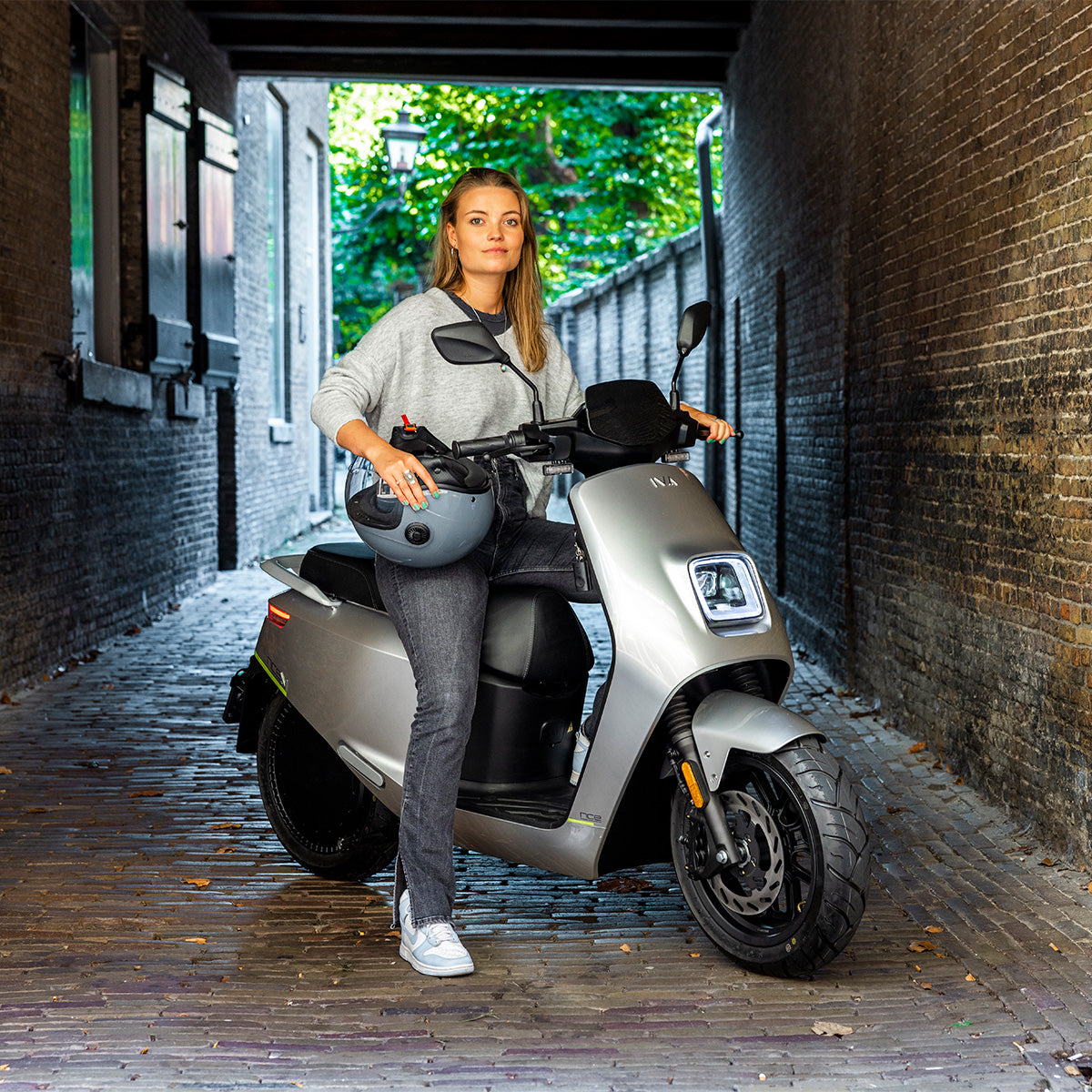
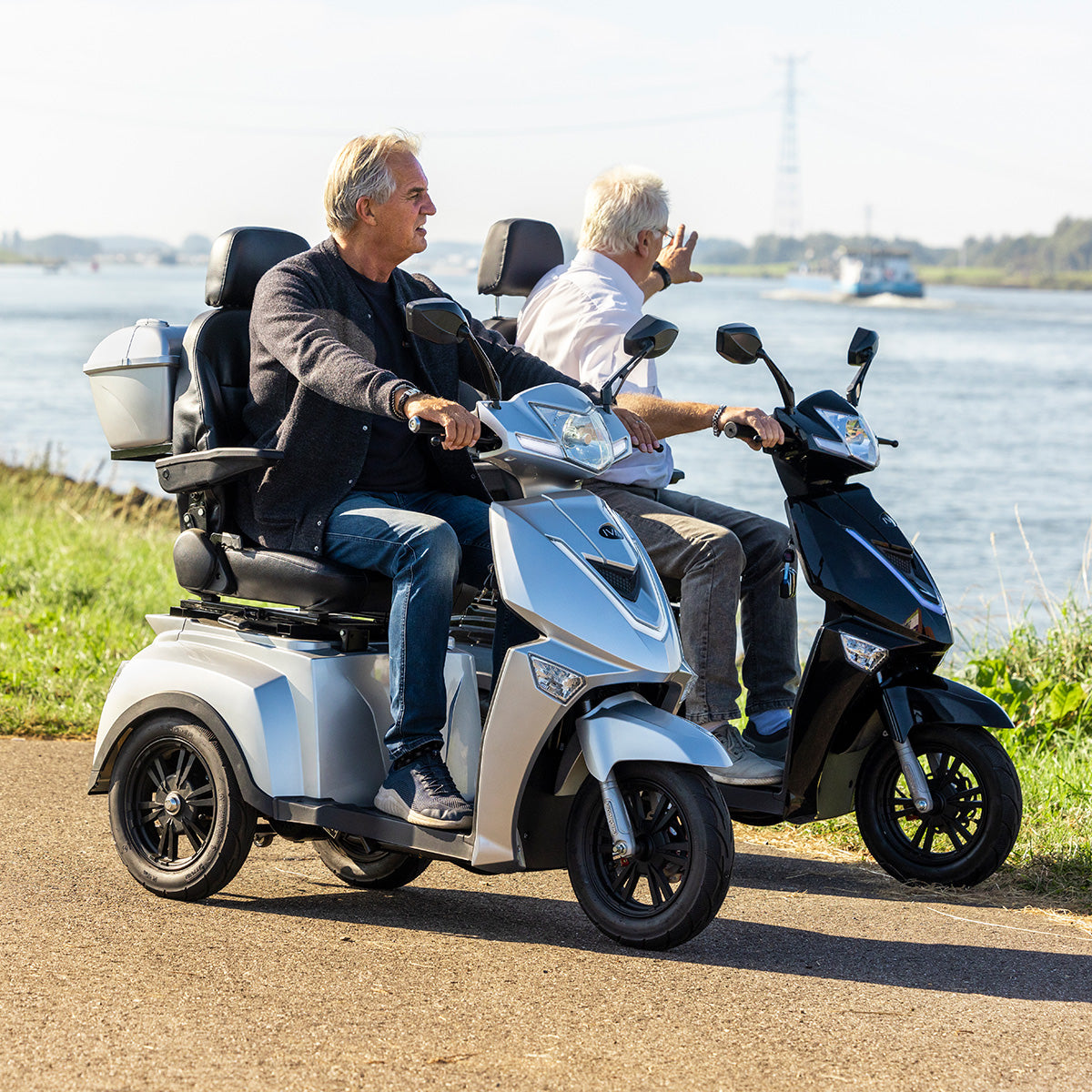
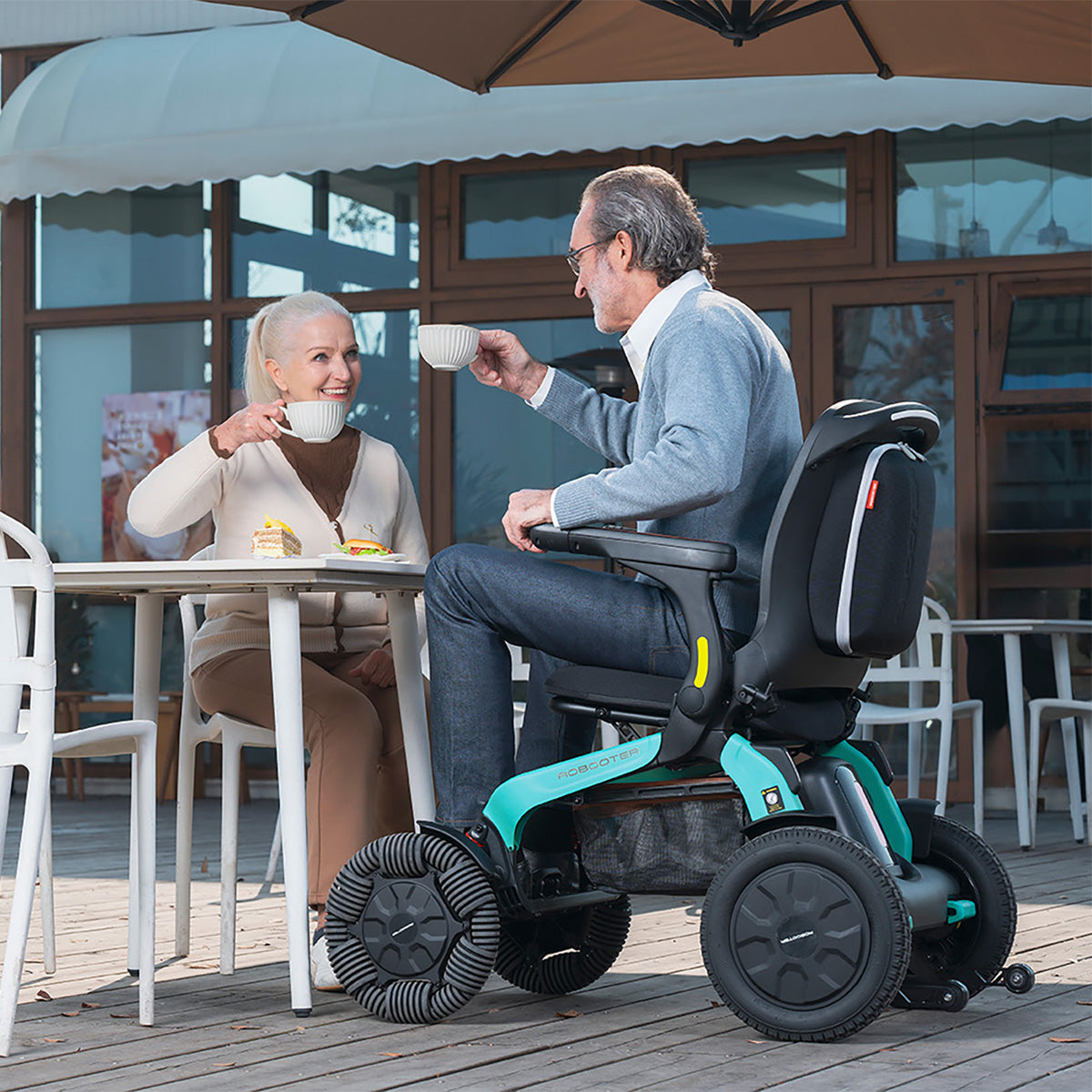
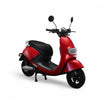
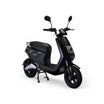
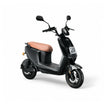
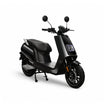
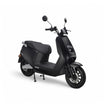
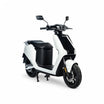
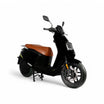
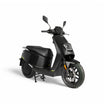
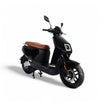
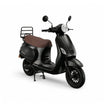
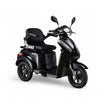
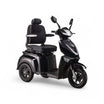
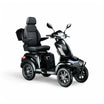
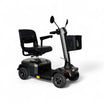
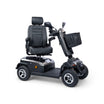
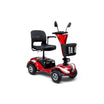
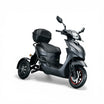
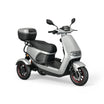
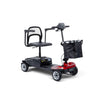
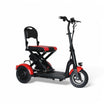
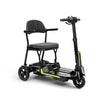

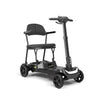
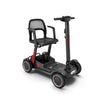
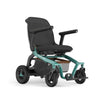
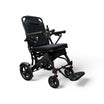
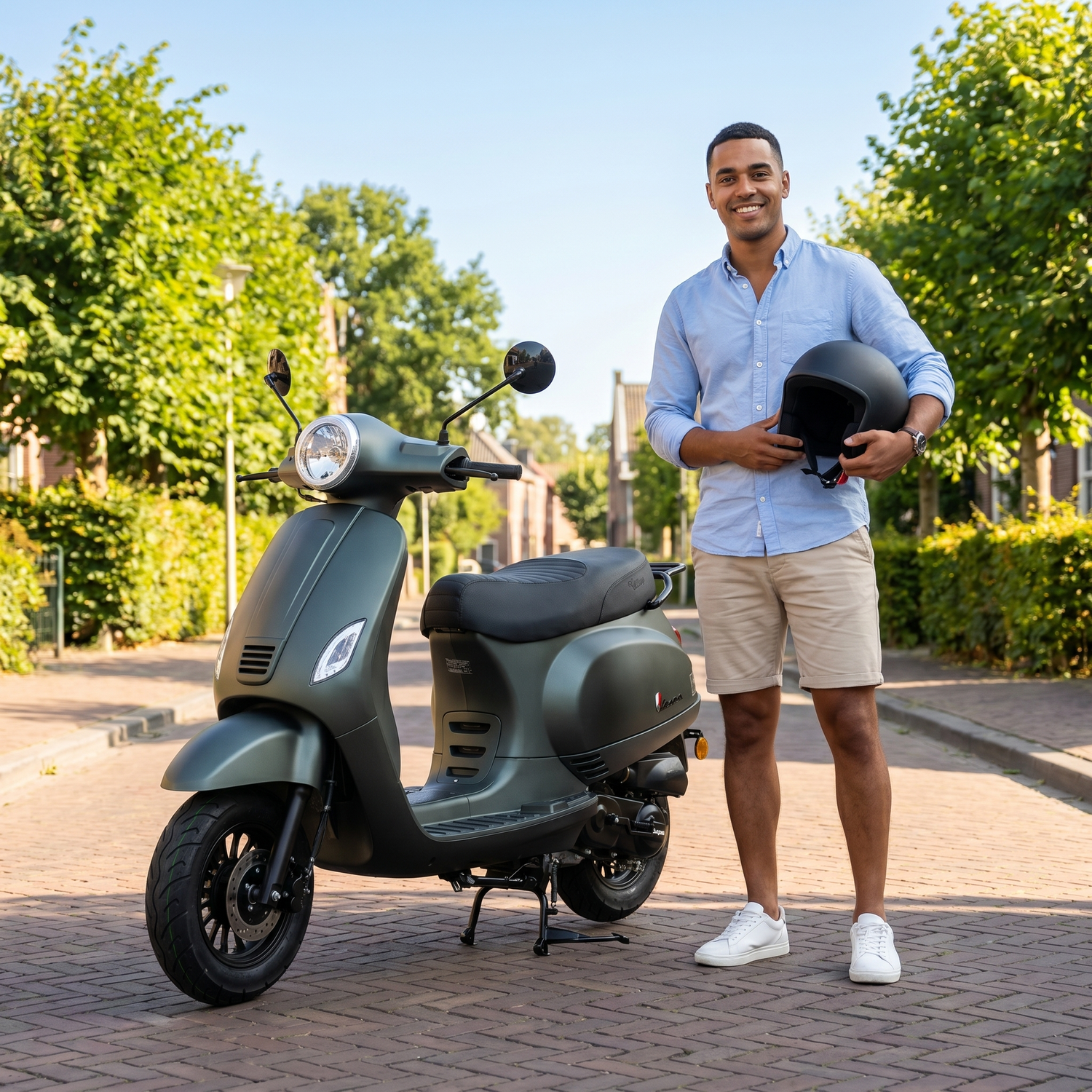
Nearly three hundred thousand Dutch people travel daily on a mobility scooter, but regarding the mobility scooter traffic rules There is still a lot of confusion. Are you allowed on the sidewalk? Is there a helmet requirement? Do you need to carry a driver's license? And how fast are you really allowed to go? In this guide, IVA Mobility lists all the rules for 2026 — based on the official guidelines of the Dutch government and Veilig Verkeer Nederland — so that you can hit the road with your mobility scooter without a doubt.
Table of contents
- Is there a helmet requirement for mobility scooters?
- How fast is a mobility scooter allowed to go?
- Where are you allowed to ride — sidewalk, bike path, or road?
- Driving license, license plate, and insurance: what is mandatory?
- Safe driving and parking: the practical rules
- Frequently asked questions about mobility scooter traffic rules
Key points in brief
- No helmet requirement: A helmet is not mandatory on a mobility scooter, regardless of the type or speed.
- Speed determines the route: Up to 6 km/h you drive everywhere, up to 25 km/h on the cycle path and road, and at 30–45 km/h exclusively on the road.
- No driver's license required: For a mobility scooter with a speed of up to 45 km/h, you do not need a driver's license or a license plate.
- Third-party liability insurance is mandatory: Every motorized mobility scooter is covered by the Motor Vehicle Liability Insurance Act.
- Sidewalk is permitted, provided at walking speed: On the sidewalk, a maximum speed of 6 km/h applies, and you have the same rights and obligations as a pedestrian.
- Lighting required after sunset: White front headlight, red taillight, plus reflectors on the sides and rear.
Is there a helmet requirement for mobility scooters?
No, there is no helmet requirement for mobility scooters. This remains unchanged in 2026, even though the helmet requirement for light mopeds and light scooters was introduced on January 1, 2023. A mobility scooter falls under the legal category of "motorized disabled vehicle," and therefore different rules apply than for a regular scooter.
The legislator has three reasons for not making helmets mandatory for mobility scooters. First, a mobility scooter generally travels slower than a light moped. Most models reach 6, 10, or 17 km/h — a fraction of what a souped-up moped does. Second, a mobility scooter with three or four wheels is much more stable than a two-wheeled vehicle. Consequently, the risk of falling and hitting your head is minimal. Third, mobility scooters are often wider and more conspicuously equipped with lighting and reflectors, ensuring that other road users see them clearly.
Would you still like to wear a helmet? Of course you may. Many experienced mobility scooter riders voluntarily opt for a lightweight bicycle helmet at higher speeds or in busy traffic. At IVA Mobility Our dealers are happy to advise you on a helmet that suits your situation and model. Important to know: also with a foldable mobility scooter or a three-wheeled IVA T3 There is no helmet requirement.
What if the law changes?
A future helmet mandate for mobility scooters has not been announced at this time. The national government regularly evaluates traffic regulations, but given the target group — often seniors or people with mobility impairments — and the limited risk of accidents, mandatory head protection is not the obvious choice. You are therefore completely free in your choice.
Conclusion: wearing a helmet on a mobility scooter is not mandatory in 2026, but it is a personal choice that can provide extra safety at higher speeds or in heavy traffic.
How fast is a mobility scooter allowed to go?
The maximum speed of a mobility scooter depends on the type and the place where you are driving. According to the official Central Government rules for disabled persons' vehicles There are three speed categories you need to know.
Category 1: up to 6 km/h (walking speed)
This is pedestrian speed. On the sidewalk and on the footpath in shopping centers, you must always stay within this 6 km/h, regardless of what your mobility scooter is theoretically capable of. Many models have a switch or damper function that allows you to manually limit the top speed to 6 km/h. Handy in a busy supermarket or at the market.
Category 2: up to 25 km/h
Most mobility scooters fall into this category. You are then allowed to ride on the cycle path and, if there is no cycle path, on the road. A large group of models — including the fixed mobility scooters from our range — has a top speed of 17 or 25 km/h and thus falls precisely into this class.
Category 3: 30 to 45 km/h
Fast mobility scooters, such as 45 km/h models, must drive on the road. The cycle path is prohibited for this type. These are often robust four-wheelers suitable for longer distances and longer journeys.
Important to remember: The maximum speed is not an obligation, but a limit.. You may always drive slower if the situation calls for it. In a residential area, for example, a maximum speed of 15 km/h applies, in a 30 km/h zone you follow the flow of traffic, and on a bicycle street you are a guest in traffic, just like cyclists.
Modifying a mobility scooter to increase its speed is not legally permitted. The manufacturer sets the maximum speed in line with the type approval, and you may not exceed this yourself. If you do, your vehicle no longer meets the legal definition of a disabled vehicle and you may receive a fine.
Conclusion: up to 6 km/h on the sidewalk, up to 25 km/h on the bike path and road, 30–45 km/h exclusively on the road — that is the golden rule.
Where are you allowed to ride — sidewalk, bike path, or road?
The place where you are allowed to ride depends directly on the speed of your mobility scooter and the available section of road. Below are the rules for each situation.
Is a mobility scooter allowed on the sidewalk?
Yes, you may ride a mobility scooter on the sidewalk, provided you do not exceed 6 km/h. On the sidewalk, you have the same rights and obligations as a pedestrian. This means: yielding to people on foot, maintaining sufficient distance from shop windows and building facades, and walking in line with the zebra crossing at pedestrian crossings. The sidewalk is particularly useful in shopping streets, for short trips, and in places where the bike path is unsafe or inconvenient.
Is a mobility scooter allowed on the bike path?
Yes, mobility scooters with a speed of up to 25 km/h are allowed on the cycle path. You must keep to the right, indicate your direction clearly, and be mindful of faster cyclists. On a mandatory cycle path (blue sign with a white bicycle), you are welcome as a mobility scooter rider. On a non-mandatory cycle path (the same sign with "bicycle" in black), you may choose between the cycle path and the road.
Is a mobility scooter allowed on the road?
Yes, that is allowed — and for fast mobility scooters (30–45 km/h) it is even mandatory. You keep to the right, use your turn signals, and adjust your speed to match other traffic. For some models, such as 45 km/h mobility scooters, additional rules apply: a license plate is mandatory, and you automatically drive on the road.
Prohibited areas: motorway, expressway and expressway
A mobility scooter is never allowed on a motorway or expressway. You are also not welcome on a dual carriageway, unless your vehicle reaches at least 50 km/h — which does not apply to a mobility scooter.In addition, pedestrian areas without exception ("except for destination traffic") sometimes have restricted access; please pay attention to the signs.
Tip from Veilig Verkeer Nederland: when in doubt, always choose the safest route, not the fastest. A detour via a quiet street is often more pleasant than a busy thoroughfare.
Conclusion: sidewalk up to 6 km/h, bike path up to 25 km/h, road from 30 km/h — and never on motorways.
Driving license, license plate, and insurance: what is mandatory?
In the Netherlands, you do not need a driver's license for a standard mobility scooter with a speed of up to 45 km/h. A license plate is also not required — except in specific cases that we discuss below. Third-party liability insurance is mandatory, however, regardless of the model.
Driving license: when and when not?
A mobility scooter falls under the category of "motorized disabled vehicle". There is no driving license requirement for this category, regardless of whether you drive at 6, 17, 25, or 45 km/h. Therefore, you do not need to take a theory exam or take practical lessons. However, Veilig Verkeer Nederland recommends taking a short driving skills course, especially if you are using a mobility scooter for the first time. At the IVA dealers you often receive extensive driving instructions upon delivery.
License plate: only on 45 km/h models
Most mobility scooters do not travel faster than 25 km/h and do not require a license plate. With a 45 km/h mobility scooter, things become more complicated: a license plate requirement may arise, depending on the type, construction, and year of manufacture. The RDW provides clarification. Do you want to purchase a fast mobility scooter? Ask your dealer for the registration certificate and license plate before you ride.
Insurance: Third-party liability is always mandatory
Every motorized mobility scooter falls under the Motor Vehicle Liability Insurance Act (WAM). Third-party liability insurance is therefore legally mandatory. This covers damage you cause to others with your mobility scooter — for example, if you accidentally hit a parked car or strike a pedestrian. In 2026, the average premium will be between € 75,00 and € 200,00 per year.
Additionally, you can opt for comprehensive coverage (WA+) or an all-risk policy. The latter also covers damage to your own mobility scooter in the event of theft, vandalism, or a collision for which you are liable. For more expensive models — especially if you have invested through WMO or a private purchase — a more comprehensive policy is often advisable.
Age and health
There is no minimum age for a mobility scooter. In practice, they are primarily used by people over 55, but younger people with a mobility impairment are also allowed to drive. A medical examination is not mandatory, but if there are any doubts about vision, reaction time, or cognitive health, we always recommend a consultation with your GP.
Conclusion: for a mobility scooter up to 45 km/h, you do not need a driver's license or a license plate, but third-party liability insurance is always mandatory.
Safe driving and parking: the practical rules
The traffic rules for a mobility scooter go beyond the helmet requirement and speed limits. Below are the practical rules you really need to know in everyday traffic.
Lighting and reflection
Between sunset and sunrise — and in poor visibility during the day — lighting is mandatory. Your mobility scooter must be equipped with a white or yellow-white headlight at the front, a red taillight, and red reflectors on the sides and rear. Indicators (turn signals) are strongly recommended, but are not legally required for all models. Practical advice: drive with your lights on during the day in winter as well, so you are more visible.
Parking
Park a mobility scooter in a place where you do not obstruct anyone. You may park on the sidewalk, provided that at least 1.20 meters remains for pedestrians, strollers, and people in wheelchairs. Bicycle parking spaces are also permitted. You may only park in disabled parking spaces if you have a valid disabled parking permit. Never park in front of driveways, fire hydrants, ramps, or emergency exits.
Indicating direction and right of way
You indicate your direction using turn signals or — on older models without indicators — via a clear arm gesture. Right-of-way rules are the same as those for cyclists and mopeds on the cycle path, and the same as for cars on the road. A mobility scooter does not have automatic right of way. At an intersection without traffic lights, look to the right before crossing or turning.
Alcohol, phone and distraction
The law is clear: the ban on driving under the influence (above 0.5 per mille) and the ban on holding a mobile phone while driving also apply to mobility scooters. A hands-free holder on your handlebars is a sensible investment. Fines for driving a mobility scooter under the influence can amount to several hundred euros, and for serious violations, an official report will follow.
Luggage and passengers
A mobility scooter is, in principle, a single-person vehicle. You may not carry a passenger, unless the model is specifically approved for two people (a so-called duo-scooter). You carry luggage in the standard luggage compartment or in a bicycle bag mounted on the back. Keep it lightweight: an overloaded mobility scooter can tip over or experience braking delays.
Tip: Always read the manual for your specific model before your first ride. The manufacturer provides additional safety advice in it, which may vary by type. Veilig Verkeer Nederland has an extensive dossier on mobility scooter traffic rules. that forms a useful addition.
Conclusion: lighting is mandatory after sunset, no alcohol, no phone in hand, and parking is allowed provided you do not obstruct anyone. Adhere to these rules and you will drive safely and legally.
Frequently asked questions about mobility scooter traffic rules
Is a helmet mandatory on a mobility scooter?
No, a helmet is not mandatory on a mobility scooter. This applies to all types and speeds, from a quiet 6 km/h scooter to a fast 45 km/h version. Do you still want to wear a helmet for extra safety? Of course you may, but it is a personal choice.
How fast are you allowed to go with a mobility scooter?
The maximum speed depends on the type and location. On the sidewalk, a maximum of 6 km/h. On the bike path, up to 25 km/h. Faster models (30–45 km/h) travel exclusively on the road. Modifying a mobility scooter to increase its speed is legally prohibited.
Is a mobility scooter allowed on the sidewalk?
Yes, a mobility scooter is allowed to ride on the sidewalk, provided you do not go faster than 6 km/h. You then have the same rights and obligations as a pedestrian and you must give priority to people on foot.
Do you need a driver's license for a mobility scooter?
No, a driver's license is not required for a mobility scooter with a speed of up to 45 km/h. There is also no mandatory theory or practical exam. However, a driving skills course at your dealer is highly recommended, especially for beginners.
Is a mobility scooter required to be insured?
Yes, third-party liability insurance is legally required for every motorized mobility scooter under the Motor Vehicle Liability Insurance Act. Premiums start in 2026 from approximately € 75,00 per year. Additional coverage for theft or all-risk is optional but advisable for more expensive models.
What is the age limit for a mobility scooter?
There is no minimum age. A mobility scooter may be driven at any age, provided you are physically and mentally capable of driving safely. In practice, they are primarily used by people over 55 and people with mobility impairments.
Is a mobility scooter allowed on the motorway or highway?
No, a mobility scooter is never allowed on a motorway or expressway. You are not welcome on a highway either, because a mobility scooter does not reach the minimum speed of 50 km/h. Stick to bike paths, roadways, and sidewalks.
How do you park a mobility scooter according to the rules?
Park your mobility scooter in a place where you do not obstruct anyone. Parking on the sidewalk is permitted, provided 1.20 meters of space remains for pedestrians. Bicycle parking spaces are also permitted. Disabled parking spaces are only permitted with a valid parking permit. Never block driveways, fire hydrants, or emergency exits.
What is the rule difference between a mobility scooter and a light moped?
A light moped has a blue license plate, requires a helmet, and falls under moped legislation. A mobility scooter falls under the category of disabled vehicles and does not require a helmet, a license plate (up to 25 km/h), or a driver's license. The rules therefore differ fundamentally.
What lighting is mandatory on a mobility scooter?
A mobility scooter must have a white or yellow-white headlight at the front and a red taillight. In addition, red reflectors on the sides and rear are mandatory. Lighting must be used between sunset and sunrise and in poor visibility. Turn signals are strongly recommended, but not legally required for every model.
Ready to hit the road?
Whether you are undecided between an agile folding mobility scooter for the car, a robust stationary scooter for long journeys, or a three-wheeled IVA T3 for extra maneuverability in the city — the mobility scooter specialists at IVA Mobility are happy to help. View our range or contact a dealer near you for personal advice and brief driving instructions upon delivery.
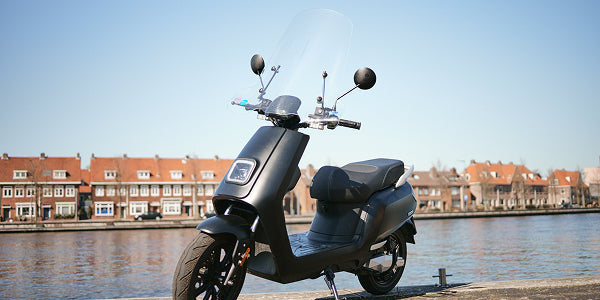


1 reaction
Marjan Hoenderdaal
Ik betaal voor mijn scootmobiel een bromfietsverzekering van 271,20 euro per jaar terwijl hij maar 16km per uur rijd geen helmplicht alles rijdt mij voorbij waarom bromfietsverzekering??
Leave a comment
This site is protected by hCaptcha and the hCaptcha Privacy Policy and Terms of Service apply.