

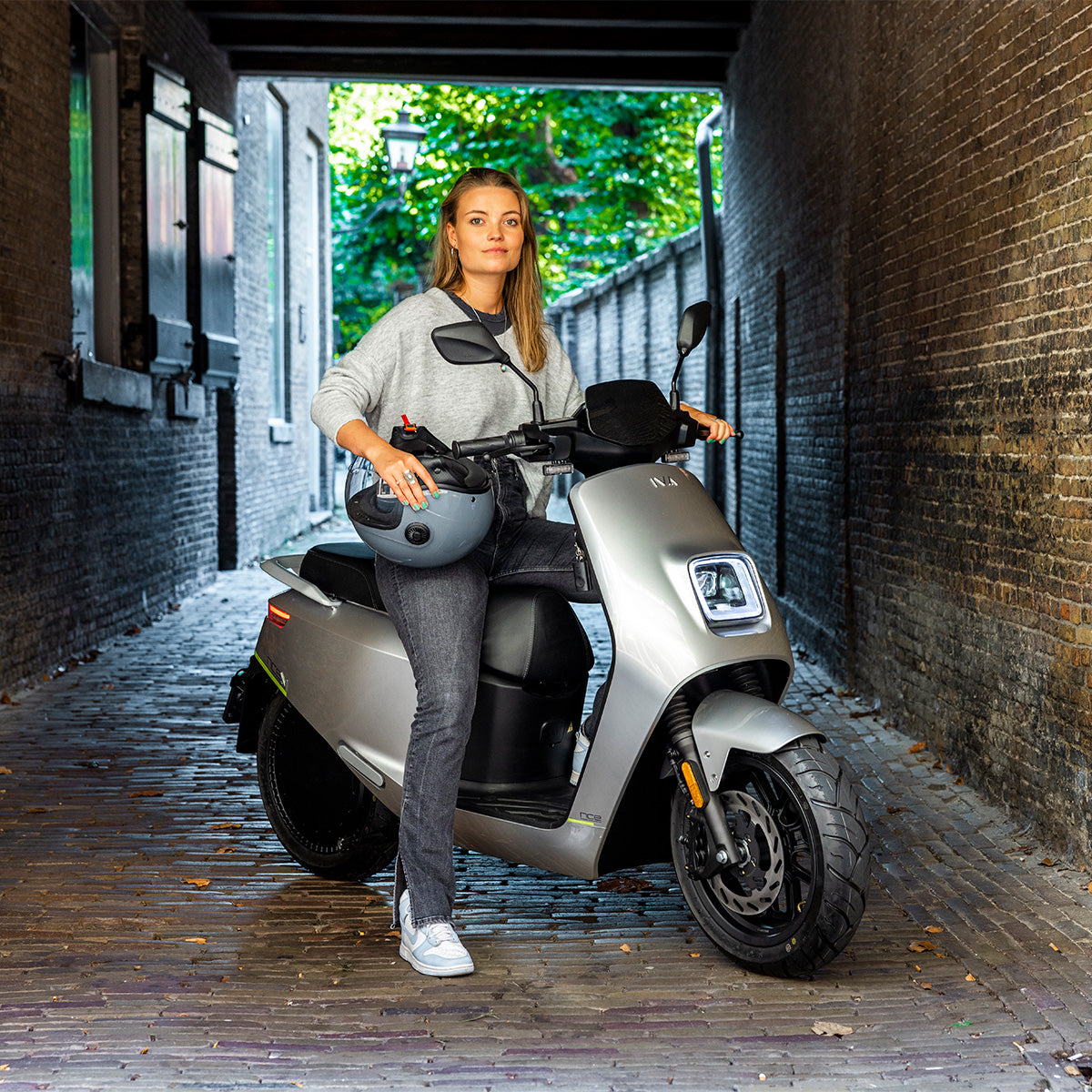
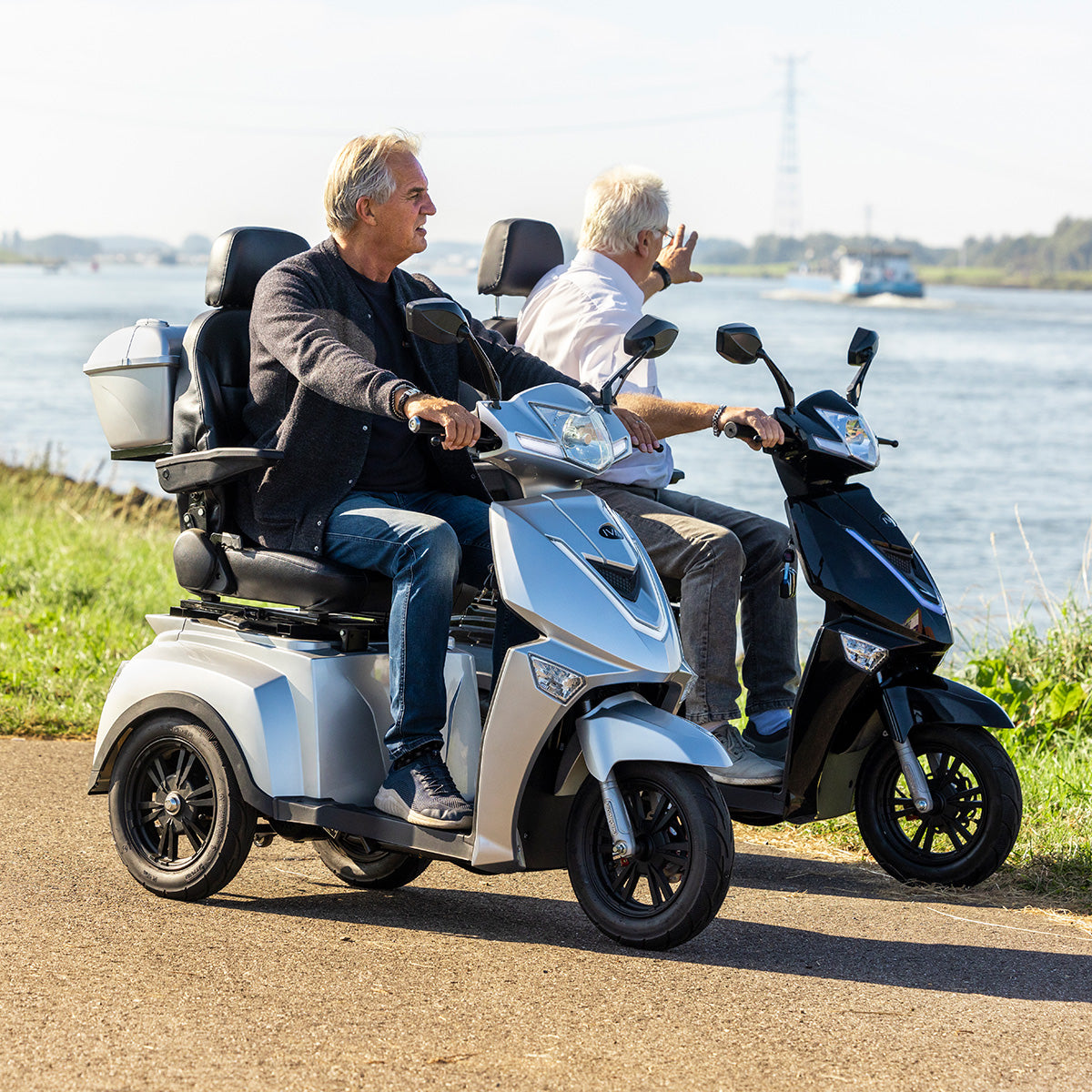
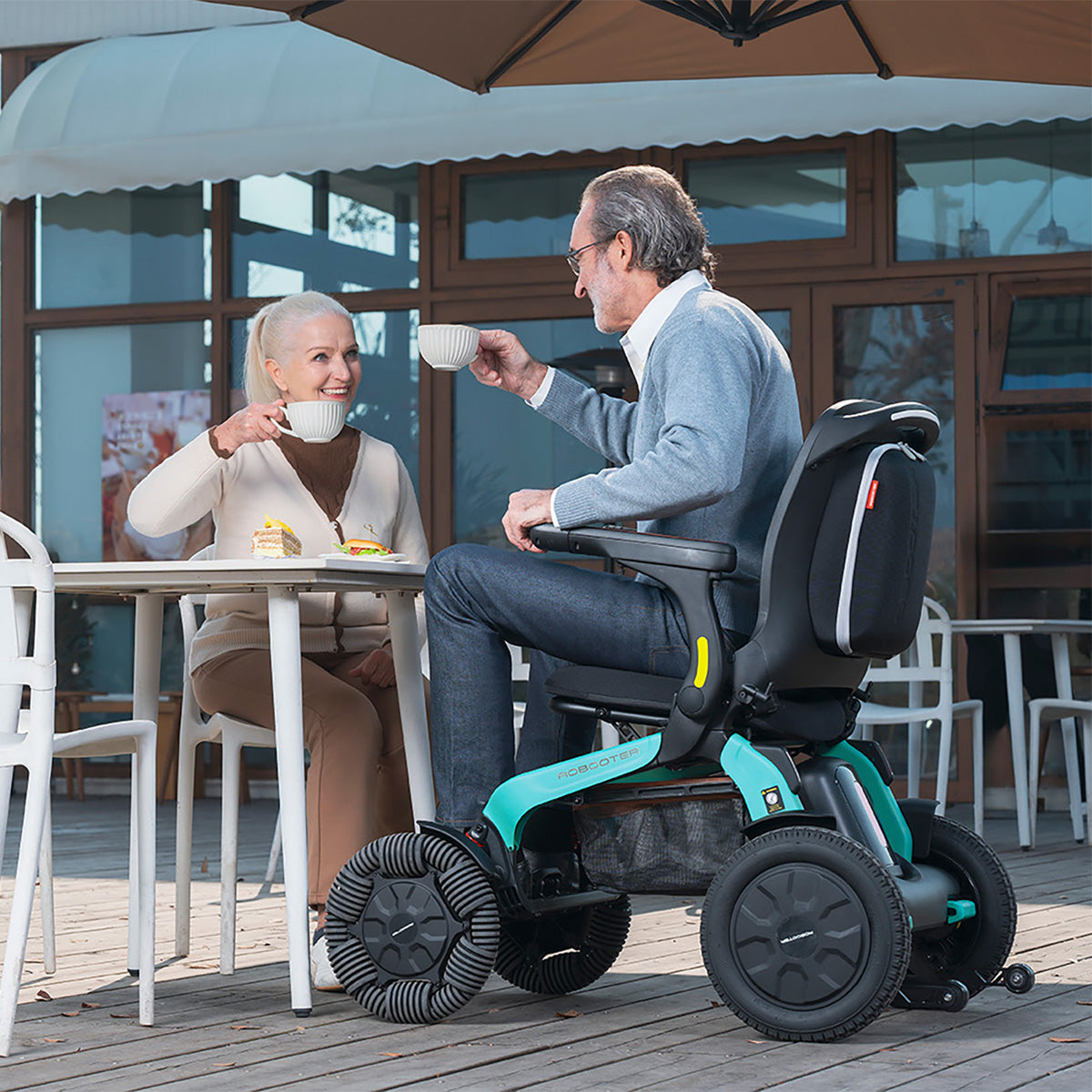
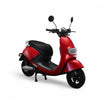
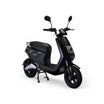
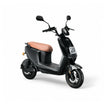
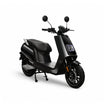
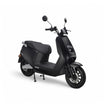
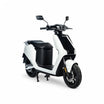
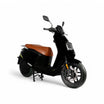
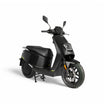
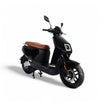
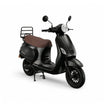
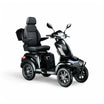
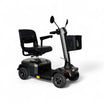
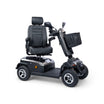
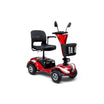
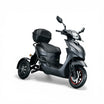
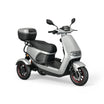
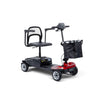
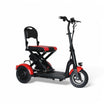
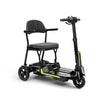

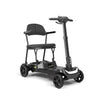
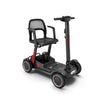
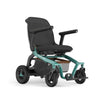
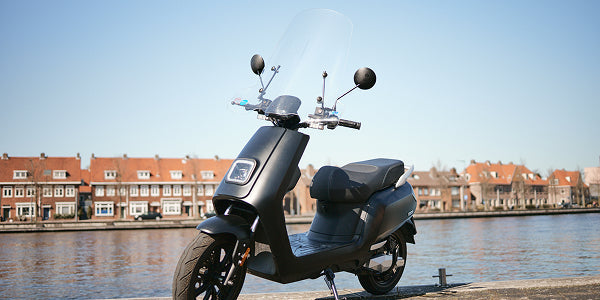
More and more Dutch people are trading in their petrol scooters for an electric model. No coincidence: the benefits of an electric scooter will pile up in 2026. Lower monthly costs, free access to low-emission zones, whisper-quiet driving through the city, and batteries that easily reach 60 to 120 km on a single charge. But there are also disadvantages of an electric scooter — a higher purchase price and charging time are the best known. In this guide, we present both sides fairly, compare electric with petrol and with the e-bike, and you can read which subsidies and tax schemes apply in 2026.
Table of contents
- What is an electric scooter and how does it work?
- The 10 most important benefits of an electric scooter
- The disadvantages at a glance — and how to avoid them
- Subsidies and tax benefits 2026
- Electric scooter vs petrol scooter
- Electric scooter vs e-bike: which one suits you?
- Environmental zones and low-emission zones in 2026
- For whom is an electric scooter the smartest choice?
- Frequently Asked Questions
Key takeaways
- An electric scooter has 60-70% lower operating costs than a petrol scooter and is locally zero-emission.
- The biggest disadvantages are the higher purchase price (€ 500-1,500 more than petrol), charging time (4-7 hours) and more limited range (60-120 km). All three are solvable.
- Light mopeds (25 km/h, blue license plate) are exempt from road tax; light scooters (45 km/h, yellow license plate) require an AM driving license and are required to wear a helmet.
- In 2026, Rotterdam, Amsterdam, Utrecht, and The Hague will have extensive environmental zones — electric scooters will be allowed to continue riding everywhere.
- There are no national subsidies for private individuals in 2026, but for businesses you benefit from the MIA/Vamil deduction, and some municipalities provide demolition compensation.
- For city rides of 0-25 km, the e-scooter is faster than an e-bike; for 0-10 km, an e-bike is often more comfortable and cheaper.
What is an electric scooter and how does it work?
An electric scooter is a two-wheeler with an electric motor instead of an internal combustion engine. The energy comes from a rechargeable lithium-ion battery, which you charge at home using a standard wall outlet. No gasoline, no oil, no exhaust.
The motor is usually located in the rear wheel (a hub motor). As soon as you twist the throttle, the controller sends power to the motor and you ride away — instantly and without shifting gears. An electric scooter has one moving main component instead of hundreds in a gasoline engine. Less wear and tear, less maintenance, less chance of breakdowns.
In the Netherlands, the RDW has two main categories:
- Moped: maximum 25 km/h, blue license plate, AM driving license required, helmet mandatory since January 1, 2023.
- Moped: maximum 45 km/h, yellow license plate, AM driving license required, helmet mandatory.
IVA Mobility offers both categories. Models such as the IVA E-GO S4 (moped, 25 km/h) and the IVA E-GO S5 (moped, 45 km/h) share the same frame and battery pack — only the permitted top speed and the license plate category differ.
Brief summary: an electric scooter is a two-wheeled vehicle with an electric motor and lithium-ion battery, emission-free and with minimal maintenance, available as a moped (25 km/h) or light scooter (45 km/h).
The 10 most important benefits of an electric scooter
The benefits of an electric scooter are both practical and financial. Below are the ten that will make the biggest difference in your daily use in 2026.
1. Much lower operating costs
A fully charged battery for an average e-scooter (1.5 to 2 kWh) costs approximately at a Dutch electricity rate. € 0,30 per kWh only € 0,45 to € 0,60. With that, you can drive 60 to 100 km. Convert that: € 0,008 per kilometer. A petrol scooter sits at € 0,06-0.08 per kilometer. On an annual basis (5,000 km), that saves € 300-350 on fuel only.
2. No road tax for mopeds
In the Netherlands, you do not pay motor vehicle tax for a light moped (blue license plate, max 25 km/h). For an electric light scooter (yellow license plate, max 45 km/h), you also pay less than for a petrol equivalent. Check current rates via the Tax and Customs Administration.
3. Driving whisper-quiet
An electric motor produces virtually no noise. In a residential area at 7 a.m., you start without waking up your neighbors. You notice it in the city as well: you hear what is happening around you, which makes your driving safer.
4. Zero emissions while driving
An electric scooter emits no CO₂, particulate matter, or nitrogen locally. According to Environment Central is an electric scooter also significantly cleaner than a petrol equivalent over its entire lifecycle (including battery production and electricity). This is important in the city, where by 2026 more and more environmental zones will also apply to two-wheelers.
5. Minimal maintenance
No oil changes, no timing belt, no fuel filter, no spark plug. An electric scooter only requires annual maintenance on tires, brakes, and suspension — just like a regular bicycle. Maintenance costs are 40-60% lower than for gasoline.
6. Instant power from a standstill
An electric motor delivers full torque from 0 rpm. In concrete terms: at a green light, you pull away immediately, without tapping the accelerator and without searching for the right RPM. This makes driving in the city more relaxing and safer at intersections.
7. Charge at home — no gas station
You can charge your electric scooter anywhere using a standard wall socket (230V). With many IVA models, you can remove the battery and take it inside — handy if you don't have a garage or storage space. A full charge takes 4 to 7 hours; charging overnight is often sufficient for the entire week of commuting.
8. No odor and no stains
No petrol fumes on your jacket, no oil leaks on your driveway. For anyone who stores their scooter in a shed, garage, or storage room, that is a serious daily benefit.
9. Often more favorable insurance
Insurers charge lower premiums for electric scooters than for comparable petrol scooters — on average 10-15% lower. The reason: less maintenance, lower fire susceptibility, and better theft prevention via tracking modules. Compare premiums via our guide on scooter insurance and costs in 2026.
10. Proven ANWB performance
The The IVA E-GO S4 has won the ANWB test multiple times since 2022. for electric scooters in its class. Independent measurements of acceleration, braking distance, range, build quality, and finish. A serious signal that the Dutch e-scooter market has matured.
Brief summary: the ten biggest benefits are lower costs, no road tax for mopeds, whisper-quiet, zero local emissions, minimal maintenance, instant power, home charging, no odor, lower insurance, and proven quality.
The disadvantages at a glance — and how to avoid them
An honest overview of the disadvantages of an electric scooter is just as important as the benefits. Below are the five most frequently mentioned disadvantages — and what you can do about them.
Higher purchase price
On average, the purchase price of a new electric scooter is € 500 to € 1.500 higher than a comparable petrol scooter. But: Thanks to the lower operating costs, you will recoup the difference within 3 to 4 years. With daily use (10,000 km per year), even within 2 years. Additionally, you can find more and more e-scooters at competitive prices on second-hand platforms.
Limited range
In practice, an electric scooter achieves 60-100 km per charge; top models like the IVA E-GO S5 even up to 120 km. More than enough for urban use, but sometimes tight for long trips in a single day. Solution: choose a model with a removable battery, so you can charge a second battery (or the same battery) on the go at the office or at a friend's.
Charging time instead of refueling
You can fill a full petrol tank in 2 minutes; a dead battery takes 4-7 hours. For the vast majority of users — who charge overnight — this plays no role whatsoever. Do you make many long trips in a single day? Choose a model with a removable battery or have a spare battery ready.
Long-term battery degradation
A lithium-ion battery loses an average of 2-3% capacity per year. After 5 years, a well-maintained battery usually retains 80-85% of its original capacity. Replacement costs € 400-700 — comparable to a major petrol scooter maintenance service. Tip: never fully discharge the battery and keep it between 20% and 80% for maximum lifespan. Read more about battery lifespan and replacement.
Lower residual value on the second-hand market
Electric scooters have been available in the Netherlands for a relatively short time. As a result, the second-hand market is less mature, and residual values after 4-5 years are lower than those of petrol scooters. This difference decreases annually as electric becomes the norm; by 2026, the difference will already be smaller than in 2022. For those who use their scooter for 6 years or more, this disadvantage does not outweigh the annual savings.
Brief summary: the five real disadvantages — higher purchase price, limited range, charging time, battery degradation, and lower residual value — are all solvable or economically compensated within three to four years.
Subsidies and tax benefits 2026
In 2026, there is no national purchase subsidy for private individuals purchasing an electric scooter. The cabinet has opted for incentives through tax schemes for entrepreneurs and local initiatives via municipalities. Below are the schemes you can actually utilize in 2026.
For private individuals
No BPM exemption (BPM does not apply to scooters), no purchase subsidy. However, there are savings on motor vehicle tax: light mopeds (25 km/h) pay no MRB; light scooters (45 km/h) pay a reduced rate compared to petrol equivalents. Some municipalities — for example, Amsterdam — offer temporary scrapping schemes where you receive compensation for handing in your old (polluting) two-stroke scooter. Check current schemes via your municipality or Rijksoverheid.nl.
For business users and entrepreneurs
This is where the real tax benefits lie. An electric scooter qualifies for:
- MIA (Environmental Investment Deduction): up to 36% of the investment amount deductible from profit.An electric moped is on the environmental list of RVO.
- Vamil (Arbitrary depreciation of environmental investments): You may freely depreciate 75% of the investment, which provides a liquidity advantage.
- KIA (Small-scale investment deduction): for investments from approximately € 2.500 to € 350.000 per year.
- VAT deduction: 100% deductible for business use.
For a business purchase of, for example, an IVA E-GO S5 from € 3.500 (excl. VAT) the total tax benefit can amount to € 700-900 — depending on your tax bracket. Always discuss this with your accountant beforehand.
Local municipal regulations
A number of large municipalities offer schemes for making business fleets more sustainable (delivery services, outpatient care, municipal services). Ask your municipality if there is a Green Deal or fleet scheme running that qualifies you.
Brief summary: private individuals will receive no purchase subsidy in 2026 but will save on road tax and local scrapping schemes; entrepreneurs benefit through MIA, Vamil, KIA, and full VAT deduction for business use.
Electric scooter vs petrol scooter
Those choosing between electric and petrol usually want to see hard numbers. The comparison below shows the key differences for an average user driving 5,000 km per year.
| Aspect | Electric scooter | Petrol scooter |
|---|---|---|
| Fuel costs (5,000 km/year) | ± € 40 | ± € 350 |
| Annual maintenance | ± € 60 | ± € 180 |
| local CO₂ emissions | 0 g/km | ± 80 g/km |
| Access to environmental zones | Always | Increasingly limited |
| Purchase price (entry-level model) | € 2.000 – € 3.500 | € 1.500 – € 2.500 |
| Refuels/charges | 4-7 hours (at home) | 2 minutes |
The conclusion: the petrol scooter wins only on purchase price and refueling speed. On all other fronts — cost per kilometer, maintenance, environment, noise, access to city centers — the electric scooter wins. For urban and regional use in the Netherlands, electric will almost always be financially and practically more advantageous in 2026.
Brief summary: electric wins on almost every front except purchase price and refueling convenience; at 5,000 km per year, an average driver saves well over € 400 per year on fuel and maintenance.
Electric scooter vs e-bike: which one suits you?
The choice between an electric scooter and an e-bike depends on your distance, route, and intention. An e-bike is cheaper, requires no driver's license, and provides exercise; an e-scooter is faster, more comfortable over longer distances, and suitable for rain and wind. The comparison below will help you choose.
| Aspect | Electric scooter | E-bike |
|---|---|---|
| Top speed | 25 or 45 km/h | 25 km/h (pedal assistance) |
| Driving license required | Yes (AM) | No |
| Helmet requirement | Yes | No (but for speed pedelecs) |
| Purchase price | € 2.000 – € 4.500 | € 1.500 – € 4.000 |
| Range | 60-120 km | 50-100 km |
| Comfort in rain/wind | High (windscreen) | Limited |
| Insurance mandatory | Yes (WA) | No |
Choose an e-bike if: your commute is 0-10 km, you want exercise, do not have a driver's license, and do not want to wear a helmet.
Choose an electric scooter if: your commute is 5-25 km, you want to keep riding in rain/wind, you need to transport luggage, or you want to be able to take two passengers with you.
Brief summary: e-bike wins on price, no driver's license required, and exercise; e-scooter wins on speed, comfort, weather resistance, and luggage capacity.
Environmental zones and low-emission zones in 2026
A low-emission zone (environmental zone) is an area where vehicles with excessive emissions are no longer welcome. Since 2025, mopeds and light mopeds also fall under the environmental zones in the four major cities. An electric scooter has always access — an important argument for those who regularly visit the center.
Which cities will have an environmental zone for scooters in 2026?
- Amsterdam: Environmental zone within the A10 ring. Petrol scooters from before 2011 (light moped) and from before 2018 (scooter) are prohibited. Electric scooters are always permitted.
- Rotterdam: Low-emission zone in the city center. Two-stroke mopeds banned. Expansion to four-stroke models planned.
- Utrecht: Vehicles with excessive emissions are banned from the city center.
- The Hague: Preparation for environmental zone for two-wheelers, expected effective date 2026-2027.
In addition to these four, there are pilots in Eindhoven, Groningen, and Arnhem. The trend is clear: polluting two-wheelers are gradually being banned from city centers. By 2026, you will be able to continue using an electric scooter everywhere without exception. For the current situation, consult Rijksoverheid.nlenvironmental zones.
Brief summary: in 2026, Amsterdam, Rotterdam, Utrecht, and (soon) The Hague will have environmental zones for scooters; electric scooters are allowed to continue riding everywhere.
For whom is an electric scooter the smartest choice?
Not everyone has the same usage profile. Below are five typical target groups for whom an electric scooter is the smartest choice in 2026.
The commuter in and around the city
Do you live in Rotterdam, Amsterdam, Utrecht, or The Hague and commute 5-20 km daily? Then you save time, money, and health. Models like the IVA E-GO S4 or IVA NCE are perfect for this ride.
The student or young professional
No money for a car, but public transport is expensive and a bike isn't always enough? You can ride an electric scooter (25 km/h) from the age of 16 with an AM driving license.Monthly costs are usually below € 60. View the entry-level models in the IVA E-GO S2 series.
The 50+ family as a second mode of transport
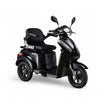
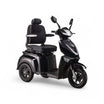
For groceries, trips to the garden center, or short outings — an electric scooter starts up smoothly, is simple to operate, and is cheaper than a second car. For those who want extra support, IVA also offers electric mobility scooters.
The business user
Meal delivery drivers, mechanics, couriers, and district nurses often drive 30-100 km per day. With an electric scooter like the IVA E-GO S5 you save hundreds of euros per month, plus the tax benefits via MIA and Vamil.
The environmentally conscious driver
Do you want to reduce your carbon footprint? An electric scooter is locally zero-emission and, powered by green electricity, is one of the cleanest modes of transport. You remain welcome in urban areas with environmental zones.
Still unsure which model suits you? In our complete buying guide 2026 find a selection guide per usage profile, or view the full collection of electric scooters.
Brief summary: commuters, students, families over 50, business drivers, and environmentally conscious consumers derive the greatest benefit from an electric scooter.
Frequently asked questions about the advantages and disadvantages of an electric scooter
What are the main advantages of an electric scooter?
The main benefits are lower operating costs (approx. € 0,008 per kilometer), zero local emissions, whisper-quiet riding, minimal maintenance, no road tax for light mopeds, instant power from a standstill, and charging at home using a standard wall socket.
What are the disadvantages of an electric scooter?
The main disadvantages are a higher purchase price (€ 500-1,500 more than petrol), more limited range (60-120 km), charging time of 4-7 hours, battery degradation, and a limited second-hand market. All five are solvable or economically offset within 3-4 years.
How much does riding an electric scooter cost per kilometer?
An average electric scooter consumes 2-3 kWh per 100 km. At € 0,30 per kWh that costs approximately € 0,007 to € 0,009 per kilometer. On 5,000 km per year, you save € 300-350 compared to petrol.
How long does the battery of an electric scooter last?
A lithium-ion battery lasts an average of 800-1,000 charge cycles — 5 to 7 years with daily use. With smart charging between 20% and 80%, you can reach 8-10 years. Replacement costs € 400-700.
Will I receive a subsidy for an electric scooter in 2026?
Private individuals do not receive a national purchase subsidy. Business buyers benefit through MIA (up to 36% deduction), Vamil (75% tax-free depreciation), KIA, and 100% VAT deduction for business use. Some municipalities offer local scrapping schemes.
Am I allowed to enter the low-emission zone with an electric scooter?
Yes. In 2026, an electric scooter will have free access to all environmental zones in the Netherlands. Old petrol scooters will be banned.
Do I need a driver's license for an electric scooter?
Yes, for both light mopeds (25 km/h) and light scooters (45 km/h), you need an AM driving licence in the Netherlands from the age of 16.
Do I need to wear a helmet on an electric scooter?
A helmet is always mandatory on a moped (45 km/h). Since January 1, 2023, a helmet is also mandatory for light scooters (25 km/h).
Is an electric scooter better for the environment than a petrol scooter?
Yes.According to Milieu Centraal, an electric scooter emits 60-70% less CO₂ over its entire lifespan than a petrol scooter.
What is better: an electric scooter or an e-bike?
For distances up to 10 km, an e-bike wins on price and mobility. For 10-25 km, rain, or luggage, an electric scooter wins on comfort, speed, and weather resistance.
How far can I drive on a single battery charge?
60 to 100 km per charge is normal in 2026; top models such as the IVA E-GO S5 achieve up to 120 km. In cold weather (below 5 °C), the range is 10-20% lower.
What is the best electric scooter in 2026?
The IVA E-GO S4 (moped) and IVA E-GO S5 (scooter) are multiple ANWB test winners. Which one is best for you depends on your desired speed and usage situation.
Start driving electric yourself?
The benefits are clear: lower costs, cleaner, quieter, future-proof with environmental zones, and often more practical than petrol or an e-bike. Ready to make the switch? View the complete range. electric scooters at IVA Mobility or ask our specialists for personal advice.


Leave a comment
This site is protected by hCaptcha and the hCaptcha Privacy Policy and Terms of Service apply.